The Paschal Controversy (The Passover Controversy): Difference between revisions
No edit summary |
No edit summary |
||
| (3 intermediate revisions by 2 users not shown) | |||
| Line 1: | Line 1: | ||
The '''Paschal controversy''' ['''Passover controversy'''] refers to the disputes that arose in the 2nd–4th centuries, caused by the conflicting insistence on the date of the Holy Supper between the Eastern and Western churches. '''Pascha''' [πασχα]<ref>[https://biblehub.com/greek/3957.htm 3957. pascha], ''Bible Hub''</ref> is a transliteration of the Hebrew word Pesach (פֶּסַח) into Greek; Pesach refers to the '''Passover''', the day when the Israelites were liberated from Egypt. After three times of disputes, the biblical [[Passover]], which is to have the Holy Supper on the fourteenth day of the first month by the sacred calendar, was abolished, and it was decided to have the Holy Supper on the day of [[Jesus Christ|Jesus]]’ [[resurrection]]. Accordingly, many theologians define the Paschal controversy as the controversy over the correct date for [[Day of Resurrection|Resurrection Day]], which is known as Easter, and call it the '''Easter controversy'''.<ref>[https://www.newadvent.org/cathen/05228a.htm Easter Controversy], ''New Advent Catholic Encyclopedia''</ref> However, this is far from the historical fact because church history was recorded according to the insistence of the Western Church that had won the Paschal controversy.<ref>Paschal Controversies, A Religious Encyclopædia Or, Dictionary of Biblical, Historical, Doctrinal, and Practical Theology. Based on the Real-encyklopädie of Herzog, Plitt, and Hauck · Volume 3, 1891, pg. 1754</ref> | <!-- interlanguage:start -->[[ko:파스카 논쟁 (유월절 논쟁)]][[vi:Tranh luận về Lễ Paschal (Tranh luận về Lễ Vượt Qua)]]<!-- interlanguage:end -->The '''Paschal controversy''' ['''Passover controversy'''] refers to the disputes that arose in the 2nd–4th centuries, caused by the conflicting insistence on the date of the Holy Supper between the Eastern and Western churches. '''Pascha''' [πασχα]<ref>[https://biblehub.com/greek/3957.htm 3957. pascha], ''Bible Hub''</ref> is a transliteration of the Hebrew word Pesach (פֶּסַח) into Greek; Pesach refers to the '''Passover''', the day when the Israelites were liberated from Egypt. After three times of disputes, the biblical [[Passover]], which is to have the Holy Supper on the fourteenth day of the first month by the sacred calendar, was abolished, and it was decided to have the Holy Supper on the day of [[Jesus Christ|Jesus]]’ [[resurrection]]. Accordingly, many theologians define the Paschal controversy as the controversy over the correct date for [[Day of Resurrection|Resurrection Day]], which is known as Easter, and call it the '''Easter controversy'''.<ref>[https://www.newadvent.org/cathen/05228a.htm Easter Controversy], ''New Advent Catholic Encyclopedia''</ref> However, this is far from the historical fact because church history was recorded according to the insistence of the Western Church that had won the Paschal controversy.<ref>Paschal Controversies, A Religious Encyclopædia Or, Dictionary of Biblical, Historical, Doctrinal, and Practical Theology. Based on the Real-encyklopädie of Herzog, Plitt, and Hauck · Volume 3, 1891, pg. 1754</ref> | ||
==Causes of the Paschal Controversy== | ==Causes of the Paschal Controversy== | ||
The early Church had the Holy Supper of the Passover [πασχα, Pascha] in the evening of the fourteenth day of the first month by the sacred calendar in accordance with the will of Jesus, who said, “I have eagerly desired to eat the Passover before I suffer.”<ref>{{Cite web |url=https://www.biblegateway.com/passage/?search=Luke+22%3A15&version=NIV |title=Luke 22:15 |publisher= |quote= }}</ref><ref>{{Cite web |url=https://www.biblegateway.com/passage/?search=1+Corinthians+11%3A23-25&version=NIV |title=1 Corinthians 11:23–25 |publisher= |quote= }}</ref> On that day, the early Church commemorated the '''death of Christ''' by eating bread and wine, which represent [[Christ]]’s flesh and blood.<ref>{{Cite web |url=https://www.biblegateway.com/passage/?search=1+Corinthians+11%3A26&version=NIV |title=1 Corinthians 11:26 |publisher= |quote= }}</ref><ref name="누룩">{{Cite web |url=https://www.biblegateway.com/passage/?search=1+Corinthians+5%3A7-8&version=NIV |title=1 Corinthians 5:7–8 |publisher= |quote= }}</ref> On the fifteenth day, the day after the Passover, the Church kept the Feast of Unleavened Bread, commemorating the [[ | The early Church had the Holy Supper of the Passover [πασχα, Pascha] in the evening of the fourteenth day of the first month by the sacred calendar in accordance with the will of Jesus, who said, “I have eagerly desired to eat the Passover before I suffer.”<ref>{{Cite web |url=https://www.biblegateway.com/passage/?search=Luke+22%3A15&version=NIV |title=Luke 22:15 |publisher= |quote= }}</ref><ref>{{Cite web |url=https://www.biblegateway.com/passage/?search=1+Corinthians+11%3A23-25&version=NIV |title=1 Corinthians 11:23–25 |publisher= |quote= }}</ref> On that day, the early Church commemorated the '''death of Christ''' by eating bread and wine, which represent [[Christ]]’s flesh and blood.<ref>{{Cite web |url=https://www.biblegateway.com/passage/?search=1+Corinthians+11%3A26&version=NIV |title=1 Corinthians 11:26 |publisher= |quote= }}</ref><ref name="누룩">{{Cite web |url=https://www.biblegateway.com/passage/?search=1+Corinthians+5%3A7-8&version=NIV |title=1 Corinthians 5:7–8 |publisher= |quote= }}</ref> On the fifteenth day, the day after the Passover, the Church kept the Feast of Unleavened Bread, commemorating the [[Crucifixion|crucifixion of Christ]], and on the first Sunday after the [[The Feast of Unleavened Bread|Feast of Unleavened Bread]], the Church kept the Day of Resurrection, which celebrates the '''resurrection of Christ'''. | ||
After the [[Apostle|apostles]] died, the early Church was divided into the Eastern Church centered on Asia Minor, and the Western Church, centered on Rome. According to the teachings of the apostles, the Eastern Church had the Holy Supper of the Passover on the fourteenth day of the first month by the sacred calendar, the day before Jesus suffered. However, the Roman Church (the Western Church) abandoned the example of Christ and had the Holy Supper on Sunday when Jesus was resurrected after suffering on the cross. | After the [[Apostle|apostles]] died, the early Church was divided into the Eastern Church centered on Asia Minor, and the Western Church, centered on Rome. According to the teachings of the apostles, the Eastern Church had the Holy Supper of the Passover on the fourteenth day of the first month by the sacred calendar, the day before Jesus suffered. However, the Roman Church (the Western Church) abandoned the example of Christ and had the Holy Supper on Sunday when Jesus was resurrected after suffering on the cross. | ||
Latest revision as of 11:07, 20 October 2025
The Paschal controversy [Passover controversy] refers to the disputes that arose in the 2nd–4th centuries, caused by the conflicting insistence on the date of the Holy Supper between the Eastern and Western churches. Pascha [πασχα][1] is a transliteration of the Hebrew word Pesach (פֶּסַח) into Greek; Pesach refers to the Passover, the day when the Israelites were liberated from Egypt. After three times of disputes, the biblical Passover, which is to have the Holy Supper on the fourteenth day of the first month by the sacred calendar, was abolished, and it was decided to have the Holy Supper on the day of Jesus’ resurrection. Accordingly, many theologians define the Paschal controversy as the controversy over the correct date for Resurrection Day, which is known as Easter, and call it the Easter controversy.[2] However, this is far from the historical fact because church history was recorded according to the insistence of the Western Church that had won the Paschal controversy.[3]
Causes of the Paschal Controversy
The early Church had the Holy Supper of the Passover [πασχα, Pascha] in the evening of the fourteenth day of the first month by the sacred calendar in accordance with the will of Jesus, who said, “I have eagerly desired to eat the Passover before I suffer.”[4][5] On that day, the early Church commemorated the death of Christ by eating bread and wine, which represent Christ’s flesh and blood.[6][7] On the fifteenth day, the day after the Passover, the Church kept the Feast of Unleavened Bread, commemorating the crucifixion of Christ, and on the first Sunday after the Feast of Unleavened Bread, the Church kept the Day of Resurrection, which celebrates the resurrection of Christ.
After the apostles died, the early Church was divided into the Eastern Church centered on Asia Minor, and the Western Church, centered on Rome. According to the teachings of the apostles, the Eastern Church had the Holy Supper of the Passover on the fourteenth day of the first month by the sacred calendar, the day before Jesus suffered. However, the Roman Church (the Western Church) abandoned the example of Christ and had the Holy Supper on Sunday when Jesus was resurrected after suffering on the cross.
In church history, we can confirm that the controversy originated from the disputes over the date of the Holy Supper.
“ A difference had arisen between East and West. In Asia the all-important date was the 14th Nisan . . . . . . Christians were accustomed to fasting until three in the afternoon and then celebrate the Eucharist. In the West, however, the fast was maintained until the Sunday following the 14th Nisan and then only was the paschal Eucharist celebrated, on the ground that that was the day of the week upon which the Lord rose from the dead. “ — J. W. C. Wand, A History of the Early Church to A.D. 500, p. 83
It is non-biblical to have the Holy Supper that commemorates the death of Christ on the Day of Resurrection that commemorates His resurrection. As the church in Rome insisted on having the Holy Supper on the Day of Resurrection, not on the biblical day of the Passover, the churches fell into confusion.
| Class. | Date of the Passover Holy Supper |
| Bible | Evening of the 14th day of the first month by the sacred calendar |
| Eastern Church | Evening of the 14th day of the first month by the sacred calendar |
| Western Church | Sunday (Resurrection Day) after the Passover |
The 1st Controversy Over the Passover
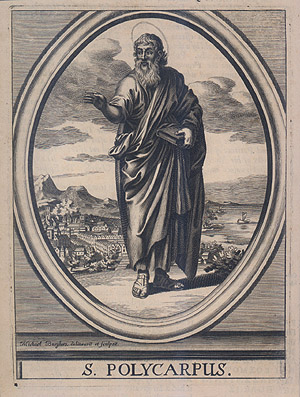

It is a dispute over the date of the Passover between Polycarp, the bishop of the church in Smyrna (Eastern Church), and Anicetus, the bishop of the church in Rome, around AD 155.[8] When Polycarp visited Rome, he told Anicetus that he had been keeping the Passover every year with John, a disciple of Jesus, and other apostles. He emphasized the importance of observing the Passover on the fourteenth day of Nisan, the first month, according to the tradition of Jesus and the apostles. However, Anicetus said that he should preserve the customs of his former bishops. Eventually, the two could not persuade each other, and decided to follow the traditions of their own former bishops.[9][10]
The 2nd Controversy Over the Passover


The controversy occurred again in 197 when Victor I, the bishop of the church in Rome, forced all the churches to follow the Dominical Rule [Lord’s Rule]—having the Holy Supper on Sunday.[11][8] The Western churches accepted Victor’s insistence, but the Eastern churches rejected it. Polycrates, the bishop of the church in Ephesus (Eastern Church), sent a letter explaining the validity of the Holy Supper of the Passover kept in Asia Minor.[8] He said that Apostle Philip, Apostle John, and other martyrs, who led the churches in Asia Minor, kept the Passover on the fourteenth day of the first month according to the gospel, and as the eighth bishop, he also observed the Passover on the fourteenth day of the first month according to the tradition of his relatives, emphasizing the exact date of the scriptural Passover.
“ ‘We,” said he, “observe the genuine day; neither adding thereto nor taking therefrom. For in Asia great lights have fallen asleep . . . Philip, one of the twelve apostles, . . . John, . . . both a martyr and teacher. He is buried in Ephesus . . . All these observed the fourteenth day of the passover according to the gospel, deviating in no respect, but following the rule of faith. Moreover, I, Polycrates, who am the least of all of you, according to the tradition of my relatives, some of whom I have followed. For there were seven, my relatives bishops, and I am the eighth; and my relatives always observed the day when the people (i.e. the Jews) threw away the leaven. “ — Eusebius Pamphilus, Eusebius’ Ecclesiastical History, Chap. 24, Baker Book House, 1995, pp. 208–209
Upon receiving the letter, Victor regarded the churches in Asia as heterodox and immediately informed them of excommunication. However, it was not the unanimous opinion of all the churches, so he had to accept the mediation of some bishops and cancel the excommunication.
The 3rd Controversy Over the Passover
Unexpectedly, the controversy over the Passover was ended by the Roman Emperor Constantine I, not by a church leader. The Council of Nicaea, which was convened by Constantine I in 325, was held in the palace of the emperor in Nicaea, and its main agenda was the end of doctrinal disputes such as the Paschal controversy and the Arian controversy. After about two months of meetings, it was decided to hold the Holy Supper ceremony on the day of Jesus’ resurrection, as the Western Church insisted. The biblical Passover was abolished. The Council also decided to keep the Resurrection Day on the first Sunday following the full moon after the vernal equinox, which was not based on the Bible.[12] After the Council of Nicaea, those who had the Passover Holy Supper on the fourteenth day of the first month, called Quartodecimans,[13] disappeared gradually. Since the Passover Holy Supper came to be celebrated on the Day of Resurrection, the Day of Resurrection is called the Pascha [Passover] in some languages. That is why Christians in those languages cannot distinguish between the Passover and the Day of Resurrection.
“ 3. Council of Nicaea The Easter controversy arose about the middle of the second century over the question of what was the proper date to celebrate Easter. The Church in the East held that Easter should be celebrated on the fourteenth day of Nisan, the date of the Passover according to the Jewish calendar, no matter what day of the week it fell upon. Polycarp of Asia was opposed in this view by the Roman bishop Anicetus, who believed that Easter should be celebrated on the Sunday following the fourteenth of Nisan. The Eastern and Western segments of the Church could not arrive at any agreement until the Council of Nicaea in 325, when the viewpoint of the Western Church was adopted.
“ — Earle E. Cairns, Christianity Through the Centuries, Zondervan Pub. House, 1954, p. 112
See also
References
- ↑ 3957. pascha, Bible Hub
- ↑ Easter Controversy, New Advent Catholic Encyclopedia
- ↑ Paschal Controversies, A Religious Encyclopædia Or, Dictionary of Biblical, Historical, Doctrinal, and Practical Theology. Based on the Real-encyklopädie of Herzog, Plitt, and Hauck · Volume 3, 1891, pg. 1754
- ↑ "Luke 22:15".
- ↑ "1 Corinthians 11:23–25".
- ↑ "1 Corinthians 11:26".
- ↑ "1 Corinthians 5:7–8".
- ↑ 8.0 8.1 8.2 A HISTORY OF THE EARLY CHURCH TO A.D. 500, J. W.C. WAND, pgs. 82–83
- ↑ Chapter XIV. Circumstances related of Polycarp, an apostolic man, Ecclesiastical History of Eusebius, pg. 141, Isaac Boyle, 1850
- ↑ The Bishops of Rome in the First Two Centuries, Saint peter and the Popes, Michael M. Winter, 1960, pp. 129–130
- ↑ Dominical letter, Collins Dictionary
- ↑ Supremacy of the Popes, Faith of Our Fathers, James Cardinal Gibbons, pgs. 134–135, 1889
- ↑ Quartodeciman, Merriam-Webster Dictionary