ASEZ Climate Change Response Forum: Difference between revisions
| Line 24: | Line 24: | ||
In the second part, ASEZ members from the U.S., South Africa, and Peru made a presentation on climate disasters, such as droughts, heat waves, and heavy rains, which occurred in their home countries. They discussed the role of university students while introducing cleanups in partnership with environment groups, and seminars, forums, and campaigns raising environmental awareness.{{그림|ASEZ-기후변화대응 토크콘서트-참석자 패널 행사 참여(2).jpg|정렬=오른쪽섬네일|너비=320px|타이틀=ASEZ members examined the severity of climate issues and discussed potential solutions at the environmental forum for responding to climate changes.}} | In the second part, ASEZ members from the U.S., South Africa, and Peru made a presentation on climate disasters, such as droughts, heat waves, and heavy rains, which occurred in their home countries. They discussed the role of university students while introducing cleanups in partnership with environment groups, and seminars, forums, and campaigns raising environmental awareness.{{그림|ASEZ-기후변화대응 토크콘서트-참석자 패널 행사 참여(2).jpg|정렬=오른쪽섬네일|너비=320px|타이틀=ASEZ members examined the severity of climate issues and discussed potential solutions at the environmental forum for responding to climate changes.}} | ||
At the event venue outside the seminar room where the forum was held, various panel exhibitions were held to introduce the severity of climate change, the reality of [https://education.nationalgeographic.org/resource/environmental-refugee/ climate refugees], and ASEZ activities in response. Korean university students served as guides, explaining the panel content in English and Spanish to university students and guests from all over the world. The university students who looked around the exhibits wrote down on a large panel what actions they would take in response to climate change, Their commitments included “recycling,” “unplugging unused electrical | At the event venue outside the seminar room where the forum was held, various panel exhibitions were held to introduce the severity of climate change, the reality of [https://education.nationalgeographic.org/resource/environmental-refugee/ climate refugees], and ASEZ activities in response. Korean university students served as guides, explaining the panel content in English and Spanish to university students and guests from all over the world. The university students who looked around the exhibits wrote down on a large panel what actions they would take in response to climate change, Their commitments included “recycling,” “unplugging unused electrical appliances,” “using public transportation and walking instead of driving private vehicles,” “wearing thick layers,” and “paying careful attention during environmental classes.” Alexander, an ASEZ member from San Diego, CA, U.S., who gave a presentation on the subject, “Millennial Generation Issues,” said, “The environmental issues we face today can only be solved when everyone, not just specific individuals or countries, takes action. As it is important to share information to discover problems and find solutions, I wanted to convey the message that we, as university students, should join forces and take action.” | ||
==External links== | ==External links== | ||
Revision as of 16:56, 19 July 2024
.jpg)
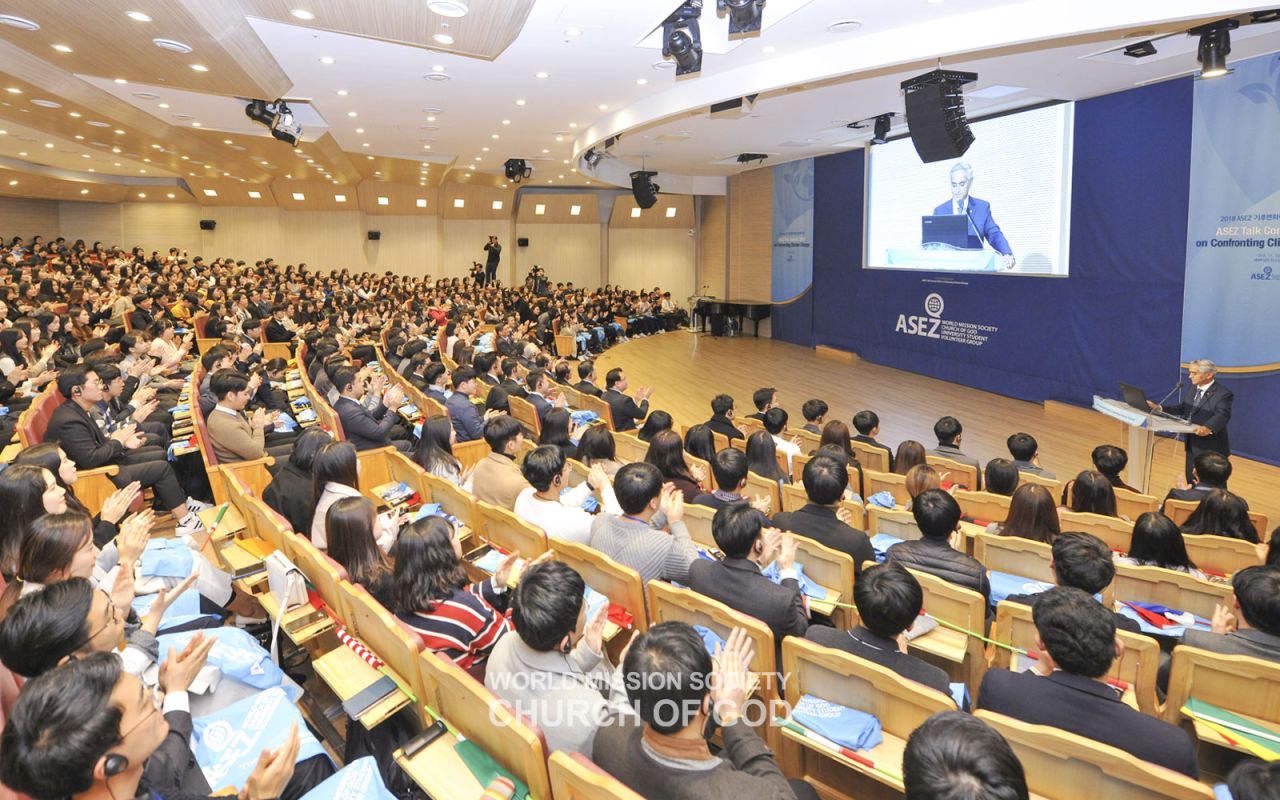
The ASEZ Climate Change Response Forum is an event hosted by the Church of God University Student Volunteer Group (ASEZ) at the New Jerusalem Pangyo Temple on November 22, 2018. It aimed to raise awareness of climate change among university students both domestically and internationally and to share ideas for solving environmental problems. University students from around the world searched for practical ways to improve environmental issues while listening to expert lectures and presentations on combating climate change.
Background of ASEZ Climate Change Response Forum
.jpg)
Abnormal climate changes and disasters caused by climate change are becoming more frequent around the global village. In Australia, wildfires occurred around the southeastern coast, damaging an area of 124,000 km², which is larger than the territory of Pennsylvania (119,280 km²), for six months from September 2019 to February 2020.[1][2][3] Australia's Commonwealth Scientific and Industrial Research Organisation (CSIRO) has reported that climate change increases Australia's bushfire occurrence by 800%.
In January 2021, the temperature in the Sahara Desert in Africa and Asir in southwestern Saudi Arabia dropped below freezing.[4][5] That summer, the temperature soared to 49.6°C, resulting in deaths from wildfires and heat waves in Lytton, British Columbia, Canada.[6]
Since the middle of the 20th century, the international society has been calling for cooperation among countries to address climate change. Since international environmental issues were first discussed at the United Nations Conference on the Human Environment in 1972, significant international agreements on combating climate change have been reached, such as the Kyoto Protocol in 1997 and the Paris Agreement on Climate Change in 2016.
ASEZ strives to address various global issues, starting within university campuses where students are located.[7] ASEZ encourages government officials, local agencies, and citizens to participate in environmental protection and awareness through initiatives such as the “Green Campus Cleanup”[8] and “The Cost” Campaign for World Environment Day.[9] In November 2018, ASEZ organized the “ASEZ Climate Change Response Forum” to facilitate discussions among college students, seeking their perspectives on implementing Sustainable Development Goals (SDGs) and exploring the role of young adults in these efforts.[10][11]
Overview of ASEZ Climate Change Response Forum
.jpg)

.jpg)
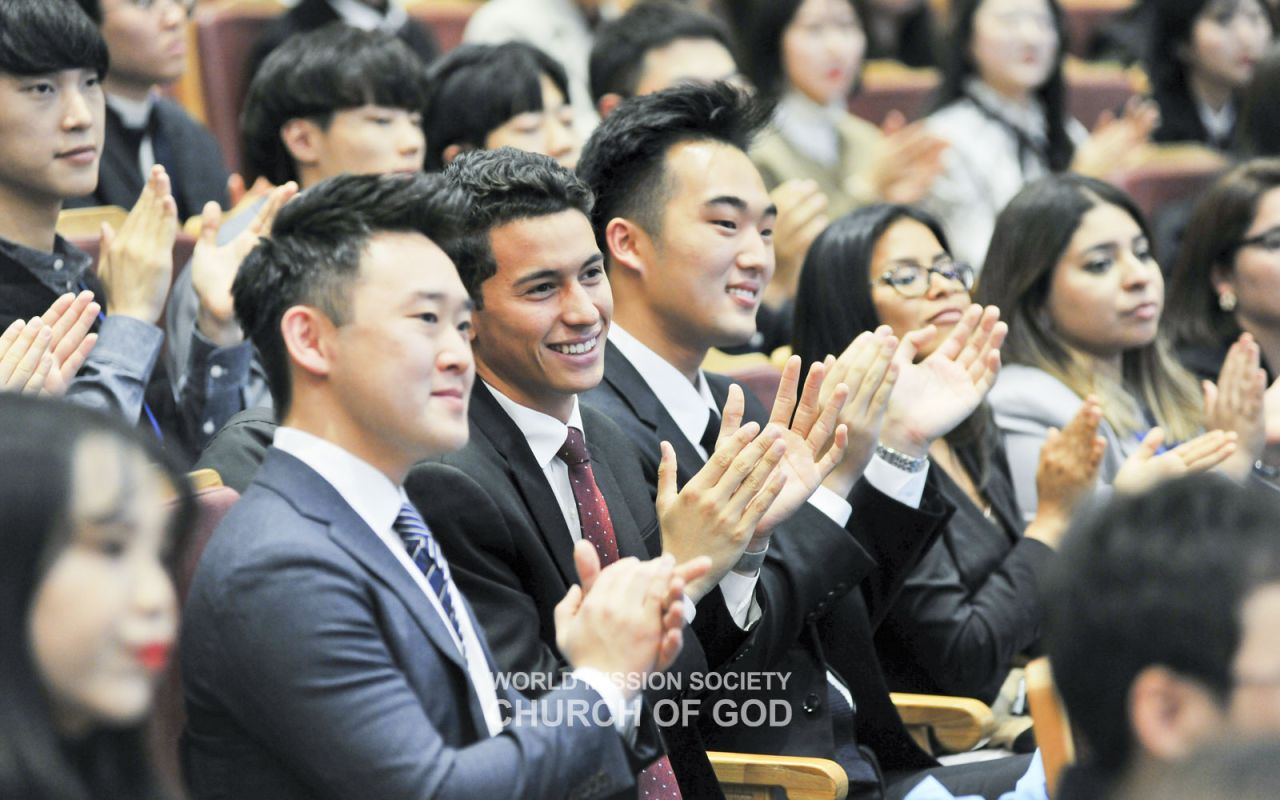
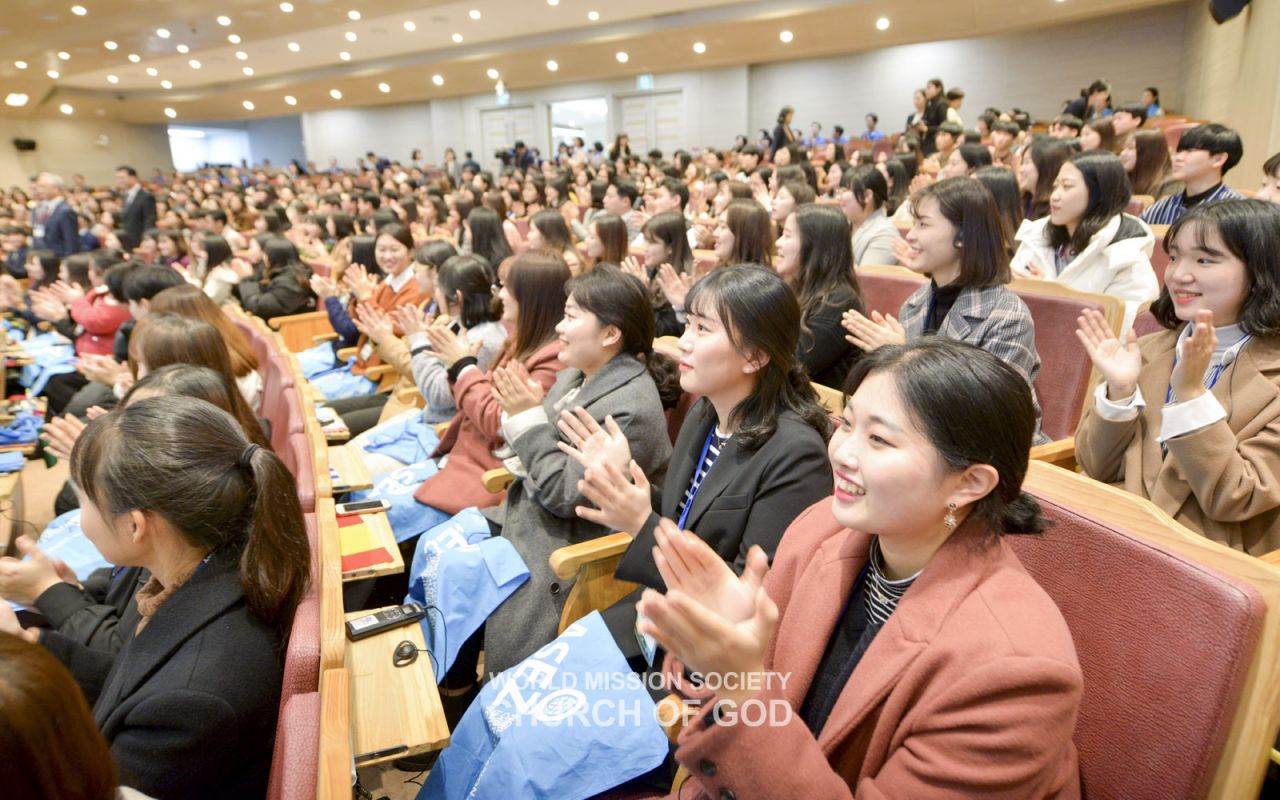
More than 600 ASEZ members from Korea, the U.S., South Africa, Philippines, and Peru attended the forum, discussing the topic on “Climate Change Response and the Role of the University Students.” General Pastor Kim Joo-cheol from the World Mission Society Church of God said in his opening remark, “Each college student who has love for humanity, passion, and intelligence will make a beautiful and hopeful change in the global village.”

.jpg)
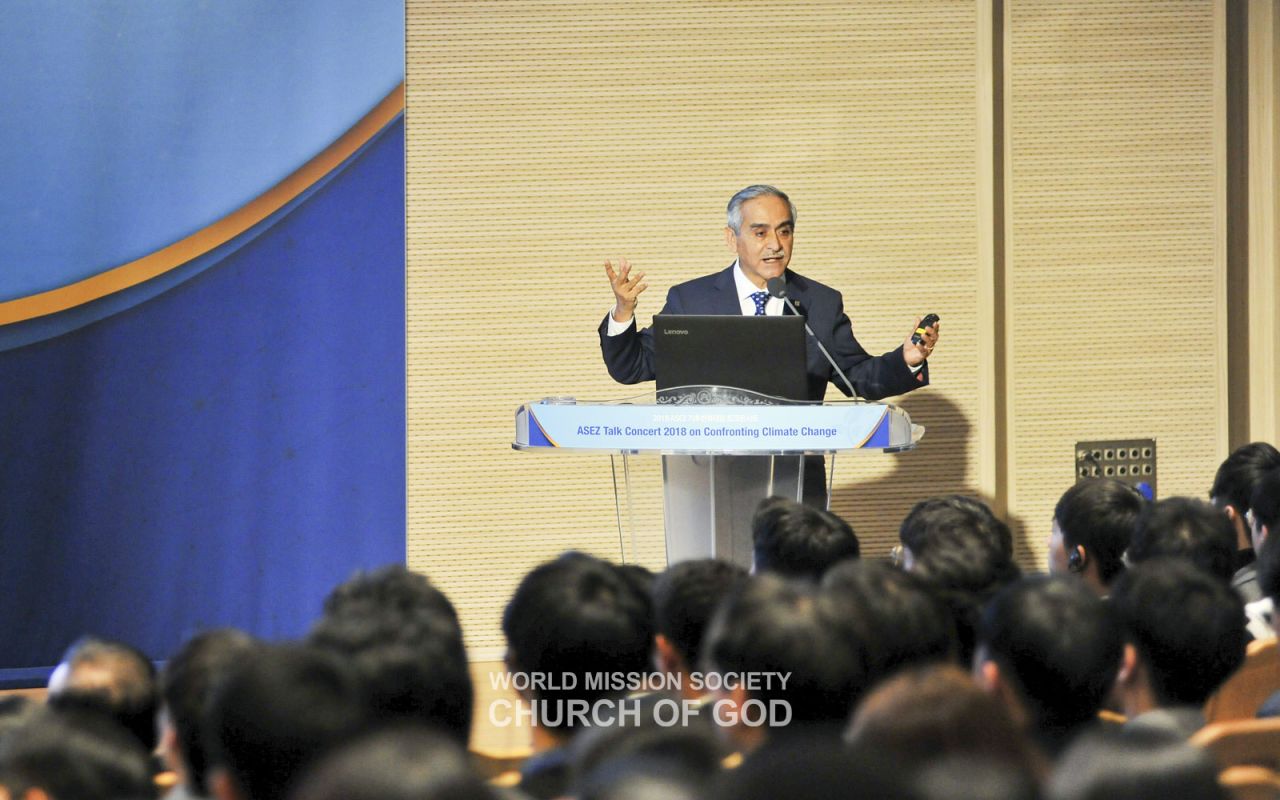
Peruvian Supreme Court Justice Duberly Rodriguez Tineo (formerly Chief Justice of the Supreme Court), who gave a speech at the special lecture in the first part, discussed in detail the solutions that college students could take into action. Pointing out greenhouse gases as the main cause of climate change, he said that governments should legislate to reduce the use of fossil fuels, which are the main causes of greenhouse gases. He helped university students gain understanding, giving an example of eco-friendly energy business in various countries of South America, such as Uruguay and Costa Rica. He also explained in detail about the meaning of and how to practice the 17 articles such as “relieving hunger and sustainable agriculture,” “Water and hygiene,” and “Climate change and response,” saying that the purpose of Sustainable Development Goals is to ensure that a good environment gets passed down to the next generation; he also made a request to the university students to take the lead in resolving environmental problems.
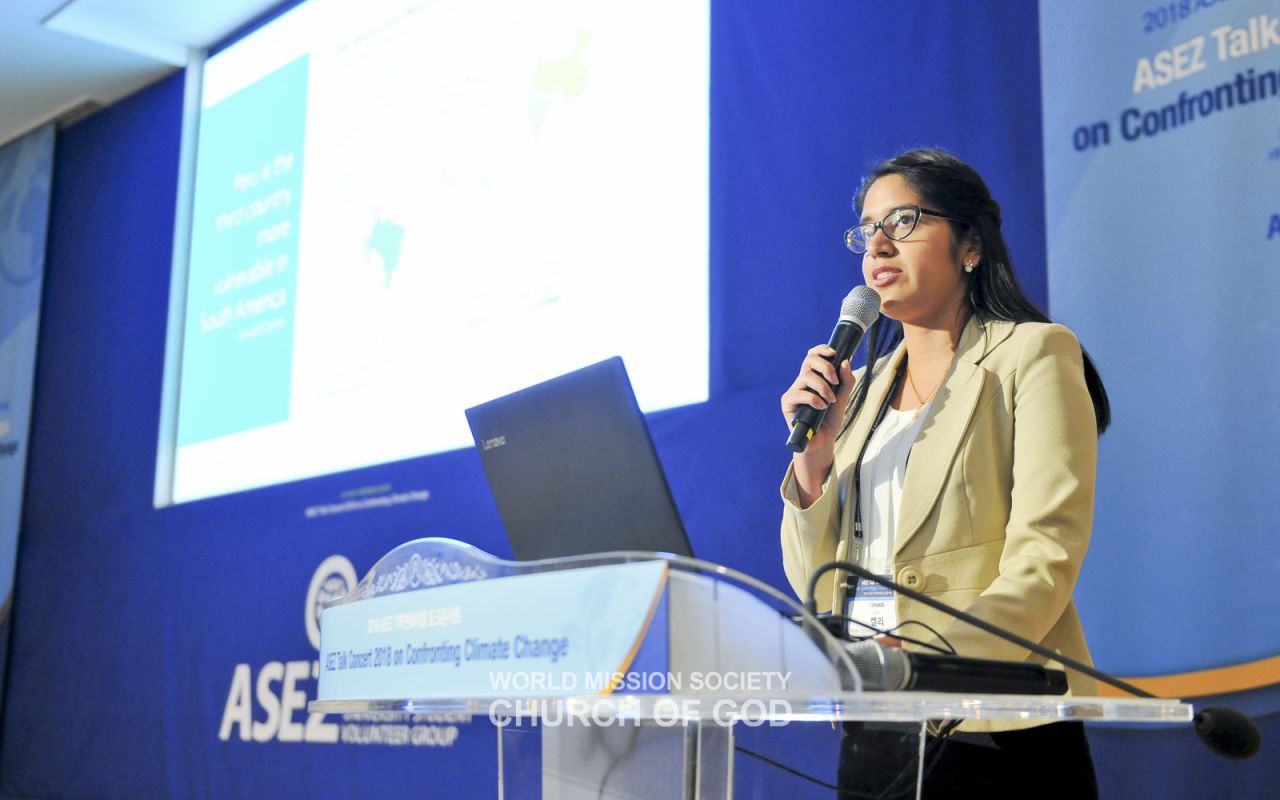
In the second part, ASEZ members from the U.S., South Africa, and Peru made a presentation on climate disasters, such as droughts, heat waves, and heavy rains, which occurred in their home countries. They discussed the role of university students while introducing cleanups in partnership with environment groups, and seminars, forums, and campaigns raising environmental awareness.
.jpg)
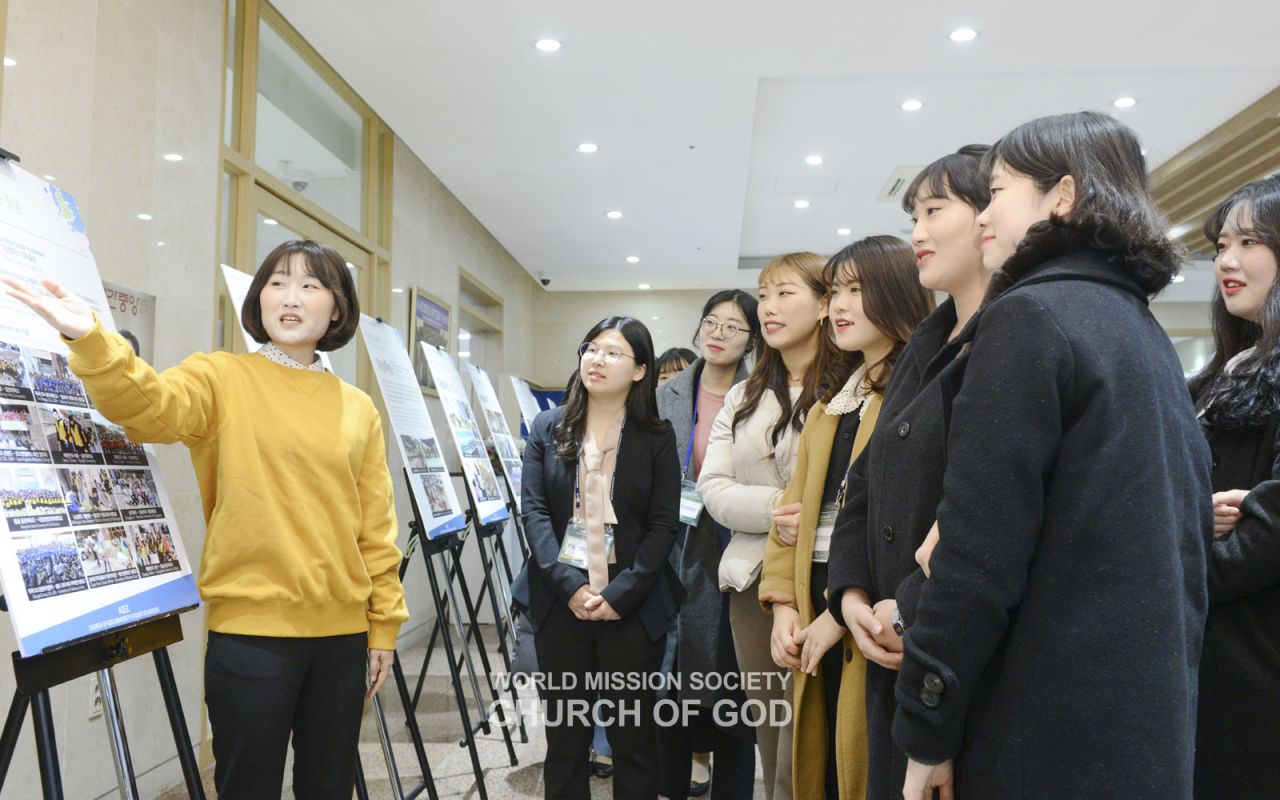
At the event venue outside the seminar room where the forum was held, various panel exhibitions were held to introduce the severity of climate change, the reality of climate refugees, and ASEZ activities in response. Korean university students served as guides, explaining the panel content in English and Spanish to university students and guests from all over the world. The university students who looked around the exhibits wrote down on a large panel what actions they would take in response to climate change, Their commitments included “recycling,” “unplugging unused electrical appliances,” “using public transportation and walking instead of driving private vehicles,” “wearing thick layers,” and “paying careful attention during environmental classes.” Alexander, an ASEZ member from San Diego, CA, U.S., who gave a presentation on the subject, “Millennial Generation Issues,” said, “The environmental issues we face today can only be solved when everyone, not just specific individuals or countries, takes action. As it is important to share information to discover problems and find solutions, I wanted to convey the message that we, as university students, should join forces and take action.”
External links
See also
- ASEZ (Church of God University Student Volunteer Group)
- Activities for Implementing the Sustainable Development Goals (SDGs)
References
- ↑ Australia's fires are 46% bigger than last year's Brazilian Amazon blazes. There are at least 2 months of fire season to go., Business Insider, January 9, 2020
- ↑ Australia fires: Dreaded bushfire season turns deadly, BBC News, October 26, 2023
- ↑ Direct radiative forcing of biomass burning aerosols from the extensive Australian wildfires in 2019–2020, Environmental Research Letters, Dong Yeong Chang et al., Vol. 16, no. 4, IOP Publishing, 2021
- ↑ Algerian Sahara desert town dusted with snow, Arab News, January 19, 2021
- ↑ Parts of Saudi Arabia record sub-zero temperatures, NCM forecast cold wave to continue until weekend, Arab News, January 18, 2022
- ↑ Western Canada heat wave expected to break daily, all-time temperature records, British Columbia, CBC, June 27, 2021
- ↑ Church of God University Student Volunteer Group, About ASEZ, ASEZ.org
- ↑ Green Campus Cleanups, ASEZ.org, January 15, 2017
- ↑ ASEZ’s World Environment Day Campaign: “The Cost”, ASEZ.org, July 30, 2021
- ↑ Understanding Climate Change over East Asia under Stabilized 1.5 and 2.0℃ Global Warming Scenarios, Korea Science, November 30, 2019
- ↑ 55th Anniversary of World Mission Society Church of God, Opening the Era of 3 Million Saints, Shindonga, June 7, 2019