Seal of God: Difference between revisions
m Text replacement - "Where Does Jesus Come a Second Time?" to "Where Jesus Comes a Second Time" |
|||
| Line 37: | Line 37: | ||
===Time of King Hezekiah=== | ===Time of King Hezekiah=== | ||
[[File:Peter Paul Rubens 082.jpg|thumb|''The Defeat of Sennacherib'' by Peter Paul Rubens: An angel slaughtered 185,000 Assyrian men overnight.]] | [[File:Peter Paul Rubens 082.jpg|thumb|''The Defeat of Sennacherib'' by Peter Paul Rubens: An angel slaughtered 185,000 Assyrian men overnight.]] | ||
The promise of the Passover is not limited to the time of the Exodus. It also prevailed in the time of Hezekiah about 800 years after the [[Exodus]]. Hezekiah was the thirteenth king of the southern Kingdom of Judah. After the unified Kingdom of Israel was divided into the northern Kingdom of Israel and the southern Kingdom of Judah, the Passover had not been celebrated for a long time. At that time Hezekiah ruled over South Judah. As soon as King Hezekiah acceded to the throne, he repaired the ruined temple<ref>{{Cite web |url=https://www.biblegateway.com/passage/?search=2+Chronicles+29%3A2-3&version=NIV |title=2 Chronicles 29:2–3 |quote= }}</ref> and decided to keep the Passover by the admonition of the prophet [[Isaiah]].<ref>{{Cite web |url=https://www.biblegateway.com/passage/?search=2+Chronicles+30%3A2&version=NIV |title=2 Chronicles 30:2 |quote= }}</ref> He sent couriers to both South Judah and North Israel, inviting them all to keep the Passover. The people of North Israel had not celebrated the Passover for more than 250 years since the first King Jeroboam set up idols and led the people to worship them.<ref>{{Cite web |url=https://www.biblegateway.com/passage/?search=1+Kings+12%3A25-29&version=NIV |title=1 Kings 12:25–29 |quote=}}</ref> Since they did not know about the Passover, they mocked and ridiculed the couriers.<ref>{{Cite web |url=https://www.biblegateway.com/passage/?search=2+Chronicles+30%3A1-10&version=NIV |title=2 Chronicles 30:1–10 |quote= }}</ref> Eventually, only the people of South Judah and some of the people of North Israel, who humbly accepted the words of the couriers, gathered in Jerusalem to celebrate the Passover.<ref>{{Cite web |url=https://www.biblegateway.com/passage/?search=2+Chronicles+30%3A11-12&version=NIV |title=2 Chronicles 30:11–12 |quote=}}</ref><br>Three years later, the Assyrian army surrounded Samaria, the capital of the northern Kingdom of Israel. Assyria was a powerful kingdom that conquered the Mediterranean coast and part of Asia Minor. Three years after the siege, Assyria captured [[Samaria]], killing millions of people and taking captive hundreds of thousands.<ref>{{Cite web |url=https://www.biblegateway.com/passage/?search=2+Kings+17%3A4-6&version=NIV |title=2 Kings 17:4–6 |quote=}}</ref> Around 721 B.C., North Israel was completely destroyed. The [[book of 2 Kings]] explains that the fundamental cause of the destruction of the northern Kingdom of Israel was because they violated God’s covenant by not keeping the Passover. | The promise of the Passover is not limited to the time of the Exodus. It also prevailed in the time of Hezekiah about 800 years after the [[The Exodus|Exodus]]. Hezekiah was the thirteenth king of the southern Kingdom of Judah. After the unified Kingdom of Israel was divided into the northern Kingdom of Israel and the southern Kingdom of Judah, the Passover had not been celebrated for a long time. At that time Hezekiah ruled over South Judah. As soon as King Hezekiah acceded to the throne, he repaired the ruined temple<ref>{{Cite web |url=https://www.biblegateway.com/passage/?search=2+Chronicles+29%3A2-3&version=NIV |title=2 Chronicles 29:2–3 |quote= }}</ref> and decided to keep the Passover by the admonition of the prophet [[Isaiah]].<ref>{{Cite web |url=https://www.biblegateway.com/passage/?search=2+Chronicles+30%3A2&version=NIV |title=2 Chronicles 30:2 |quote= }}</ref> He sent couriers to both South Judah and North Israel, inviting them all to keep the Passover. The people of North Israel had not celebrated the Passover for more than 250 years since the first King Jeroboam set up idols and led the people to worship them.<ref>{{Cite web |url=https://www.biblegateway.com/passage/?search=1+Kings+12%3A25-29&version=NIV |title=1 Kings 12:25–29 |quote=}}</ref> Since they did not know about the Passover, they mocked and ridiculed the couriers.<ref>{{Cite web |url=https://www.biblegateway.com/passage/?search=2+Chronicles+30%3A1-10&version=NIV |title=2 Chronicles 30:1–10 |quote= }}</ref> Eventually, only the people of South Judah and some of the people of North Israel, who humbly accepted the words of the couriers, gathered in Jerusalem to celebrate the Passover.<ref>{{Cite web |url=https://www.biblegateway.com/passage/?search=2+Chronicles+30%3A11-12&version=NIV |title=2 Chronicles 30:11–12 |quote=}}</ref><br>Three years later, the Assyrian army surrounded Samaria, the capital of the northern Kingdom of Israel. Assyria was a powerful kingdom that conquered the Mediterranean coast and part of Asia Minor. Three years after the siege, Assyria captured [[Samaria]], killing millions of people and taking captive hundreds of thousands.<ref>{{Cite web |url=https://www.biblegateway.com/passage/?search=2+Kings+17%3A4-6&version=NIV |title=2 Kings 17:4–6 |quote=}}</ref> Around 721 B.C., North Israel was completely destroyed. The [[book of 2 Kings]] explains that the fundamental cause of the destruction of the northern Kingdom of Israel was because they violated God’s covenant by not keeping the Passover. | ||
{{quote5 |내용=In King Hezekiah’s fourth year, which was the seventh year of Hoshea son of Elah king of Israel, Shalmaneser king of Assyria marched against Samaria and laid siege to it. At the end of three years the Assyrians took it. So Samaria was captured in Hezekiah's sixth year, which was the ninth year of Hoshea king of Israel. . . . This happened because they had not obeyed the LORD their God, but had violated his covenant—all that Moses the servant of the LORD commanded. They neither listened to the commands nor carried them out. |출처=[https://www.biblegateway.com/passage/?search=2+Kings+18%3A9-12&version=NIV 2 Kings 18:9–12]}} | {{quote5 |내용=In King Hezekiah’s fourth year, which was the seventh year of Hoshea son of Elah king of Israel, Shalmaneser king of Assyria marched against Samaria and laid siege to it. At the end of three years the Assyrians took it. So Samaria was captured in Hezekiah's sixth year, which was the ninth year of Hoshea king of Israel. . . . This happened because they had not obeyed the LORD their God, but had violated his covenant—all that Moses the servant of the LORD commanded. They neither listened to the commands nor carried them out. |출처=[https://www.biblegateway.com/passage/?search=2+Kings+18%3A9-12&version=NIV 2 Kings 18:9–12]}} | ||
[[File:Map of Assyria.png|thumb|300px|left|Assyrian territory surrounding the Kingdom of Judah]] | [[File:Map of Assyria.png|thumb|300px|left|Assyrian territory surrounding the Kingdom of Judah]] | ||
Revision as of 10:05, 14 March 2025
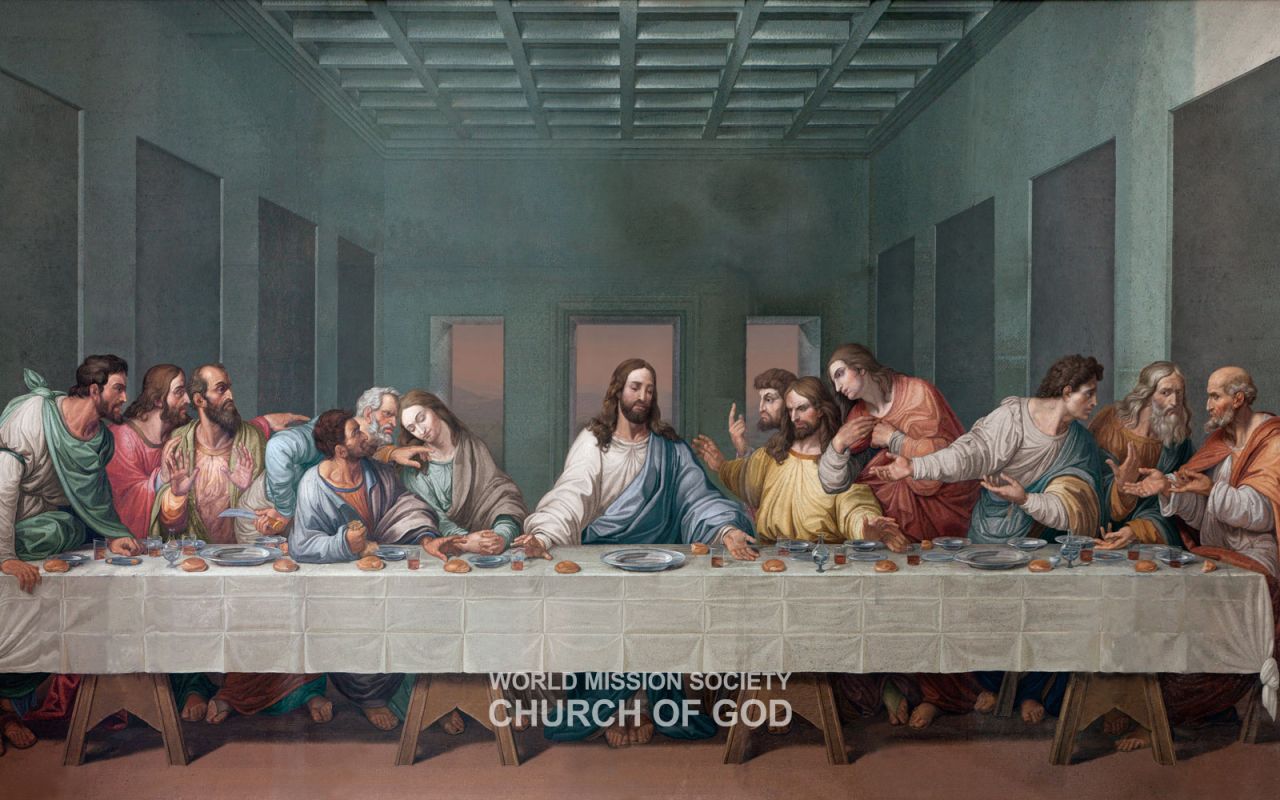

The seal of God is found in the prophecy of Revelation 7 in the New Testament. Apostle John saw in a revelation that God’s seal would be put on the foreheads of God’s people before the great disaster took place. Simply put, the seal of God is the stamp of God.[1]
Throughout all ages, God seals those who He approves. There is a seal of the apostleship[2] and a seal of the righteousness of faith as well.[3] God also sets His seal of ownership on His people, and put His Spirit in their hearts as a deposit.[4] However, the seal in Revelation 7:2 is the mark of redemption, the Passover of the new covenant, by which the saints can escape the last disaster.
God’s Work of Putting a Seal

The prophecy about God’s work of putting the seal is recorded in Revelation 7.
After this I saw four angels standing at the four corners of the earth, holding back the four winds of the earth to prevent any wind from blowing on the land or on the sea or on any tree. Then I saw another angel coming up from the east, having the seal of the living God. He called out in a loud voice to the four angels who had been given power to harm the land and the sea: “Do not harm the land or the sea or the trees until we put a seal on the foreheads of the servants of our God.”
The four angels have power to harm the land and the sea with the four winds, but are holding them back. In the Bible, wind represents war.[5] The winds being released from the four corners of the earth mean a war will break out across the world. Before they are released, God must put a seal on the foreheads of the saints to save them from this disaster.
When
The four winds of the earth refer to the winds blowing from all directions, that is, world war. In history, there have been two world wars. To understand which war the four angels are holding back, we must know what happened before Revelation 7. We can find the answer in Revelation 6.
I watched as he opened the sixth seal. There was a great earthquake. The sun turned black like sackcloth made of goat hair, the whole moon turned blood red, and the stars in the sky fell to earth, as late figs drop from a fig tree when shaken by a strong wind.
Figs and stars in the sky refer to the Israelites in the Bible.[6][7] The Bible says the stars in the sky fell to earth as late figs drop from a fig tree when shaken by a strong wind. This means that many Jews were sacrificed in a great war. During World War II (1939–1945), Nazi Germany regarded the Jews as an inferior race and sent them to ghettos (residential areas appointed by the laws for the Jews to live in) and concentration camps by force. They slaughtered the Jews regardless of gender and age under the pretext of ethnic cleansing. The number of the slaughtered Jews is 6 million, including 1.5 million children.[8]
In Revelation 7, God’s work of putting a seal begins after the angels hold back the winds from the four corners of the earth, that is, after the end of World War II in 1945.
Where
God’s work of putting a seal begins from the east.
Then I saw another angel coming up from the east, having the seal of the living God. He called out in a loud voice to the four angels who had been given power to harm the land and the sea: “Do not harm the land or the sea or the trees until we put a seal on the foreheads of the servants of our God.”
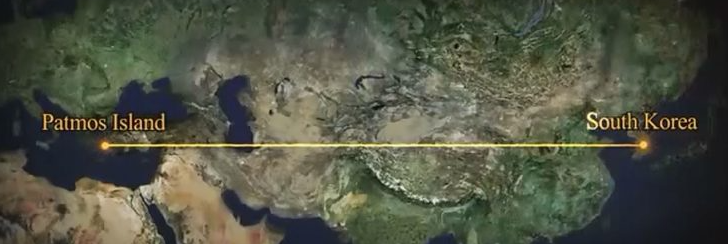
Apostle John received this revelation from the Island of Patmos. Then the east in Revelation 7 refers to a country east of the Island of Patmos. The latitude from Patmos traveling to the ends of the earth ends in the Republic of Korea (South Korea, hereinafter referred to as “Korea”). Korea is the country in the east according to the prophecy of Revelation 7 because the “seal of God” appeared from there.

Passover, the Seal of God
The seal of God is a sign to save God’s people from the last disaster. The Passover is the truth that saves us from disasters. Its name means that disasters pass over. It is called Pesach (פֶּסַח) in Hebrew and Pascha (πασχα) in Greek. They all mean that disasters pass over.
From the time it was first instituted 3,500 years ago, the Passover has been promised as a sign of redemption from disasters. While the four angels are holding back the winds from the four corners of the earth, God puts the seal on the foreheads of the saints to save them from the impending disasters. Here, the seal too refers to the Passover.
Time of Exodus

In the fifteenth century B.C., the people of Israel lived as slaves in Egypt. In order to free them, God brought the great disaster of destroying the firstborn all over Egypt. However, He had the Israelites slaughter lambs on the evening of the 14th day of the first month (by the sacred calendar) and put its blood on the sides and tops of the doorframes of their houses before the disaster occurred. This is the first Passover.
“The animals you choose must be year-old males without defect, and you may take them from the sheep or the goats. Take care of them until the fourteenth day of the month, when all the people of the community of Israel must slaughter them at twilight. Then they are to take some of the blood and put it on the sides and tops of the doorframes of the houses where they eat the lambs. . . . it is the LORD’s Passover. On that same night I will pass through Egypt and strike down every firstborn—both men and animals—and I will bring judgment on all the gods of Egypt. I am the LORD. The blood will be a sign for you on the houses where you are; and when I see the blood, I will pass over you. No destructive plague will touch you when I strike Egypt.”
On the night of the Passover, every firstborn in the land of Egypt, from the firstborn of Pharaoh to the firstborn of a man in prison, and all the firstborn of the cattle were put to death.[9] However, the Israelites, who kept the Passover, were protected from the disaster and freed from Egypt the next day. Even non-Israelites were saved from the disaster by putting the blood of the Passover lamb on the tops and sides of the doorframes of their houses, and they left Egypt with the Israelites.[10] As God had promised, the blood of the Passover lamb became a sign letting the disaster pass over them.
Time of King Hezekiah

The promise of the Passover is not limited to the time of the Exodus. It also prevailed in the time of Hezekiah about 800 years after the Exodus. Hezekiah was the thirteenth king of the southern Kingdom of Judah. After the unified Kingdom of Israel was divided into the northern Kingdom of Israel and the southern Kingdom of Judah, the Passover had not been celebrated for a long time. At that time Hezekiah ruled over South Judah. As soon as King Hezekiah acceded to the throne, he repaired the ruined temple[11] and decided to keep the Passover by the admonition of the prophet Isaiah.[12] He sent couriers to both South Judah and North Israel, inviting them all to keep the Passover. The people of North Israel had not celebrated the Passover for more than 250 years since the first King Jeroboam set up idols and led the people to worship them.[13] Since they did not know about the Passover, they mocked and ridiculed the couriers.[14] Eventually, only the people of South Judah and some of the people of North Israel, who humbly accepted the words of the couriers, gathered in Jerusalem to celebrate the Passover.[15]
Three years later, the Assyrian army surrounded Samaria, the capital of the northern Kingdom of Israel. Assyria was a powerful kingdom that conquered the Mediterranean coast and part of Asia Minor. Three years after the siege, Assyria captured Samaria, killing millions of people and taking captive hundreds of thousands.[16] Around 721 B.C., North Israel was completely destroyed. The book of 2 Kings explains that the fundamental cause of the destruction of the northern Kingdom of Israel was because they violated God’s covenant by not keeping the Passover.
In King Hezekiah’s fourth year, which was the seventh year of Hoshea son of Elah king of Israel, Shalmaneser king of Assyria marched against Samaria and laid siege to it. At the end of three years the Assyrians took it. So Samaria was captured in Hezekiah's sixth year, which was the ninth year of Hoshea king of Israel. . . . This happened because they had not obeyed the LORD their God, but had violated his covenant—all that Moses the servant of the LORD commanded. They neither listened to the commands nor carried them out.

In the fourteenth year of King Hezekiah, Sennacherib king of Assyria led his army and to capture fortified cities in South Judah. The siege narrowed down to Jerusalem, the capital.[17][18] Sennacherib and his servants mocked the weak South Judah and God whom they believed in.[19]
Hezekiah sent elders to Isaiah the prophet to inquire of God’s will. God said, “The king of Assyria will not enter this city or shoot an arrow here. His men will not come before it with shields or build a siege ramp against it. By the way that they came they will return.”[20] As God said, the great Assyrian army was destroyed overnight.
“I will defend this city and save it, for my sake and for the sake of David my servant.” That night the angel of the LORD went out and put to death a hundred and eighty-five thousand men in the Assyrian camp. When the people got up the next morning—there were all the dead bodies!
Hezekiah preached and kept the Passover because he wanted to secure his nation’s stability through God’s blessings. As he wished, Judah, which had kept the Passover, was protected by God from the attack of Assyria.
New Testament Times

In the Old Testament times, the Israelites celebrated the Passover with the flesh and blood of lambs. The purpose of keeping the Passover in this way was to lead the saints in the New Testament to keep the Passover of the new covenant with bread and wine symbolizing the flesh and blood of Jesus Christ. He appeared as the reality of the animal sacrifice in the Old Testament[21] by shedding His blood on the cross for the salvation of God’s people.
For Christ, our Passover lamb, has been sacrificed.
In the Old Testament times, the blood of the Passover lamb was a sign through which disasters would pass over the Israelites. It is the same with the blood that Jesus shed on the cross as the Passover lamb in the New Testament times.
Jesus gave wine to His disciples at the Passover ceremony, saying, “This cup is the blood of the covenant, poured out for your salvation.” He also called the Passover bread His flesh.
“I have eagerly desired to eat this Passover with you before I suffer.” And he took bread, gave thanks and broke it, and gave it to them, saying, “This is my body given for you; do this in remembrance of me.” . . . “This cup [wine] is the new covenant in my blood, which is poured out for you.”
Just as the Israelites celebrated the Passover with the flesh and blood of lambs in the Old Testament times, the saints in the New Testament keep the Passover of the new covenant with the flesh and blood of Jesus, who is the reality of the lambs. The saints who keep the New Covenant Passover, engraving the love of Christ on their hearts, are blessed with the forgiveness of sins and eternal life through the blood of Christ.[22][23] In the last days, we will be blessed to escape the great disaster as God showed in the history of the Old Testament as a shadow. Just like the time of the Exodus and of Hezekiah, the blood of the Passover becomes a sign for God’s people to escape disasters in the last day. Therefore, the seal of God in Revelation 7 is a prophecy about the Passover of the new covenant.
This fact is also evident in the words of Jesus recorded in the Gospel of John. Jesus said, “Whoever eats My flesh and drinks My blood remains in Me, and I in him.”[24] This means that we become one body with Jesus by keeping the Passover. Jesus said that He has the seal of God on Him.
“On him (Jesus) God the Father has placed his seal of approval.”
Those who become one body with Jesus by keeping the Passover of the new covenant can receive the seal of God. In other words, the Passover of the new covenant is the truth through which we can receive the seal of God. The saints who receive the seal of God through the Passover of the new covenant become God’s people,[25] who belong to God,[26] and God will protect them on the day of the last disaster.
But now, this is what the LORD says—he who created you, O Jacob, he who formed you, O Israel: “Fear not, for I have redeemed you; I have summoned you by name; you are mine. When you pass through the waters, I will be with you; and when you pass through the rivers, they will not sweep over you. When you walk through the fire, you will not be burned; the flames will not set you ablaze. For I am the LORD, your God, the Holy One of Israel, your Savior.”
Also, the Holy Supper of the Passover is the seal that fulfills all the promises of God: the forgiveness of sins,[27] redemption,[28] reconciliation,[29] righteousness,[30] peace,[31] and being bought with blood.[32]
According to Revelation 7, the only way to escape the last great disaster is to receive the seal of God. In other words, in the New Testament times, those who eat and drink the Passover bread and wine, engraving Christ’s love and sacrifice on their hearts, are the ones who can escape the last disaster as they have the seal of God on their foreheads.
Prophecies about the Seal of God in the Old Testament
The prophecies about the seal of God are recorded not only in the book of Revelation but also in book of Ezekiel of the Old Testament.
“Go throughout the city of Jerusalem and put a mark on the foreheads of those who grieve and lament over all the detestable things that are done in it.” As I listened, he said to the others, “Follow him through the city and kill, without showing pity or compassion. Slaughter old men, young men and maidens, women and children, but do not touch anyone who has the mark.”
The prophet Ezekiel saw a vision where God separates those who grieve and lament over all the detestable things done by the people who despise God’s law and worship idols while claiming to believe in God. He saw God putting a mark on the foreheads of these people and destroying those who do not have it.
The prophet Ezekiel lived during the end of the southern Kingdom of Judah. The book of Ezekiel was a revelation he received and recorded from God just before Judah was completely destroyed by Neo-Babylonian Empire (Babylon) (c. 586 B.C.). The prophet Zephaniah, who worked in the days of King Josiah just before Ezekiel, also prophesied the impending destruction of Judah. At first, his prophecies seem to only be about the things that would take place in the Old Testament days, however, they are about what will happen in the time when the last disaster is imminent. The book of Zephaniah prophesies a far worse situation than what occurred at the time of the destruction of Judah—the great disaster that will destroy even the birds of the air and the fish of the sea.[33] It is the same with the book of Ezekiel. Therefore, the sign to escape from disasters in Ezekiel 9 is the same prophecy as the seal of God recorded in Revelation 7.
Those who receive the mark to escape disasters are those who grieve and lament over all the detestable things done by people who forsake God’s law and practice idolatry. Zephaniah said it is only those who keep the decrees of God who will be saved and not suffer the last disaster.
Gather together, gather together, O shameful nation, before the appointed time arrives and that day sweeps on like chaff, before the fierce anger of the LORD comes upon you, before the day of the LORD’s wrath comes upon you. Seek the LORD, all you humble of the land, you who do what he commands. Seek righteousness, seek humility; perhaps you will be sheltered on the day of the LORD’s anger.
Zephaniah said that those who keep God’s commands will be saved from disasters; in Ezekiel 9 those who have the mark on their foreheads, and in Revelation 7 those who have the seal of God on their foreheads will escape disaster.[34] The Passover is the only sign to escape disasters. At the time of the Exodus, the blood of the Passover lambs became a sign and the destroying angel passed over the houses with it. Likewise, when the last disaster comes, the blood of Jesus Christ, who is the reality of the Passover lamb, becomes the sign of redemption, the seal of God, and the disaster will pass over those who have His blood. Those who keep the New Covenant Passover, which is God’s decree, with a humble heart can receive the seal of God.
Christ Ahnsahnghong Has Brought the Seal of God
God’s work of putting a seal in Revelation 7 begins from the east. This is a revelation that the Passover, which disappeared in A.D. 325, will appear in Korea in the east. The prophet Isaiah too prophesied the restoration of the Passover.
On this mountain the LORD Almighty will prepare a feast of rich food for all peoples, a banquet of aged wine—the best of meats and the finest of wines. On this mountain he will destroy the shroud that enfolds all peoples, the sheet that covers all nations; he will swallow up death forever. . . . In that day they will say, “Surely this is our God; we trusted in him, and he saved us.”
God prepared a banquet with the aged wine which had been stored for a long time to swallow up death forever. In the Bible, the wine of the Passover of the new covenant is the only wine to swallow up death forever, giving the promise of eternal life.[23][35] This prophecy means that God would bring back the New Covenant Passover, which had not been kept since the Apostolic Age. It is Ahnsahnghong who has restored the Passover of the new covenant which can only be revealed and restored by God.
Christ Ahnsahnghong was born in the Republic of Korea at the ends of the earth in the east from the island of Patmos where Apostle John saw the revelation. He was baptized in 1948 when He was thirty years old, and preached the truth of salvation of the new covenant. This happened as the fulfillment of the prophecy that God’s work of putting a seal would begin in the east after the end of World War II in 1945.[36] The One who has brought the New Covenant Passover is our God as it was prophesied in the book of Isaiah.
See also
- Ahnsahnghong
- Second Coming Jesus (Second Coming Christ)
- Timing of Jesus’ Second Coming
- Where Jesus Comes a Second Time
- Prophecy of King David’s Throne
- Passover
- Disaster & Passover
External links
Related videos
- The Passover, Through Which We Can Escape Disasters
References
- ↑ "Seal". Dictionary.com.
- ↑ "1 Corinthians 9:2".
- ↑ "Romans 4:11".
- ↑ "2 Corinthians 1:22".
- ↑ "Jeremiah 4:11–19".
- ↑ "Genesis 15:5".
- ↑ "Luke 13:7".
- ↑ "DOCUMENTING NUMBERS OF VICTIMS OF THE HOLOCAUST AND NAZI PERSECUTION". Holocaust Encyclopedia.
- ↑ "Exodus 12:29–30".
- ↑ "Exodus 12:37–38".
- ↑ "2 Chronicles 29:2–3".
- ↑ "2 Chronicles 30:2".
- ↑ "1 Kings 12:25–29".
- ↑ "2 Chronicles 30:1–10".
- ↑ "2 Chronicles 30:11–12".
- ↑ "2 Kings 17:4–6".
- ↑ "2 Kings 18:13–17".
- ↑ "Sennacherib: The Assyrian King's Failed Second Siege of Jerusalem", Warfare History Network
- ↑ "2 Chronicles 32:10–11".
- ↑ "2 Kings 19:32-33".
- ↑ "Hebrews 10:1".
- ↑ "Matthew 26:28".
- ↑ 23.0 23.1 "John 6:54".
- ↑ "John 6:56".
- ↑ "Jeremiah 31:31–33".
- ↑ "1 Peter 2:9".
- ↑ "Ephesians 1:7".
- ↑ "1 Peter 1:18–19".
- ↑ "Romans 5:11".
- ↑ "Romans 5:9".
- ↑ "Colossians 1:20".
- ↑ "Acts 20:28".
- ↑ "Zephaniah 1:3".
- ↑ "Revelation 7:2–3".
- ↑ "Luke 22:20".
- ↑ "Revelation 7:1–3".