The Meaning of the Gospel


The term gospel literally means “good news.” About 2,000 years ago, Jesus came to this earth to save humanity and proclaimed the good news. All the teachings He gave and the example He set make up the gospel—the blessed message that leads people to the kingdom of heaven. At its core, the gospel is the truth that frees humanity from the bondage of sin and death.
Definition of the Gospel
The term gospel (Greek: εὐαγγέλιον, euangelion) appears frequently throughout the New Testament.[1][2] The word euangelion comes from euangelos, which combines the prefix eu—meaning “good,” “noble,” “well,” or “favorable”—with angelos, meaning “messenger” or “one who brings news.” Thus, euangelion literally means “good news.”
Humanity: Slaves to Sin and Death
The significance of the gospel can also be understood by considering the condition of those who receive it—humanity itself. The Bible teaches that all people are sinners who have been cast down from heaven,[3] and that the wages of sin is death.[4]
They answered him, “We are Abraham’s descendants and have never been slaves of anyone. How can you say that we shall be set free?” Jesus replied, “Very truly I tell you, everyone who sins is a slave to sin.”
Even if a person claims to be free, all humanity without exception lives as slaves to sin and death. Unless they receive forgiveness of sins, they are inevitably destined to be cast into the lake of fire in hell.[5]
The Blessed News Delivered to Humanity
The Old Testament foretold that Christ would come to this world to bring salvation to humankind. Jesus fulfilled this prophecy.[6][7] The name Jesus itself means “He will save His people from their sins.”[8] Jesus, who declared, “I have come to call sinners,”[9] proclaimed the gospel of the kingdom while urging repentance. The gospel is the good news that frees all humanity, who had become slaves to sin and death.
From that time on Jesus began to preach, “Repent, for the kingdom of heaven has come near.” . . . Jesus went throughout Galilee, teaching in their synagogues, proclaiming the good news of the kingdom.
The gospel is thus defined as the complete body of teachings that Jesus both commanded and exemplified during His three-year public ministry.[10][11]
The Core of the Gospel: The Truth of Forgiveness
For a condemned criminal, the most joyous news is the granting of a pardon that leads to freedom. Likewise, humanity—spiritually no different from those sentenced to death—receives the most joyful and blessed message: Through the forgiveness of sins committed in heaven, it is possible to return to the eternal kingdom of freedom. Jesus delivered this gospel by establishing the truth that frees humankind from the dominion of sin and death.
Deliverance From Sin and Death
The account of the Israelites’ liberation from slavery in Egypt serves as a symbolic foreshadowing of the way humanity can be set free from the bondage of sin and death.
In the time of Moses, the day on which God delivered the Israelites from their slavery in Egypt was the Passover. On the night of the Passover, God struck down all the firstborn in Egypt but spared those who observed the Passover. The Israelites who kept the Passover were not only protected from the plague but were also freed from their bondage. For them, the Passover marked both a day of deliverance and a day of freedom.
“It is the LORD’s Passover. . . .” . . . At midnight the LORD struck down all the firstborn in Egypt, from the firstborn of Pharaoh, who sat on the throne, to the firstborn of the prisoner, who was in the dungeon, and the firstborn of all the livestock as well. . . . At the end of the 430 years, to the very day, all the LORD’s divisions left Egypt. Because the LORD kept vigil that night to bring them out of Egypt, on this night all the Israelites are to keep vigil to honor the LORD for the generations to come.
The Bible testifies that Jesus came as a prophet like Moses.[12][13] The Old Testament Passover, which brought physical deliverance through Moses, prefigured the New Covenant Passover, through which Jesus would spiritually liberate humanity from sin and death.[14][15]
New Covenant Passover: Promise of Forgiveness and Eternal Life
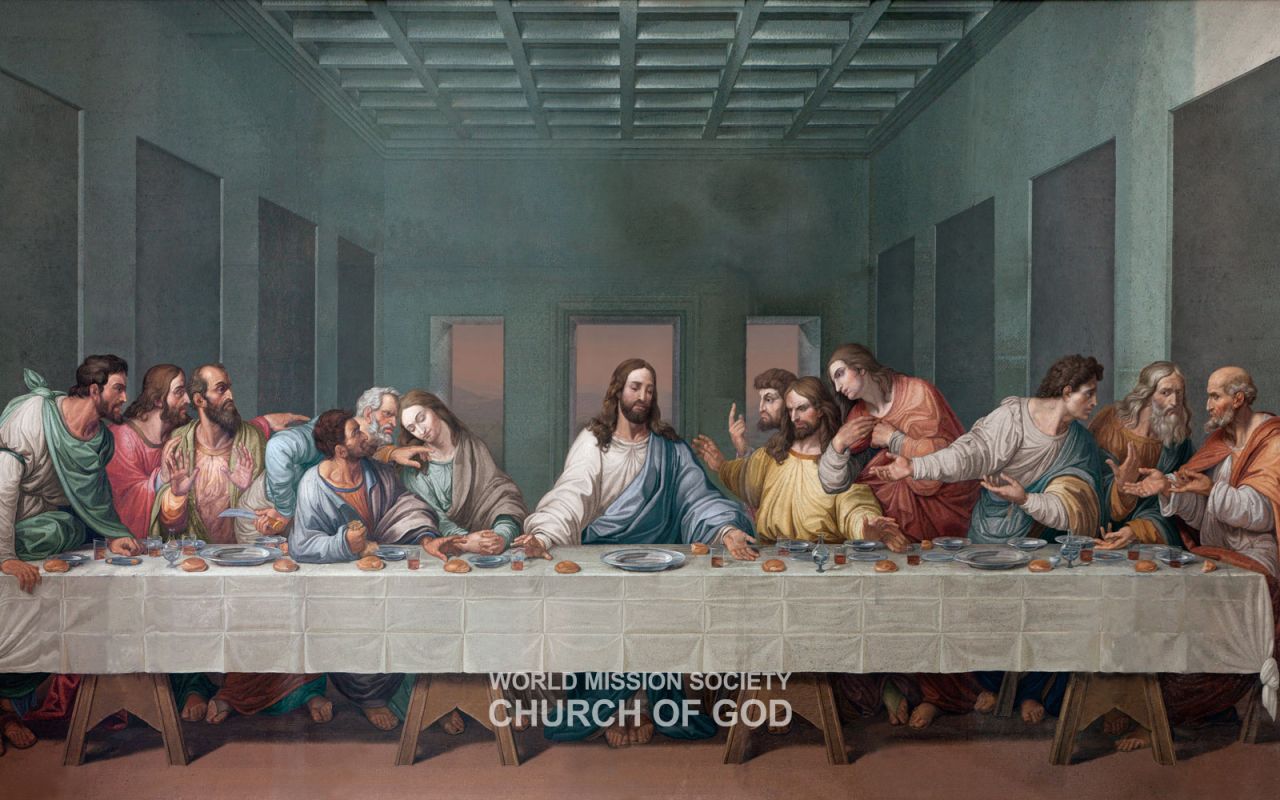

Jesus celebrated the Passover with His disciples, promising the blessings of forgiveness and eternal life through it.
- So the disciples did as Jesus had directed them and prepared the Passover. . . . Jesus took bread, gave thanks and broke it, and gave it to his disciples, saying, “Take and eat; this is my body.” Then he took a cup, gave thanks and offered it to them, saying, “Drink from it, all of you. This is my blood of the covenant, which is poured out for many for the forgiveness of sins.” (Matthew 26:17–28)
- “Whoever eats my flesh and drinks my blood has eternal life, and I will raise him up at the last day.” (John 6:54)
Accordingly, the essence of the gospel delivered to humanity—destined for eternal death because of sin—is the New Covenant Passover, through which the blessings of the forgiveness of sins and eternal life are promised. Jesus Christ, who came to bring salvation to humanity, eagerly desired to keep the Passover with His disciples.[16] In obedience to His command to make disciples of all nations and teach them to obey the gospel,[11] the apostles of the early Church regarded the New Covenant Passover as a sacred ordinance to be cherished and faithfully observed.[17]
See also
- Gospel
- The Beginning of the Gospel
- The Value of the Gospel
- Gospel of the Kingdom
- Gospel and the New Covenant
- Different Gospels
References
- ↑ Strong's Greek: 2098. εὐαγγέλιον, Bible Hub
- ↑ "Mark 1:1".
- ↑ "Romans 3:9-10".
- ↑ "Romans 6:23".
- ↑ "Revelation 20:12–15".
- ↑ "Luke 4:16–21".
- ↑ "Matthew 4:14–16".
- ↑ "Matthew 1:21".
- ↑ "Matthew 9:13".
- ↑ "Matthew 24:14".
- ↑ 11.0 11.1 "Matthew 28:18–20".
- ↑ "Deuteronomy 18:18–19".
- ↑ "Acts 3:20–23".
- ↑ "Hebrews 3:5".
- ↑ "Hebrews 10:1".
- ↑ "Luke 22:14–20".
- ↑ "1 Corinthians 11:23–26".