Diferencia entre revisiones de «Dios Madre»
| Línea 2: | Línea 2: | ||
==Elohim y Dios Madre== | ==Elohim y Dios Madre== | ||
{{그림 | Elohim_en.jpg |너비= 260px |정렬=오른쪽섬네일 |타이틀= Elohim, una palabra hebrea}}La existencia de Dios Madre se encuentra desde el capítulo 1 del libro de Génesis. El primer capítulo de la Biblia comienza con: “En el principio creó Dios los cielos y la tierra”. La Biblia, que fue escrita por primera vez en hebreo, registra '''''Elohim''''' como Dios en este versículo.<ref>{{cita web|url=https://live.bible.is/bible/SPAR60/GEN/1|título=Génesis 1:1|sitioweb=Biblehub.com |cita=אֱלֹהִים}}</ref> ''[[Elohim]]'' ([https://biblehub.com/hebrew/430.htm אֱלֹהִים]) es un término plural del sustantivo singular ''[[Eloah]]'' ([https://biblehub.com/hebrew/433.htm אֱלוֹהַּ]) que significa Dios (dios) o deidad. El sufijo plural -im (ים ) lo convierte en un sustantivo plural que significa '''Dioses''' (dioses) or '''deidades'''. La palabra ''Elohim'' se escribió más de 2500 veces en el Antiguo Testamento. No es una coincidencia ni error ortográfico que Dios sea descrito como el sustantivo plural ''Elohim''. El Creador es Dioses, no un Dios.{{참고 |Elohim|l1=Para más información, consulte el documento Elohim|설명=}} | {{그림 | Elohim_en.jpg |너비= 260px |정렬=오른쪽섬네일 |타이틀= Elohim, una palabra hebrea}}La existencia de Dios Madre se encuentra desde el capítulo 1 del libro de Génesis. El primer capítulo de la Biblia comienza con: “En el principio creó Dios los cielos y la tierra”. La Biblia, que fue escrita por primera vez en hebreo, registra '''''Elohim''''' como Dios en este versículo.<ref>{{cita web|url=https://live.bible.is/bible/SPAR60/GEN/1|título=Génesis 1:1|sitioweb=Biblehub.com |cita=אֱלֹהִים}}</ref> ''[[Elohim]]'' ([https://biblehub.com/hebrew/430.htm אֱלֹהִים]) es un término plural del sustantivo singular ''[[Eloah]]'' ([https://biblehub.com/hebrew/433.htm אֱלוֹהַּ]) que significa Dios (dios) o deidad. El sufijo plural -im (ים ) lo convierte en un sustantivo plural que significa '''Dioses''' (dioses) or '''deidades'''. La palabra ''Elohim'' se escribió más de 2500 veces en el Antiguo Testamento. No es una coincidencia ni error ortográfico que Dios sea descrito como el sustantivo plural ''Elohim''. El Creador es Dioses, no un Dios.{{참고 |Elohim|l1=Para más información, consulte el documento Elohim|설명=}} | ||
=== | ===Varón y hembra fueron creados a imagen de Dios=== | ||
{{그림 |002.The Creation of Eve.jpg |너비= 260px |정렬=오른쪽섬네일 |타이틀= '' | {{그림 |002.The Creation of Eve.jpg |너비= 260px |정렬=오른쪽섬네일 |타이틀= ''La creación de Eva'' de Gustave Doré}}La razón por la cual Dios el Creador fue escrito como el sustantivo plural '''''Elohim''''' se encuentra en Génesis 1:26-28. | ||
{{quote5|내용= | {{quote5|내용=Entonces dijo Dios: '''Hagamos''' al hombre a '''nuestra''' imagen, conforme a '''nuestra''' semejanza […]. Y creó Dios al hombre a su imagen, a '''imagen de Dios''' lo creó; '''varón''' y '''hembra''' los creó.|출처=[https://www.studylight.org/study-desk.html?q1=https://live.bible.is/bible/SPAR60/GEN/1 Génesis 1:26–28]}} | ||
When He created man, God said, “Let '''us''' make man in '''our''' image, in '''our''' likeness,” and made male and female. If there is only God the Father, human beings created in the image of God should only be males. The creation of humans in two images, male and female, according to the image of God clearly proves that there are male and female images of God. The plural pronouns “us” and “our” used in referring to God, instead of “me” and “my” also verify that God the Creator is not one but two.{{참고|Image of God|l1=The Image of God|설명=}} | When He created man, God said, “Let '''us''' make man in '''our''' image, in '''our''' likeness,” and made male and female. If there is only God the Father, human beings created in the image of God should only be males. The creation of humans in two images, male and female, according to the image of God clearly proves that there are male and female images of God. The plural pronouns “us” and “our” used in referring to God, instead of “me” and “my” also verify that God the Creator is not one but two.{{참고|Image of God|l1=The Image of God|설명=}} | ||
===God the Mother Testified by All Creation=== | ===God the Mother Testified by All Creation=== | ||
The Bible testifies that God’s invisible power and divine nature are clearly seen in all creatures, and that people understand them from what has been made.<ref>{{cita web|url=https://www.studylight.org/study-desk.html?q1=Romans+1%3A18-20&q2=&ss=0&t1=eng_n84&t2=eng_kjv&t3=eng_nas&ns=0&sr=1&ot=bhs&nt=wh&hv1=1&b=verse&d=3|título=Romans 1:18–20}}</ref><ref name="계시록42">{{cita web|url=https://www.studylight.org/study-desk.html?q1=revelation+4%3A11&q2=&ss=0&t1=eng_n84&t2=eng_kjv&t3=eng_nas&ns=0&sr=1&ot=bhs&nt=wh&hv1=1&b=verse&d=3|título=Revelation 4:11}}</ref> All living things in this world have something in common—they have a father and a mother and receive life from their mother. The reason [[Creator|God created]] living things through this providence is to reveal the existence of God the Mother, who gives eternal life.{{참고|God the Mother Testified by All Creatures|l1=God the Mother Testified by All Creation|설명=}} | The Bible testifies that God’s invisible power and divine nature are clearly seen in all creatures, and that people understand them from what has been made.<ref>{{cita web|url=https://www.studylight.org/study-desk.html?q1=Romans+1%3A18-20&q2=&ss=0&t1=eng_n84&t2=eng_kjv&t3=eng_nas&ns=0&sr=1&ot=bhs&nt=wh&hv1=1&b=verse&d=3|título=Romans 1:18–20}}</ref><ref name="계시록42">{{cita web|url=https://www.studylight.org/study-desk.html?q1=revelation+4%3A11&q2=&ss=0&t1=eng_n84&t2=eng_kjv&t3=eng_nas&ns=0&sr=1&ot=bhs&nt=wh&hv1=1&b=verse&d=3|título=Revelation 4:11}}</ref> All living things in this world have something in common—they have a father and a mother and receive life from their mother. The reason [[Creator|God created]] living things through this providence is to reveal the existence of God the Mother, who gives eternal life.{{참고|God the Mother Testified by All Creatures|l1=God the Mother Testified by All Creation|설명=}} | ||
Revisión del 09:38 17 may 2023

Dios Madre es el Dios de imagen femenina. También es llamada la Dios Madre o la Madre espiritual. La mayoría de las personas piensan que solo existe un Dios, el Padre. Sin embargo, desde el primer capítulo de Génesis hasta el último capítulo de Apocalipsis, la Biblia da testimonio de las dos imágenes de Dios: masculina y femenina. La Biblia testifica que el Dios de imagen masculina es nuestro Padre que está en los cielos,[1]y también sobre Dios Madre, diciendo: “La Jerusalén de arriba, la cual es madre de todos nosotros, es libre”.[2] Según los testimonios de la Biblia, la Iglesia de Dios Sociedad Misionera Mundial cree en Dios Padre y también en Dios Madre.[3]
Elohim y Dios Madre
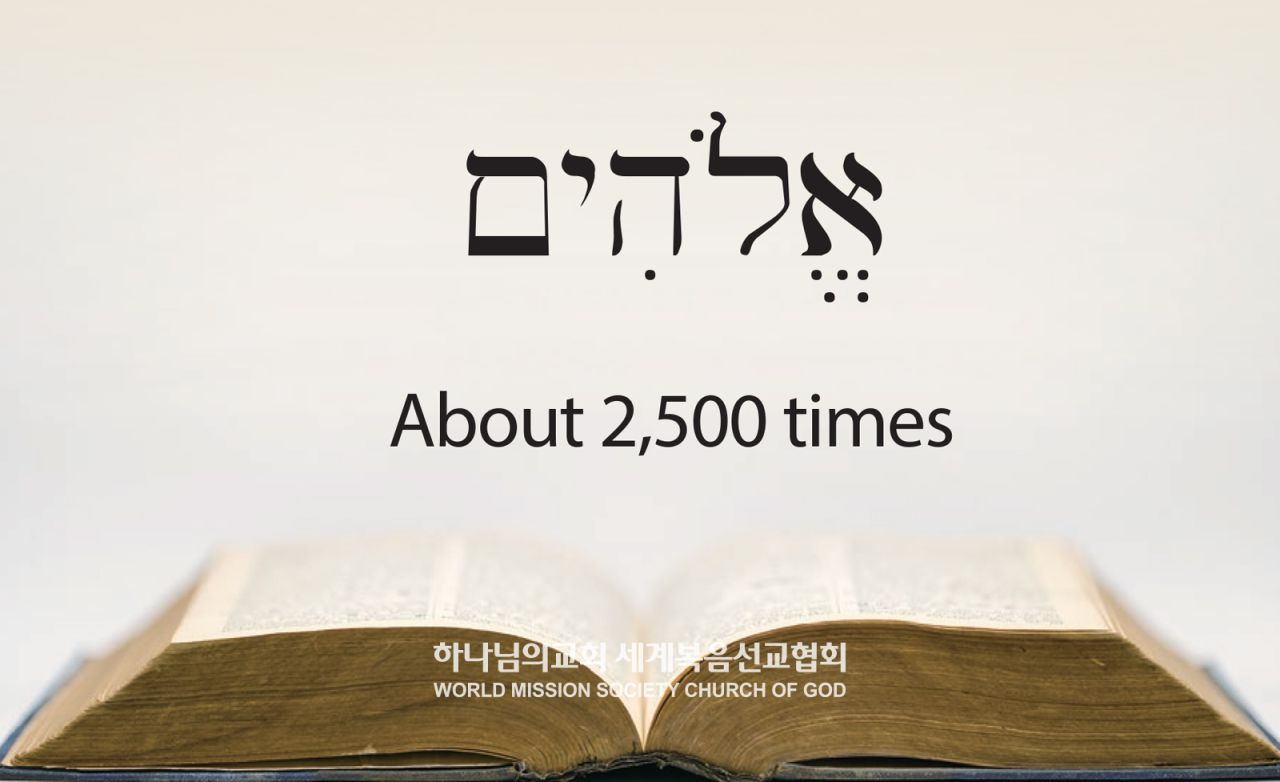

La existencia de Dios Madre se encuentra desde el capítulo 1 del libro de Génesis. El primer capítulo de la Biblia comienza con: “En el principio creó Dios los cielos y la tierra”. La Biblia, que fue escrita por primera vez en hebreo, registra Elohim como Dios en este versículo.[4] Elohim (אֱלֹהִים) es un término plural del sustantivo singular Eloah (אֱלוֹהַּ) que significa Dios (dios) o deidad. El sufijo plural -im (ים ) lo convierte en un sustantivo plural que significa Dioses (dioses) or deidades. La palabra Elohim se escribió más de 2500 veces en el Antiguo Testamento. No es una coincidencia ni error ortográfico que Dios sea descrito como el sustantivo plural Elohim. El Creador es Dioses, no un Dios.
Varón y hembra fueron creados a imagen de Dios


La razón por la cual Dios el Creador fue escrito como el sustantivo plural Elohim se encuentra en Génesis 1:26-28.
Entonces dijo Dios: Hagamos al hombre a nuestra imagen, conforme a nuestra semejanza […]. Y creó Dios al hombre a su imagen, a imagen de Dios lo creó; varón y hembra los creó.
When He created man, God said, “Let us make man in our image, in our likeness,” and made male and female. If there is only God the Father, human beings created in the image of God should only be males. The creation of humans in two images, male and female, according to the image of God clearly proves that there are male and female images of God. The plural pronouns “us” and “our” used in referring to God, instead of “me” and “my” also verify that God the Creator is not one but two.
God the Mother Testified by All Creation
The Bible testifies that God’s invisible power and divine nature are clearly seen in all creatures, and that people understand them from what has been made.[5][6] All living things in this world have something in common—they have a father and a mother and receive life from their mother. The reason God created living things through this providence is to reveal the existence of God the Mother, who gives eternal life.
Heavenly Father and Heavenly Mother
God testified straightforwardly in the Bible about God the Father and God the Mother.
“This, then, is how you should pray: ‘Our Father in heaven, hallowed be your name.’ ”
But the Jerusalem that is above is free, and she is our mother.
From the words “our Father” and “our Mother,” “our” refers to God’s children who will be saved. God’s children have Heavenly Father and Heavenly Mother.[7]
The Spirit and the Bride
In Revelation 22:17, the last chapter of the Bible, it is written that the Spirit and the Bride give the water of life. The Bible says that only God can give the water of life.[8] In the light of Trinity, the Spirit refers to God the Father, who is the same God with Jehovah and Jesus. Apostle John said that the Bride who gives the water of life along with the Spirit is the wife of the Lamb. Since the Lamb is Jesus Christ, the wife of the Lamb is the wife of God the Father. Apostle John described the wife of the Lamb as the Holy City Jerusalem coming down out of heaven from God.[9] Apostle Paul too testified that “the Jerusalem that is above is free, and she is our mother.”[2] Therefore, the prophecy that the Spirit and the Bride will give the water of life means that God the Father and God the Mother will give the water of life to all mankind.
Heavenly Family and God the Mother
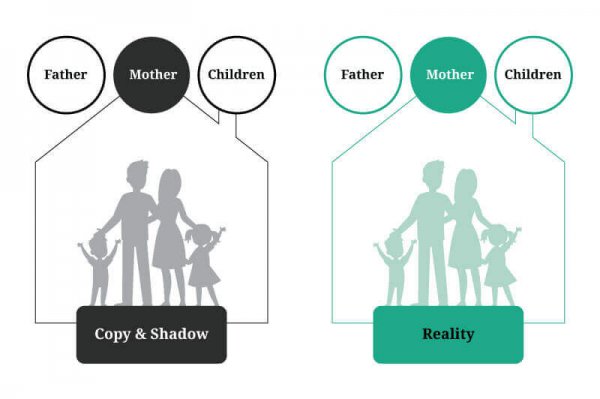

The Bible tells us that God is the Father[1] and the Mother of our spirits,[2] and we are God’s children.[10] Father, mother, and children are the titles used at home. The titles of Heavenly Father, Heavenly Mother, and God’s children prove that there is a spiritual family, a community of eternal love, just as a family on this earth is a community of love. Just as the family members on the earth are related by blood, the family members in heaven are also related by God’s blood through the Passover.
God the Mother in the Heavenly Wedding Banquet
Jesus Christ implied the existence of God the Mother through the parable of the wedding banquet about 2,000 years ago. He likened the kingdom of heaven to a wedding banquet, in Matthew 22.[11] In the parable, the king who held the wedding banquet represents God, and the bridegroom represents Jesus, who came as the Son. The guests who are invited to the wedding banquet represent the saints, who are called by God. A wedding banquet cannot be held only with the bridegroom and guests. In order for a wedding banquet to be held, the bride must be present. Two thousand years ago, however, the bride did not appear. In the parable, there were the bridegroom and guests, but not the bride. As the kingdom of heaven is likened to a wedding banquet, the bride must appear in due time. Apostle John saw a revelation of the bride appearing in due time, and recorded it in the book of Revelation.
“For the wedding of the Lamb has come, and his bride has made herself ready. . . . ‘Blessed are those who are invited to the wedding supper of the Lamb.’ ”
Finally, all the participants—the bridegroom, the bride, and the invited guests—appear in Revelation 19. In Revelation 21, the Bride, the wife of the Lamb, is called the Holy City Jerusalem coming down out of heaven.[9] The Lamb is not a real lamb but represents Jesus Christ. Jerusalem coming down out of heaven represents the Bride. The reality of the Bride who is represented as the heavenly Jerusalem is found in the book of Galatians.
But Jerusalem that is above is free, and she is our mother.
The Bridegroom at the heavenly wedding banquet is the Lamb, our Father; and the Bride, Heavenly Jerusalem, is our Mother. As the Bible says that the kingdom of heaven is like a wedding banquet and that the invitees are blessed, those who know this secret and receive Heavenly Father and Heavenly Mother can attend the heavenly wedding banquet and receive salvation.
The Rest of the Woman’s Offspring
The Bible prophesies that the dragon (devil)[12] will make war against the rest of the woman’s offspring.[13] The secret about the woman and her offspring who are fighting against the dragon is found from the Garden of Eden in the book of Genesis.
“And I will put enmity between you and the woman, and between your offspring and hers; he will crush your head, and you will strike his heel.”
In Genesis 3, it says that the serpent and the woman will become enemies; and in Revelation 12, it records that the ancient serpent called the devil will make war against the rest of the woman’s offspring. Therefore, the woman who will fight against the dragon corresponds to Eve, the wife of Adam, according to Genesis 3. Since Revelation 12 is a prophecy about what will take place in the last days after the Dark Ages, the woman in Revelation 12 is not Eve who was expelled from Eden.
Apostle Paul testified that as there is the first man, Adam, there is the last Adam.[14] Just as there is the last Adam, the reality of the first man Adam, there must also be the last Eve, the reality of Adam’s wife. The last Adam and the last Eve are described as the Lamb and His bride in Revelation 19,[15] and were also expressed as the Lamb and His wife in chapter 21,[9] and the Spirit and the Bride, who give the water of life in chapter 22.[16] Since the last Adam is Second Coming Christ, the spiritual Father[17] in the book of Revelation, the last Eve, His wife, is the spiritual Mother. Those who stand on God’s side and win the spiritual war against Satan in the last days and enter the kingdom of heaven, are the rest of the woman’s offspring, namely, the children of Heavenly Mother.
In the book of Genesis, Adam named his wife Eve, and Eve became the mother of all the living.[18] The name Eve means living. God the Creator made all living things to be borne by receiving life from their mothers, which shows that God’s salvation for the living will be completed when those who are to be saved receive eternal life from God the Mother.
God the Mother of Love
Mother’s Love for Her Children


There is a Jewish proverb: "God could not be everywhere, and therefore he made mothers.” It does not mean that God made mothers because He did not have the ability to be omnipresent, but it means that mother's love for her children is so infinite that she can exert her superhuman power for her children like God.
In The Story of a Mother by Hans Christian Andersen, the mother sheds blood after accepting the thorn-bush’s request of embracing it in order to find her lost son. She also exchanges her fine hair for the old woman’s gray hair. She even gives her eyes to the god of a lake. No one would think that a mother’s love was exaggerated in this story. It is because everyone agrees that a mother lavishes her love upon her children.
Mothers only care about their children even in extreme situations. It is true across the ages and in all countries of the world. When a magnitude-7.0 earthquake occurred in central Armenia in December 1988,[19] a mother named Susanna Petrosyan was trapped in the collapsed building with her four-year-old daughter. Susanna pierced her finger with a piece of glass and gave her blood to her thirsty daughter. The young daughter could endure the cold and hunger thanks to her mother’s love, and they both were rescued dramatically. Susanna said in an interview, “I thought I was going to die, but I wanted my daughter to survive.”[20]
In the 2008 earthquake in Sichuan, China,[21] a mother was found in a pile of soil, tightly embracing her child.[22] When a fire started in an apartment in South Korea, a mother blocked the fire with her whole body to death to save her five-year-old son.[23] In general, people instinctively protect themselves first when they encounter danger. However, mothers put their children's safety before theirs. Even after giving birth to their children, mothers do not spare their one and only life for their children. The greatest love that humans have is mother’s love for her children.
God the Mother’s Love Towards All Humanity
We feel emotional and choked up just by calling mother. This is because of her sacrificial love for us. All things were created by God’s will,[24][6] and the earthly things are a copy and shadow that awakens us to the heavenly things.[25] Human mothers’ great love for their children enables us to understand God the Mother’s love for all mankind.
The new covenant emphasizes that God is love.[26][27] It is not until we realize the great love of God the Father and God the Mother, who spare no sacrifice and love for Their children, that we can fully understand the new covenant. Just as children cannot love their parents first, we cannot love God first; God has always loved us first.[28] God has constantly loved us and kept us as the apple of His eye even when we didn’t know God. God’s love did not stop even when His children came down to this earth after having sinned in heaven. The Bible prophesies that the Bride, who is represented as the heavenly Jerusalem,[29][9] will give the water of life and that Her children will be comforted in Her.
"Rejoice with Jerusalem and be glad for her, all you who love her; rejoice greatly with her, all you who mourn over her. For you will nurse and be satisfied at her comforting breasts; you will drink deeply and delight in her overflowing abundance." For this is what the LORD says: "I will extend peace to her like a river, and the wealth of nations like a flooding stream; you will nurse and be carried on her arm and dandled on her knees. As a mother comforts her child, so will I comfort you; and you will be comforted over Jerusalem."
God the Mother, who came to this earth according to the prophecy, gives eternal life to Her children who repent and return to Her. The birth of life is a happy event, but mother’s pain is accompanied in the process. There is nothing more joyful than receiving eternal life. This joy, too, is followed by God the Mother’s pain and devotion. When we were little children, we did not know how much our mothers were making efforts for us. But when we grow up, we realize it and thank them. Likewise, mature heavenly children know God the love and sacrifice of Mother, and have faith good enough to give thanks and glory to Her.
“ I’ve realized the boundless love of Mother. Though we made many mistakes in the past, Mother warmly welcomed us. To those who want to feel and know God the Mother’s love, I would like to say, “Go to Korea. If you meet Mother, you will realize the love and sacrifice of Father and Mother. “ — From an interview of the 39th Overseas Visiting Group[30]
Related videos
- Sermon: God the Father & God the Mother
- If we have God the Father, then why don’t we have God the Mother?
See also
- The Spiritual Home and Heavenly Mother
- Jerusalem Mother
- The History of Abraham’s Family
- God the Father
External links
- Church of God Official Website
- Church of God Official YouTube
- WATV Media Cast
- Come to Heavenly Mother
References
- ↑ 1,0 1,1 «Mateo 6:9».
- ↑ 2,0 2,1 2,2 «Gálatas 4:26».
- ↑ Iglesia de Dios Sociedad Misionera Mundial - El 55.º aniversario de su fundación abre la era de los 3 millones de miembros, Revista mensual Shindonga, junio de 2019
- ↑ «Génesis 1:1». Biblehub.com. «אֱלֹהִים ».
- ↑ «Romans 1:18–20».
- ↑ 6,0 6,1 «Revelation 4:11».
- ↑ «The Holy Spirit and the Bride». WATV.org.
- ↑ «Revelation 21:6».
- ↑ 9,0 9,1 9,2 9,3 «Revelation 21:9–10».
- ↑ «2 Corinthians 6:17–18».
- ↑ «Matthew 22:1–14».
- ↑ «Revelation 12:9».
- ↑ «Revelation 12:17».
- ↑ «1 Corinthians 15:45».
- ↑ «Revelation 19:7».
- ↑ «Revelation 22:17».
- ↑ «Romans 5:12–19».
- ↑ «Genesis 3:20».
- ↑ «The forgotten survivors of the Gyumri earthquake». Al jazeera. December 7, 2017.
- ↑ John-Thor Dahlburg (December 29, 1988). «Trapped Woman Gave Daughter Her Blood to Keep Her Alive». AP News.
- ↑ «Sichuan earthquake of 2008 China». Britannica.
- ↑ «Power of their mothers' love». China Daily. 18 de mayo de 2008.
- ↑ «Mother Goes to Heaven after Saving Her Son from Fire». YTN. January 24, 2015.
- ↑ «Romans 1:20».
- ↑ «Hebrews 8:5».
- ↑ «John 13:34».
- ↑ «1 John 4:7–8».
- ↑ «1 John 4:19».
- ↑ «Revelation 22:17».
- ↑ «Mother is Surely Love [Japan] 39th Overseas Visiting Group». WATV News. February 11, 2010.