Diferencia entre revisiones de «La regla del velo»
Sin resumen de edición |
|||
| Línea 60: | Línea 60: | ||
</gallery> | </gallery> | ||
La tiara papal era usada por el papa en una ceremonia como la coronación. Sin embargo, no ha sido usada después de la coronación del papa Pablo VI en 1963.<ref>{{cita web|url= https://www.lastampa.it/vatican-insider/en/2011/07/16/news/the-pope-and-the-papal-tiara-s-symbolic-power-1.36956948/ |título=The Pope and the Papal Tiara's symbolic power|editorial=|sitioweb=LA STAMPA|fecha=|autor=}}</ref> La mitra es un tocado alto y puntiagudo.<ref>{{cita web|url= https://dictionary.cambridge.org/ko/%EC%82%AC%EC%A0%84/%EC%98%81%EC%96%B4/mitre|título=mitre|editorial=|sitioweb=Cambridge Dictionary|fecha=|autor=}}</ref> In Latin, it is called ''mitra.''<ref>{{cita web|url=https://www.catholic.com/magazine/print-edition/miters#:~:text=The%20word%20miter%20(or%20mitre)%20in%20English%20is%20derived%20directly%20from%20the%20Greek%20and%20Latin%20word%C2%A0mitra%2C%20meaning%20crown.|título=Miters|editorial= |sitioweb=Catholic Answers|fecha=March 1, 1992|autor=}}</ref> A zucchetto is a hemisphere-shaped skullcap called Pileolus.<ref>{{cita web|url=https://www.catholicculture.org/culture/library/dictionary/index.cfm?id=37238&randomterm=false|título=ZUCCHETTO|editorial=|sitioweb=Catholic Culture|fecha=|autor=}}</ref> | La tiara papal era usada por el papa en una ceremonia como la coronación. Sin embargo, no ha sido usada después de la coronación del papa Pablo VI en 1963.<ref>{{cita web|url= https://www.lastampa.it/vatican-insider/en/2011/07/16/news/the-pope-and-the-papal-tiara-s-symbolic-power-1.36956948/ |título=The Pope and the Papal Tiara's symbolic power|editorial=|sitioweb=LA STAMPA|fecha=|autor=}}</ref> La mitra es un tocado alto y puntiagudo.<ref>{{cita web|url= https://dictionary.cambridge.org/ko/%EC%82%AC%EC%A0%84/%EC%98%81%EC%96%B4/mitre|título=mitre|editorial=|sitioweb=Cambridge Dictionary|fecha=|autor=}}</ref> In Latin, it is called ''mitra.''<ref>{{cita web|url=https://www.catholic.com/magazine/print-edition/miters#:~:text=The%20word%20miter%20(or%20mitre)%20in%20English%20is%20derived%20directly%20from%20the%20Greek%20and%20Latin%20word%C2%A0mitra%2C%20meaning%20crown.|título=Miters|editorial= |sitioweb=Catholic Answers|fecha=March 1, 1992|autor=}}</ref> A zucchetto is a hemisphere-shaped skullcap called Pileolus.<ref>{{cita web|url=https://www.catholicculture.org/culture/library/dictionary/index.cfm?id=37238&randomterm=false|título=ZUCCHETTO|editorial=|sitioweb=Catholic Culture|fecha=|autor=}}</ref> El bonete es un gorro cuadrangular con tres o cuatro picos, tradicionalmente usado por el clero católico romano; a veces un bonete lleva por encima un penacho o borla.<ref>{{cita web|url=https://www.catholicculture.org/culture/library/dictionary/index.cfm?id=32182&randomterm=false|título=BIRETTA|editorial=|sitioweb=Catholic Culture|fecha=|autor=}}</ref> De hecho, un bonete puede tener tres o cuatro plumas encima. Además, el color del bonete varía de acuerdo con el rango.<ref>{{cita web|url= https://books.google.co.kr/books?id=uqJixgEACAAJ&pg=PA69&source=gbs_toc_r&cad=2#v=onepage&q&f=false|título=Origins of Catholic Words: A Discursive Dictionary|editorial=|sitioweb=The Catholic University of America Press|fecha=24 de enero de 2020|autor=Anthony Lo Bello}}</ref> El galero es un sombrero rojo de ala ancha con cuerdas teseladas utilizadas por los cardenales católicos romanos.<ref>{{cita web|url=https://www.merriam-webster.com/dictionary/galero|título=GALERO|editorial=|sitioweb=Merriam Webster Dictionary|fecha=|autor=}}</ref><br>La Iglesia ortodoxa de oriente tiene aspectos similares a los de la Iglesia católica romana. Las miembros usan un velo en la cabeza cuando están en la misa, y el obispo se pone una mitra adornada con la cruz y símbolos (dibujos o símbolos santos).<ref>{{cita web|url=https://www.nst.com.my/opinion/columnists/2022/01/765262/old-believers-making-comeback-russia |título=Old Believers making a comeback in Russia|editorial=|sitioweb=NEW STRAITS TIMES |fecha=23 de enero de 2022|autor=|cita= }}</ref><ref>{{cita web|url= https://www.rbth.com/lifestyle/331402-women-russican-church-head-cover | ||
|título=Why do women cover their heads in Orthodox churches?|editorial=|sitioweb=Russia Beyond|fecha= | |título=14. Why do women cover their heads in Orthodox churches? (Por qué las mujeres se cubren la cabeza en las iglesias ortodoxas)|editorial=|sitioweb=Russia Beyond|fecha=11 de diciembre de 2019|autor=|cita=}}</ref><ref>{{cita web|url=https://www.catholicregister.org/faith/item/21714-pope-russian-orthodox-patriarch-to-meet-in-cuba-vatican-announces|título=Pope, Russian Orthodox patriarch to meet in Cuba, Vatican announces|sitioweb=The Catholic Register |fecha=5 de febrero de 2016|cita=}}</ref><ref>988 Vladimir Adopts Christianity, Christian History Issue #28, ''Christian History Institute'', 1990</ref> | ||
=== | === Iglesias protestantes === | ||
No hay muchas denominaciones protestantes que confirmen el uso del velo o lo practiquen. Los Hermanos de Plymouth, cuya sede central está en Plymouth, Inglaterra, son conocidos como una denominación que reconoce la regla del velo.<ref>{{cita web|url= https://plymouthbrethren.org/article/443|título=The Head Covering―A Biblical Perspective―The True Women's Lib|editorial=|sitioweb=Plymouth brethren Writings|fecha=|autor=J Boyd Nicholson Sr.|cita=}}</ref> Entre los anabaptistas en los Estados Unidos, los menonitas hacen que las mujeres usen sombreros con forma de bonete o velos, basados en 1 Corintios 11, pero dejan que cada uno decida.<ref>{{cita web|url=https://www.themennonitemom.com/post/difference-between-amish-and-mennonites|título=about the Amish and Mennonites|sitioweb=The Mennonite mom| quote= |fecha=4 de abril de 2019}}</ref> Las amish, como parte de los menonitas, mantienen el cabello largo y siempre se ponen una capota en la cabeza.<ref>Why do Amish men have beards but no mustaches?, ''All about the Amish: Answers to Common Questions''(¿Por qué los hombres amish tienen barba y no bigotes? Todo sobre los amish: Responder las preguntas comunes), 2 de marzo de 2021</ref> | |||
== The Church of God Keeps the Regulation of Veil == | == The Church of God Keeps the Regulation of Veil == | ||
Revisión del 09:57 16 ago 2023
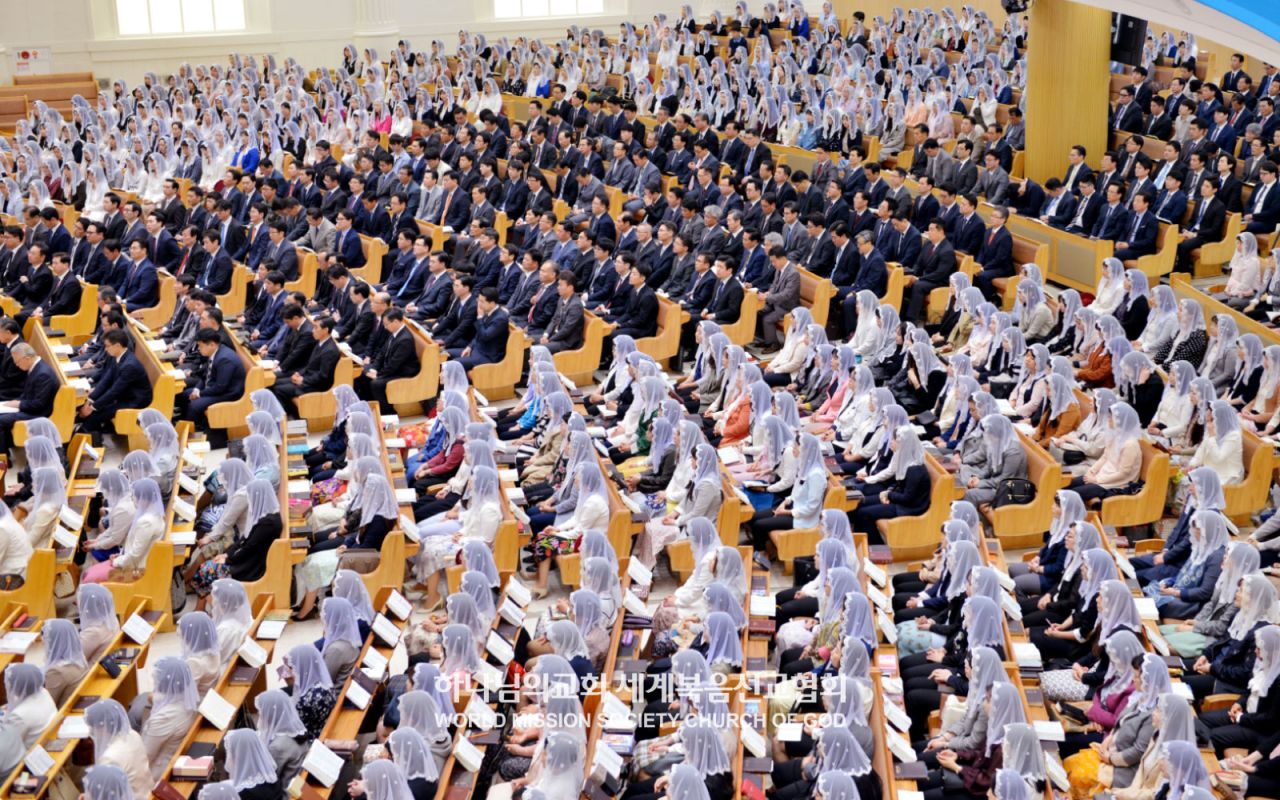

La regla del velo es una regla que los santos deben guardar cuando rinden culto u oran a Dios, y se menciona en 1 Corintios 11. El punto principal es que el varón no usa nada sobre su cabeza y la mujer usa el velo. En la carta enviada a la iglesia de Corinto, el apóstol Pablo explicó la regla del velo y su significado, basándose en las enseñanzas de Cristo. Él enfatizó que todas las iglesias deben guardar la regla del velo, a través de la providencia de la creación de Dios y la naturaleza dada a los hombres.
Enseñanzas sobre el velo
Al conocer a un rey o presidente de un país, hay cierta etiqueta que los invitados deben seguir. Del mismo modo, existen leyes y reglas en la Biblia para orar y rendir culto al santo Dios. La regla del velo es una de estas.
Miembros varones
“Pero quiero que sepáis que Cristo es la cabeza de todo varón, y el varón es la cabeza de la mujer, y Dios la cabeza de Cristo. Todo varón que ora o profetiza con la cabeza cubierta, afrenta su cabeza.”
La Biblia enseña que la cabeza del varón es Cristo, y que si pone algo sobre su cabeza y ora, la deshonra. En otras palabras, es un acto de deshonra a Dios. El varón no debe cubrirse la cabeza cuando ora o rinde culto.
Miembros mujeres
“Pero toda mujer que ora o profetiza con la cabeza descubierta, afrenta su cabeza; porque lo mismo es que si se hubiese rapado. Porque si la mujer no se cubre, que se corte también el cabello; y si le es vergonzoso a la mujer cortarse el cabello o raparse, que se cubra.”
La Biblia dice que la mujer debe raparse si quiere orar sin un velo sobre su cabeza. Pero no quiere decir que realmente se rape, sino que enfatiza que la mujer debe usar el velo. Las mujeres deben cubrirse la cabeza durante la oración o el culto.
Razones de la regla del velo
El apóstol Pablo mencionó el orden de la iglesia y los temas relacionados conforme al ejemplo de Cristo, en su primera carta a los santos de Corinto (libro de 1 Corintios). En el capítulo 11, explicó la regla del velo. En el tiempo de la iglesia de Corinto, algunas mujeres insistieron en la igualdad de género e intentaron quitarse el velo durante el culto. El apóstol Pablo trató de corregir esto explicando las enseñanzas de Jesucristo y el significado de usar el velo.
Las enseñanzas de Cristo
“Sed imitadores de mí, así como yo [apóstol Pablo] de Cristo.”
El apóstol Pablo enfatizó que todo lo que predicaba era según el ejemplo de Jesucristo, antes de explicar la regla del velo. Esto significa que la regla del velo es una enseñanza clara de Cristo.
La providencia de la creación de Dios
“Porque el varón no debe cubrirse la cabeza, pues él es imagen y gloria de Dios; pero la mujer es gloria del varón. Porque el varón no procede de la mujer, sino la mujer del varón, y tampoco el varón fue creado por causa de la mujer, sino la mujer por causa del varón. Por lo cual la mujer debe tener señal de autoridad sobre su cabeza, por causa de los ángeles.”
Cuando Dios creó al hombre, primero hizo a Adán del polvo,[1] y luego tomó su costilla y creó a Eva como su ayuda.[2] Esto muestra el orden establecido por Dios el Creador. El apóstol Pablo explicó que tanto el varón como la mujer son iguales ante Dios,[3] pero de acuerdo con la providencia de la creación de Dios, la mujer debe usar un velo sobre su cabeza.
Enseñanzas de la naturaleza
“Juzgad vosotros mismos: ¿Es propio que la mujer ore a Dios sin cubrirse la cabeza? La naturaleza misma ¿no os enseña que al varón le es deshonroso dejarse crecer el cabello? Por el contrario, a la mujer dejarse crecer el cabello le es honroso; porque en lugar de velo le es dado el cabello.”
El apóstol Pablo enfatizó una vez más que la mujer debía usar un velo, así como es natural y hermoso que una mujer tenga el cabello largo. Dicha naturaleza humana implica que una mujer es hermosa ante los ojos de Dios cuando cubre su cabeza con algo, como tener el cabello largo. La frase “porque en lugar de velo le es dado el cabello”, significa que el cabello largo de una mujer le hace querer usar el velo durante el culto. Algunos la interpretan así: “Si tiene el cabello largo, no necesita usar el velo sobre su cabeza”. Sin embargo, esto contradice las enseñanzas de Cristo de que la mujer debe usar el velo. Además, si el uso del velo dependiera de la longitud del cabello de la mujer, el apóstol Pablo debería haber escrito un estándar definitivo para la longitud del cabello.
“Juzgad vosotros mismos: ¿Es propio que la mujer ore a Dios sin cubrirse la cabeza? […] Con todo eso, si alguno quiere ser contencioso, nosotros no tenemos tal costumbre, ni las iglesias de Dios.”
“Pero si alguien quiere discutir este tema, simplemente digo que no tenemos otra costumbre más que esa, y tampoco la tienen las demás iglesias de Dios.”
- 1 Corintios 1:16, GNT
El apóstol Pablo afirmó que no existe la costumbre o regla de que la mujer ore sin un velo sobre su cabeza en la Iglesia de Dios. Y declaró firmemente que esta regla aplicaba no solo a la Iglesia de Dios de Corinto, sino también a todas las iglesias de Dios.
Subtítulos y descripciones de 1 Corintios 11
Subtítulos de traducciones de la Biblia
Hay traducciones de la Biblia que se han dividido en párrafos para facilitar la comprensión del contenido, y tienen subtítulos para cada tema. En dichas traducciones, el subtítulo de 1 Corintios 11 se refiere a que la mujer debe cubrirse la cabeza. Esto muestra que 1 Corintios 11 se enfoca en el asunto del velo de la mujer durante la oración o los cultos. La siguiente tabla muestra los subtítulos de 1 Corintios 11, que están escritos en algunas traducciones de la Biblia:
| Traducción en español | Editor | Subtítulo |
|---|---|---|
| Nueva Versión Internacional | Biblica, Inc. | Decoro en el culto |
| Nueva Traducción Viviente | Tyndale House Foundation | Instructions for Public Worship |
| La Palabra (España) | Sociedad Bíblica de España | El velo de las mujeres |
Situación por denominación
Iglesia católica
En la Iglesia católica romana, las miembros usan un velo llamado “mantilla”, pero no es observado estrictamente.[4][5] Los miembros (pontífice, cardenal, arzobispo, obispo) usan varios tipos de sombreros en la cabeza. Tienen una tiara papal, mitra, solideo, bonete, galero, etc.
-
 Tiara papal
 -
 Mitra
Mitra -
 Solideo
 -
 Bonete
 -
 Galero

.jpg)


_M%C3%A9tropole_Saint-Pierre_Vo%C3%BBtes_56.jpg)
La tiara papal era usada por el papa en una ceremonia como la coronación. Sin embargo, no ha sido usada después de la coronación del papa Pablo VI en 1963.[6] La mitra es un tocado alto y puntiagudo.[7] In Latin, it is called mitra.[8] A zucchetto is a hemisphere-shaped skullcap called Pileolus.[9] El bonete es un gorro cuadrangular con tres o cuatro picos, tradicionalmente usado por el clero católico romano; a veces un bonete lleva por encima un penacho o borla.[10] De hecho, un bonete puede tener tres o cuatro plumas encima. Además, el color del bonete varía de acuerdo con el rango.[11] El galero es un sombrero rojo de ala ancha con cuerdas teseladas utilizadas por los cardenales católicos romanos.[12]
La Iglesia ortodoxa de oriente tiene aspectos similares a los de la Iglesia católica romana. Las miembros usan un velo en la cabeza cuando están en la misa, y el obispo se pone una mitra adornada con la cruz y símbolos (dibujos o símbolos santos).[13][14][15][16]
Iglesias protestantes
No hay muchas denominaciones protestantes que confirmen el uso del velo o lo practiquen. Los Hermanos de Plymouth, cuya sede central está en Plymouth, Inglaterra, son conocidos como una denominación que reconoce la regla del velo.[17] Entre los anabaptistas en los Estados Unidos, los menonitas hacen que las mujeres usen sombreros con forma de bonete o velos, basados en 1 Corintios 11, pero dejan que cada uno decida.[18] Las amish, como parte de los menonitas, mantienen el cabello largo y siempre se ponen una capota en la cabeza.[19]
The Church of God Keeps the Regulation of Veil
In the World Mission Society Church of God, men wear nothing on their heads and women wear veils on their heads during worship according to the teachings of the Bible. The Church of God has restored the truth of the new covenant, which Jesus Christ preached and the apostles kept 2,000 years ago, and so the church keeps the regulation of women’s veil as a part of the regulations of the early Church.[20] The church teaches that the regulations of women’s veil is established and proclaimed by God, not made up by men.[21]
“ The Church of God strongly believes that they practice the teachings of the Bible. They believe in God the Father and God the Mother according to the Bible, and keep all the seven feasts, including the New Covenant Passover, the Sabbath, the regulation of wearing a veil, and so on, just like the original Church of God 2,000 years ago. “ — Monthly JoongAng, December 2017 [22]
“ ― Is it also a teaching of the Bible that women wear a veil on their heads during worship? “As I mentioned earlier, our faith is based on the Bible. The Bible teaches that men do not cover their heads but women do during worship. That is the way the early Church did. 1 Corinthians 11 records the regulations of veil in detail. Unfortunately, as 2,000 years have passed by, in this day and age many churches today go against the teachings of the Bible even from this small point; women do not cover their heads during worship, or male priests put something on their heads to hold mass. If Apostles Peter, John, and Paul come in this age and see the situation, they will surely say that the only church the same as theirs is the Church of God.”
“ — Monthly Chosun, March 2020 [23]
In the Church of God around the world, regardless of location, male members wear nothing on their heads and female members wear veils on their heads.
Related videos
- The Church of God Members Wear Veils During Worship
See also
References
- ↑ «Génesis 2:7».
- ↑ «Génesis 2:21–23».
- ↑ «1 Corintios 11:11–12».
- ↑ «Veil, Religious». Catholic Culture.
- ↑ «What Happened to Mantillas? (¿Qué le pasó a la mantilla?)». Catholic Answers.
- ↑ «The Pope and the Papal Tiara's symbolic power». LA STAMPA.
- ↑ «mitre». Cambridge Dictionary.
- ↑ «Miters». Catholic Answers. March 1, 1992.
- ↑ «ZUCCHETTO». Catholic Culture.
- ↑ «BIRETTA». Catholic Culture.
- ↑ Anthony Lo Bello (24 de enero de 2020). «Origins of Catholic Words: A Discursive Dictionary». The Catholic University of America Press.
- ↑ «GALERO». Merriam Webster Dictionary.
- ↑ «Old Believers making a comeback in Russia». NEW STRAITS TIMES. 23 de enero de 2022.
- ↑ «14. Why do women cover their heads in Orthodox churches? (Por qué las mujeres se cubren la cabeza en las iglesias ortodoxas)». Russia Beyond. 11 de diciembre de 2019.
- ↑ «Pope, Russian Orthodox patriarch to meet in Cuba, Vatican announces». The Catholic Register. 5 de febrero de 2016.
- ↑ 988 Vladimir Adopts Christianity, Christian History Issue #28, Christian History Institute, 1990
- ↑ J Boyd Nicholson Sr. «The Head Covering―A Biblical Perspective―The True Women's Lib». Plymouth brethren Writings.
- ↑ «about the Amish and Mennonites». The Mennonite mom. 4 de abril de 2019.
- ↑ Why do Amish men have beards but no mustaches?, All about the Amish: Answers to Common Questions(¿Por qué los hombres amish tienen barba y no bigotes? Todo sobre los amish: Responder las preguntas comunes), 2 de marzo de 2021
- ↑ «[Special Feature ● Luther's 500 Years of Religious Reformation – Church of God and Truth in the Bible] What are they believing and practicing?». Monthly JoongAng. November 17, 2017.
- ↑ Joo Cheol Kim, Covenant and Commandment, Melchizedek Pub. Co., Ltd
- ↑ «[Special Feature ● Luther's 500 Years of Religious Reformation - Church of God and Truth in the Bible] 2.7 Million World Mission Society Church of God Saints' 'Grand Chorus'». Monthly JoongAng. November 17, 2017.
- ↑ «[Religious Tour Interview] World Mission Sociey Church of God General Pastor Joo-Cheol Kim». Monthly Chosun. March 2020.