Gospel: Difference between revisions
No edit summary |
No edit summary |
||
| (14 intermediate revisions by 2 users not shown) | |||
| Line 1: | Line 1: | ||
{{그림 |예수님과 제자들.jpg|너비= 260px |정렬=오른쪽섬네일 |타이틀=Jesus preached the gospel for three years during His ministry.}} | <!-- interlanguage:start -->[[ko:복음]][[vi:Tin Lành]][[es:El evangelio]][[ne:सुसमाचार]][[pt:Evangelho]]<!-- interlanguage:end -->{{그림 |예수님과 제자들.jpg|너비= 260px |정렬=오른쪽섬네일 |타이틀=Jesus preached the gospel for three years during His ministry.}} | ||
'''Gospel''' (Greek: ''εὐαγγέλιον, Euangelion'')<ref>{{Cite web |url=https://www.billmounce.com/greek-dictionary/euangelion |title=εὐαγγέλιον |website=Greek Dictionary |publisher= |date= |year= |author=Bill Mounce |page= |series= |isbn= |quote= }}</ref> literally means “good news.” Specifically, it refers to the '''truth that Jesus taught and set an example of on the earth'''.<ref name=":32">{{Cite web |url=https://www.biblegateway.com/passage/?search=Matthew+24%3A14+&version=NIV |title=Matthew 24:14 |publisher= }}</ref><ref name="마 28장2">{{Cite web |url=https://www.biblegateway.com/passage/?search=Matthew+28%3A18-20&version=NIV |title=Matthew 28:18–20 |publisher= }}</ref> Broadly speaking, it can be said that the [[The Old Testament|Old Testament]] is the gospel, too, because it is the word of blessing for the people of God. However, the gospel in the [[The New Testament|New Testament]] began when Jesus was baptized by John. The core truth of the gospel is the [[New Covenant Passover]], which frees mankind from slavery to sin and death.<ref name=":82">{{Cite web |url=https://www.biblegateway.com/passage/?search=John+8%3A32-34&version=NIV |title=John 8:32–34 |publisher= }}</ref> | '''Gospel''' (Greek: ''εὐαγγέλιον, Euangelion'')<ref>{{Cite web |url=https://www.billmounce.com/greek-dictionary/euangelion |title=εὐαγγέλιον |website=Greek Dictionary |publisher= |date= |year= |author=Bill Mounce |page= |series= |isbn= |quote= }}</ref> literally means “good news.” Specifically, it refers to the '''truth that Jesus taught and set an example of on the earth'''.<ref name=":32">{{Cite web |url=https://www.biblegateway.com/passage/?search=Matthew+24%3A14+&version=NIV |title=Matthew 24:14 |publisher= }}</ref><ref name="마 28장2">{{Cite web |url=https://www.biblegateway.com/passage/?search=Matthew+28%3A18-20&version=NIV |title=Matthew 28:18–20 |publisher= }}</ref> Broadly speaking, it can be said that the [[The Old Testament|Old Testament]] is the gospel, too, because it is the word of blessing for the people of God. However, the gospel in the [[The New Testament|New Testament]] began when Jesus was baptized by John. The core truth of the gospel is the [[The New Covenant Passover|New Covenant Passover]], which frees mankind from slavery to sin and death.<ref name=":82">{{Cite web |url=https://www.biblegateway.com/passage/?search=John+8%3A32-34&version=NIV |title=John 8:32–34 |publisher= }}</ref> | ||
==Meaning of the Gospel== | ==Meaning of the Gospel== | ||
The gospel which Jesus preached is the blessed and good news because it contains the way to the [[Heaven|kingdom of heaven]]. Therefore, the gospel of [[Jesus Christ]] is also called the “[[Gospel of the Kingdom|gospel of the kingdom]].” | The gospel which Jesus preached is the blessed and good news because it contains the way to the [[Kingdom of Heaven|kingdom of heaven]]. Therefore, the gospel of [[Jesus Christ]] is also called the “[[Gospel of the Kingdom|gospel of the kingdom]].” | ||
The [[Bible]] says that all humans are sinners who sinned and were cast down from heaven, and the wages of their sins is death.<ref>{{Cite web |url=https://www.biblegateway.com/passage/?search=Romans+3%3A9-10&version=NIV |title=Romans 3:9–10 |publisher= |quote=}}</ref><ref>{{Cite web |url=https://www.biblegateway.com/passage/?search=Romans+6%3A23&version=NIV |title=Romans 6:23 |publisher= |quote= }}</ref> Thus, Jesus Himself came in the flesh to save mankind for the sins deserving of the death penalty.<ref name="왕상 20장2">{{Cite web |url=https://www.biblegateway.com/passage/?search=1+Kings+20%3A42&version=NIV |title=1 Kings 20:42 |publisher= |quote= }}</ref><ref name=":02">{{Cite web |url=https://www.biblegateway.com/passage/?search=John+1%3A23-34&version=NIV |title=John 1:23–34 |publisher= |quote= }}</ref> | The [[Bible]] says that all humans are sinners who sinned and were cast down from heaven, and the wages of their sins is death.<ref>{{Cite web |url=https://www.biblegateway.com/passage/?search=Romans+3%3A9-10&version=NIV |title=Romans 3:9–10 |publisher= |quote=}}</ref><ref>{{Cite web |url=https://www.biblegateway.com/passage/?search=Romans+6%3A23&version=NIV |title=Romans 6:23 |publisher= |quote= }}</ref> Thus, Jesus Himself came in the flesh to save mankind for the sins deserving of the death penalty.<ref name="왕상 20장2">{{Cite web |url=https://www.biblegateway.com/passage/?search=1+Kings+20%3A42&version=NIV |title=1 Kings 20:42 |publisher= |quote= }}</ref><ref name=":02">{{Cite web |url=https://www.biblegateway.com/passage/?search=John+1%3A23-34&version=NIV |title=John 1:23–34 |publisher= |quote= }}</ref> | ||
| Line 22: | Line 22: | ||
<small>{{참고|Beginning of the Gospel|설명=}}</small> | <small>{{참고|Beginning of the Gospel|설명=}}</small> | ||
==Gospel and New Covenant== | ==Gospel and New Covenant== | ||
The gospel, which Jesus taught and set an example of keeping,<ref>{{Cite web |url=https://www.biblegateway.com/passage/?search=John+13%3A15-17&version=NIV |title=John 13:15–17 |publisher= |quote= }}</ref> is the [[New Covenant|new covenant]]. [[Paul|Apostle Paul]] explained that the gospel is the new covenant by calling himself a worker of the gospel and a worker of the new covenant as well.<ref>{{Cite web |url=https://www.biblegateway.com/passage/?search=Colossians+1%3A23&version=NIV |title=Colossians 1:23 |publisher= |quote= }}</ref><ref>{{Cite web |url=https://www.biblegateway.com/passage/?search=2+Corinthians+3%3A6&version=NIV |title=2 Corinthians 3:6 |publisher= |quote= }}</ref> According to the prophecy of the Old Testament that God would establish the new covenant, Jesus changed the [[Old Covenant|old covenant]],<ref>{{Cite web |url=https://www.biblegateway.com/passage/?search=Jeremiah+31%3A31-33&version=NIV |title=Jeremiah 31:31–33 |publisher= |quote= }}</ref> the law of the Old Testament, into the perfect new covenant,<ref name="마 5장22">{{Cite web |url=https://www.biblegateway.com/passage/?search=Matthew+5%3A17&version=NIV |title=Matthew 5:17 |publisher= |quote= }}</ref> and set an example of keeping the feasts of the new covenant. | The gospel, which Jesus taught and set an example of keeping,<ref>{{Cite web |url=https://www.biblegateway.com/passage/?search=John+13%3A15-17&version=NIV |title=John 13:15–17 |publisher= |quote= }}</ref> is the [[New Covenant|new covenant]]. [[Paul|Apostle Paul]] explained that the gospel is the new covenant by calling himself a worker of the gospel and a worker of the new covenant as well.<ref>{{Cite web |url=https://www.biblegateway.com/passage/?search=Colossians+1%3A23&version=NIV |title=Colossians 1:23 |publisher= |quote= }}</ref><ref>{{Cite web |url=https://www.biblegateway.com/passage/?search=2+Corinthians+3%3A6&version=NIV |title=2 Corinthians 3:6 |publisher= |quote= }}</ref> According to the prophecy of the Old Testament that God would establish the new covenant, Jesus changed the [[The Old Covenant|old covenant]],<ref>{{Cite web |url=https://www.biblegateway.com/passage/?search=Jeremiah+31%3A31-33&version=NIV |title=Jeremiah 31:31–33 |publisher= |quote= }}</ref> the law of the Old Testament, into the perfect new covenant,<ref name="마 5장22">{{Cite web |url=https://www.biblegateway.com/passage/?search=Matthew+5%3A17&version=NIV |title=Matthew 5:17 |publisher= |quote= }}</ref> and set an example of keeping the feasts of the new covenant. | ||
<small>{{참고|Gospel and the New Covenant|설명=}}</small> | <small>{{참고|Gospel and the New Covenant|설명=}}</small> | ||
*'''Baptism''' | *'''Baptism''' | ||
| Line 31: | Line 31: | ||
*'''Sabbath''' | *'''Sabbath''' | ||
{{quote5 |내용=He went to Nazareth, where he had been brought up, and on the Sabbath day he went into the synagogue, as was his custom. And he stood up to read. |출처=[https://www.biblegateway.com/passage/?search=Luke+4%3A16&version=NIV Luke 4:16]}} | {{quote5 |내용=He went to Nazareth, where he had been brought up, and on the Sabbath day he went into the synagogue, as was his custom. And he stood up to read. |출처=[https://www.biblegateway.com/passage/?search=Luke+4%3A16&version=NIV Luke 4:16]}} | ||
:The Sabbath is the commemoration day of the [[Creator]], which originated from the fact that God rested on the seventh day after His [[Six-Day Creation|six-day creation]].<ref>{{Cite web |url=https://www.biblegateway.com/passage/?search=Genesis+2%3A1-3&version=NIV |title=Genesis 2:1–3 |publisher= |quote= }}</ref> It was appointed as the fourth commandment among the [[Ten Commandments]] in the time of [[Moses]].<ref>{{Cite web |url=https://www.biblegateway.com/passage/?search=Exodus+20%3A8-11&version=NIV |title=Exodus 20:8–11 |publisher= |quote= }}</ref> Jesus worshiped on the Sabbath day according to His custom<ref>{{Cite web |url=https://www.biblegateway.com/passage/?search=John+4%3A23&version=NIV |title=John 4:23 |publisher= |quote= }}</ref> and told us to keep it until the end of the age.<ref>{{Cite web |url=https://www.biblegateway.com/passage/?search=Matthew+24%3A20-21&version=NIV |title=Matthew 24:20–21 |publisher= |quote= }}</ref> By doing so, He taught that the Sabbath is a [[Commandments of God|commandment of God]] that must be kept not only in the Old Testament times but also in the New Testament times. | :The Sabbath is the commemoration day of the [[The Creator|Creator]], which originated from the fact that God rested on the seventh day after His [[Six-Day Creation|six-day creation]].<ref>{{Cite web |url=https://www.biblegateway.com/passage/?search=Genesis+2%3A1-3&version=NIV |title=Genesis 2:1–3 |publisher= |quote= }}</ref> It was appointed as the fourth commandment among the [[The Ten Commandments|Ten Commandments]] in the time of [[Moses]].<ref>{{Cite web |url=https://www.biblegateway.com/passage/?search=Exodus+20%3A8-11&version=NIV |title=Exodus 20:8–11 |publisher= |quote= }}</ref> Jesus worshiped on the Sabbath day according to His custom<ref>{{Cite web |url=https://www.biblegateway.com/passage/?search=John+4%3A23&version=NIV |title=John 4:23 |publisher= |quote= }}</ref> and told us to keep it until the end of the age.<ref>{{Cite web |url=https://www.biblegateway.com/passage/?search=Matthew+24%3A20-21&version=NIV |title=Matthew 24:20–21 |publisher= |quote= }}</ref> By doing so, He taught that the Sabbath is a [[The Commandments of God|commandment of God]] that must be kept not only in the Old Testament times but also in the New Testament times. | ||
| Line 37: | Line 37: | ||
{{그림 |최후의 만찬 유월절.jpg|너비= 250px |정렬=오른쪽섬네일 |타이틀=Jesus keeping the Passover of the new covenant with His disciples}} | {{그림 |최후의 만찬 유월절.jpg|너비= 250px |정렬=오른쪽섬네일 |타이틀=Jesus keeping the Passover of the new covenant with His disciples}} | ||
{{quote5 |내용=And he said to them, “I have eagerly desired to eat this '''Passover''' with you before I suffer.” . . . And he took bread, gave thanks and broke it, and gave it to them, saying, “This is my body given for you; do this in remembrance of me.” In the same way, after the supper he took the cup, saying, “This cup is the '''new covenant''' in my blood, which is poured out for you.” |출처=[https://www.biblegateway.com/passage/?search=Luke+22%3A15-20&version=NIV Luke 22:15–20]}} | {{quote5 |내용=And he said to them, “I have eagerly desired to eat this '''Passover''' with you before I suffer.” . . . And he took bread, gave thanks and broke it, and gave it to them, saying, “This is my body given for you; do this in remembrance of me.” In the same way, after the supper he took the cup, saying, “This cup is the '''new covenant''' in my blood, which is poured out for you.” |출처=[https://www.biblegateway.com/passage/?search=Luke+22%3A15-20&version=NIV Luke 22:15–20]}} | ||
:The Passover is the truth that Jesus eagerly desired to keep before [[ | :The Passover is the truth that Jesus eagerly desired to keep before [[Crucifixion|He suffered on the cross]]. On this day, He gave His disciples bread and wine, saying that they were His flesh and blood giving eternal life;<ref name=":42">{{Cite web |url=https://www.biblegateway.com/passage/?search=John+6%3A54&version=NIV |title=John 6:54 |publisher= |quote= }}</ref> this way, He established the new covenant. On the day after the Passover, He completed all the truths of the gospel of the kingdom through the new covenant by shedding His blood on the cross.<ref>{{Cite web |url=https://www.biblegateway.com/passage/?search=John+19%3A34&version=NIV |title=John 19:34 |publisher= |quote= }}</ref><ref name=":52">{{Cite web |url=https://www.biblegateway.com/passage/?search=Hebrews+9%3A15-17&version=NIV |title=Hebrews 9:15–17 |publisher= |quote= }}</ref> | ||
:The Passover of the new covenant, which contains the promise of the forgiveness of sins<ref name=":12">{{Cite web |url=https://www.biblegateway.com/passage/?search=Matthew+26%3A17-28&version=NIV |title=Matthew 26:17–28 |publisher= |quote= }}</ref> and eternal life, is the key truth of the gospel of the kingdom which Jesus preached. Just as the Israelites were freed from slavery in Egypt by keeping the Passover about 3,500 years ago,<ref>{{Cite web |url=https://www.biblegateway.com/passage/?search=Exodus+12%3A11-42&version=NIV |title=Exodus 12:11–42 |publisher= |quote= }}</ref> Jesus gave the forgiveness of sins and eternal life through the New Covenant Passover, so that mankind could be freed from slavery to sin and death.<ref name=":82" /> | :The Passover of the new covenant, which contains the promise of the forgiveness of sins<ref name=":12">{{Cite web |url=https://www.biblegateway.com/passage/?search=Matthew+26%3A17-28&version=NIV |title=Matthew 26:17–28 |publisher= |quote= }}</ref> and eternal life, is the key truth of the gospel of the kingdom which Jesus preached. Just as the Israelites were freed from slavery in Egypt by keeping the Passover about 3,500 years ago,<ref>{{Cite web |url=https://www.biblegateway.com/passage/?search=Exodus+12%3A11-42&version=NIV |title=Exodus 12:11–42 |publisher= |quote= }}</ref> Jesus gave the forgiveness of sins and eternal life through the New Covenant Passover, so that mankind could be freed from slavery to sin and death.<ref name=":82" /> | ||
| Line 64: | Line 64: | ||
==See also== | ==See also== | ||
*[[Meaning of the Gospel]] | *[[The Meaning of the Gospel]] | ||
* [[Beginning of the Gospel]] | * [[The Beginning of the Gospel]] | ||
*[[Gospel of the Kingdom]] | *[[Gospel of the Kingdom]] | ||
*[[Gospel and the New Covenant]] | *[[Gospel and the New Covenant]] | ||
*[[Value of the Gospel]] | *[[The Value of the Gospel]] | ||
*[[Different Gospel]] | *[[Different Gospel]] | ||
Latest revision as of 14:11, 23 April 2026
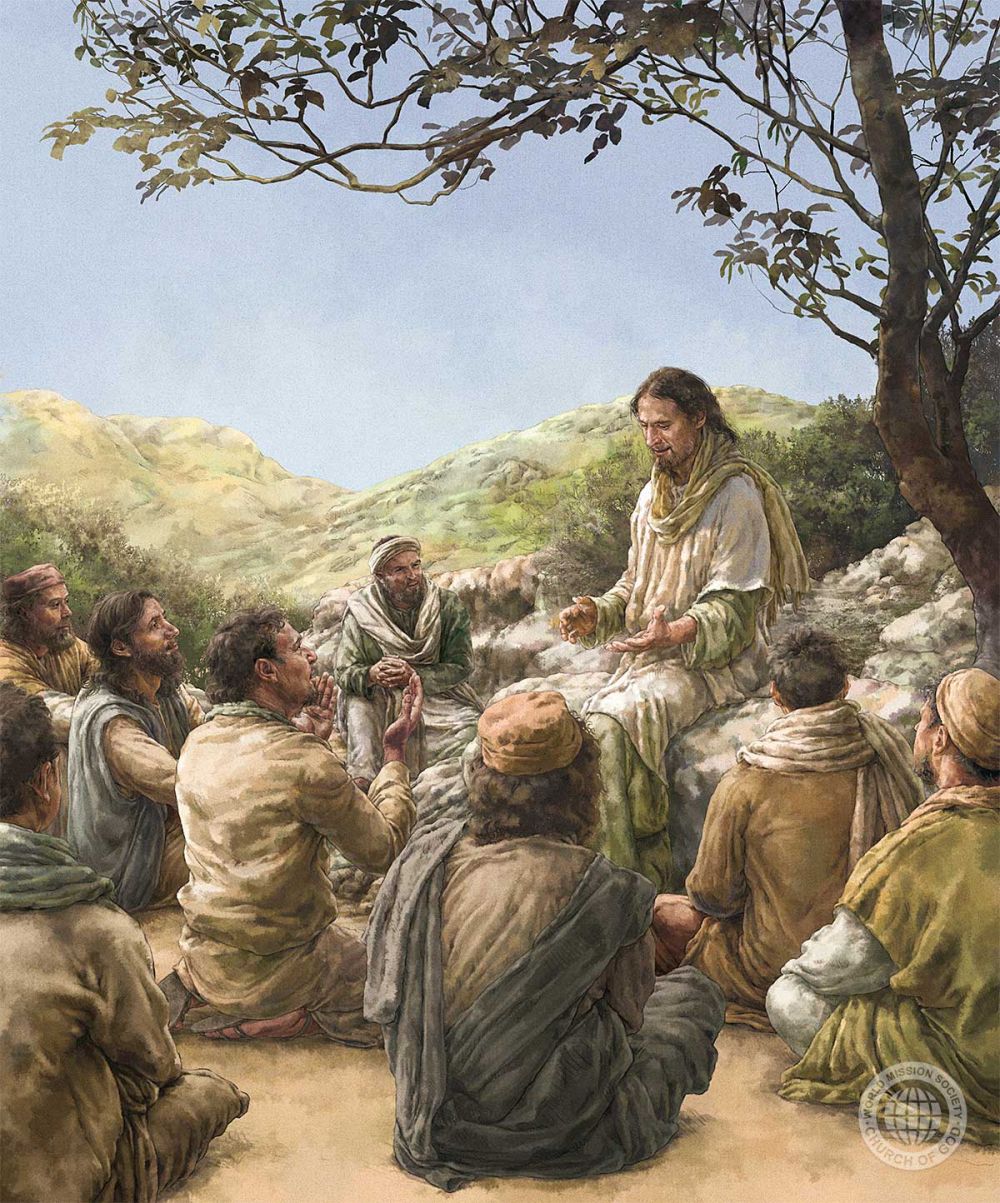

Gospel (Greek: εὐαγγέλιον, Euangelion)[1] literally means “good news.” Specifically, it refers to the truth that Jesus taught and set an example of on the earth.[2][3] Broadly speaking, it can be said that the Old Testament is the gospel, too, because it is the word of blessing for the people of God. However, the gospel in the New Testament began when Jesus was baptized by John. The core truth of the gospel is the New Covenant Passover, which frees mankind from slavery to sin and death.[4]
Meaning of the Gospel
The gospel which Jesus preached is the blessed and good news because it contains the way to the kingdom of heaven. Therefore, the gospel of Jesus Christ is also called the “gospel of the kingdom.”
The Bible says that all humans are sinners who sinned and were cast down from heaven, and the wages of their sins is death.[5][6] Thus, Jesus Himself came in the flesh to save mankind for the sins deserving of the death penalty.[7][8]
“For even the Son of Man did not come to be served, but to serve, and to give his life as a ransom for many.”
“I have come that they may have life, and have it to the full.”
For three years of His ministry, Jesus preached the way to the forgiveness of sin and eternal life—the truth that leads mankind to heaven. This was truly blessed and good news for humans who were destined to die because of their sins.
Beginning of the Gospel
In the New Testament, the gospel began when Jesus was baptized 2,000 years ago.
When all the people were being baptized, Jesus was baptized too. . . . Now Jesus himself was about thirty years old when he began his ministry
The beginning of the gospel about Jesus Christ, the Son of God.
John the Baptist,[9][10] the last prophet of the age of the law of the Old Testament, opened the gospel age of the New Testament by testifying about Jesus,[8] who is God who came in the flesh. Jesus got baptized by John the Baptist and began to preach the gospel of the kingdom.
From that time on Jesus began to preach, “Repent, for the kingdom of heaven is near.” . . . Jesus went throughout Galilee, teaching in their synagogues, preaching the good news of the kingdom
Gospel and New Covenant
The gospel, which Jesus taught and set an example of keeping,[11] is the new covenant. Apostle Paul explained that the gospel is the new covenant by calling himself a worker of the gospel and a worker of the new covenant as well.[12][13] According to the prophecy of the Old Testament that God would establish the new covenant, Jesus changed the old covenant,[14] the law of the Old Testament, into the perfect new covenant,[15] and set an example of keeping the feasts of the new covenant.
- Baptism
_(14590836189).jpg)
- Baptism is a ceremony in which the forgiveness of sins is promised.[16] Through baptism, one’s sin is buried and he or she is born again into a new life.[17] Even though Jesus didn’t have sin, He was baptized by John the Baptist[18] and also baptized people Himself.[19] This is an example and a lesson showing that baptism is an essential ceremony for salvation.[20]
- Sabbath
He went to Nazareth, where he had been brought up, and on the Sabbath day he went into the synagogue, as was his custom. And he stood up to read.
- The Sabbath is the commemoration day of the Creator, which originated from the fact that God rested on the seventh day after His six-day creation.[21] It was appointed as the fourth commandment among the Ten Commandments in the time of Moses.[22] Jesus worshiped on the Sabbath day according to His custom[23] and told us to keep it until the end of the age.[24] By doing so, He taught that the Sabbath is a commandment of God that must be kept not only in the Old Testament times but also in the New Testament times.
- Passover
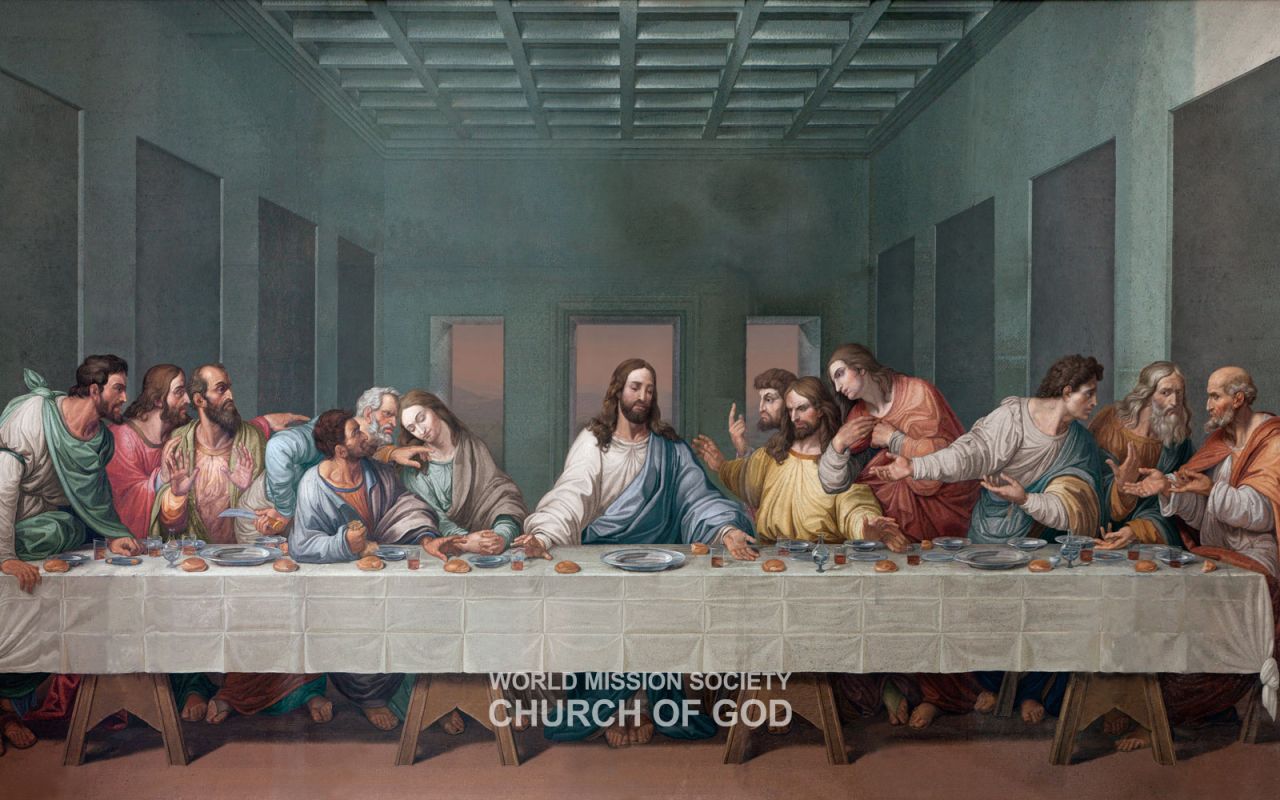

And he said to them, “I have eagerly desired to eat this Passover with you before I suffer.” . . . And he took bread, gave thanks and broke it, and gave it to them, saying, “This is my body given for you; do this in remembrance of me.” In the same way, after the supper he took the cup, saying, “This cup is the new covenant in my blood, which is poured out for you.”
- The Passover is the truth that Jesus eagerly desired to keep before He suffered on the cross. On this day, He gave His disciples bread and wine, saying that they were His flesh and blood giving eternal life;[25] this way, He established the new covenant. On the day after the Passover, He completed all the truths of the gospel of the kingdom through the new covenant by shedding His blood on the cross.[26][27]
- The Passover of the new covenant, which contains the promise of the forgiveness of sins[28] and eternal life, is the key truth of the gospel of the kingdom which Jesus preached. Just as the Israelites were freed from slavery in Egypt by keeping the Passover about 3,500 years ago,[29] Jesus gave the forgiveness of sins and eternal life through the New Covenant Passover, so that mankind could be freed from slavery to sin and death.[4]
- Feast of Tabernacles
- Jesus preached during the Feast of Tabernacles and promised the Holy Spirit like the living water to those who believed in Him.[30] The fact that Jesus kept the Feast of Tabernacles is the proof that He also kept the Feast of Trumpets and the Day of Atonement.[31]
Value of the Gospel
Apostle Paul realized the value of the gospel that leads mankind to heaven, cherished the mission of preaching the gospel,[32][33] and awakened church members to the importance of the gospel whenever he wrote to each church.[34] The blessings contained in the gospel are recorded in the book of Ephesians.
In reading this, then, you will be able to understand my insight into the mystery of Christ, which was not made known to men in other generations as it has now been revealed by the Spirit to God's holy apostles and prophets. This mystery is that through the gospel the Gentiles are heirs together with Israel, members together of one body, and sharers together in the promise in Christ Jesus.
It is written that even the Gentiles who do not know God can become heirs, members of one body, and sharers in the promise in Christ Jesus, through the gospel. This means that we will become God’s heirs and receive the kingdom of heaven as an inheritance,[35][36][37] become members of Christ’s body,[38] and live forever in the kingdom of heaven by receiving the promise of eternal life.[39][40] The Passover of the new covenant, which is the core truth of the gospel, contains all these blessings. Since the bread and wine of the New Covenant Passover represent God’s flesh and blood, we can inherit the flesh and blood of God through the Passover and become God’s children, that is, God's heirs. At the same time, we become one body in Christ and become members of Christ’s body.[41] The Passover also contains the promise of eternal life.[25]
Therefore, neither the kingdom of heaven nor eternal life can be obtained except through the gospel including the Passover of the new covenant. The gospel is an important message that we must know and follow for salvation. The apostles and members of the early Church preached the gospel of the new covenant, such as the Passover,[42] the Sabbath,[43][44] and baptism,[45] following Jesus’ teachings and engraving the value of the gospel on their hearts.[46] This is a living lesson showing that the church that preaches the gospel must have the truths of the new covenant, including the Passover.
Different Gospel
After the apostles who had been taught directly by Jesus died, the gospel began to change little by little from the mid-2nd century as the church became secularized. As a result, different gospel, which is not the teachings of Jesus, disguises itself as authenticity as it has prevailed to the point of confusing people about what has changed. Lord’s day worship is held on Sunday, the holy day of Mithraism, which worships the sun god;[47] and Christmas, which originated from the birthday of Mithra, is celebrated on December 25;[48][49][50] and the cross[51] was introduced into church in the process of the church’s secularization and paganism. Furthermore, Thanksgiving Day and Easter that has the custom of sharing eggs, are not based on the Bible: they are all different gospel.
Jesus taught that those who practice a different gospel cannot enter the kingdom of heaven even though they may look like God’s people.[52] The apostles too warned that whoever preaches or follows a gospel other than the gospel Jesus preached would be punished with everlasting destruction.
This will happen when the Lord Jesus is revealed from heaven in blazing fire with his powerful angels. He will punish those who do not know God and do not obey the gospel of our Lord Jesus. They will be punished with everlasting destruction and shut out from the presence of the Lord and from the majesty of his power
I am astonished that you are so quickly deserting the one who called you by the grace of Christ and are turning to a different gospel—which is really no gospel at all. Evidently some people are throwing you into confusion and are trying to pervert the gospel of Christ. But even if we or an angel from heaven should preach a gospel other than the one we preached to you, let him be eternally condemned!
See also
- The Meaning of the Gospel
- The Beginning of the Gospel
- Gospel of the Kingdom
- Gospel and the New Covenant
- The Value of the Gospel
- Different Gospel
References
- ↑ Bill Mounce. "εὐαγγέλιον". Greek Dictionary.
- ↑ "Matthew 24:14".
- ↑ "Matthew 28:18–20".
- ↑ 4.0 4.1 "John 8:32–34".
- ↑ "Romans 3:9–10".
- ↑ "Romans 6:23".
- ↑ "1 Kings 20:42".
- ↑ 8.0 8.1 "John 1:23–34".
- ↑ "Matthew 11:13".
- ↑ "Luke 16:16".
- ↑ "John 13:15–17".
- ↑ "Colossians 1:23".
- ↑ "2 Corinthians 3:6".
- ↑ "Jeremiah 31:31–33".
- ↑ "Matthew 5:17".
- ↑ "Acts 2:38".
- ↑ "Romans 6:1–4".
- ↑ "Luke 3:21".
- ↑ "John 3:22–23".
- ↑ "1 Peter 3:21".
- ↑ "Genesis 2:1–3".
- ↑ "Exodus 20:8–11".
- ↑ "John 4:23".
- ↑ "Matthew 24:20–21".
- ↑ 25.0 25.1 "John 6:54".
- ↑ "John 19:34".
- ↑ "Hebrews 9:15–17".
- ↑ "Matthew 26:17–28".
- ↑ "Exodus 12:11–42".
- ↑ "John 7:2, 37–39".
- ↑ "Deuteronomy 16:16".
- ↑ "Romans 15:16".
- ↑ "1 Thessalonians 2:3–4".
- ↑ Chapter 31 The Regulations of the New Covenant, THE MYSTERY OF GOD AND THE SPRING OF THE WATER OF LIFE, Ahnsahnghong, pg. 199, Melchizedek Pub. Co., Ltd
- ↑ "Romans 8:16–18".
- ↑ "Daniel 7:17–18".
- ↑ "1 Corinthians 2:6–9".
- ↑ "1 Corinthians 12:27".
- ↑ "1 John 2:25".
- ↑ "Revelation 22:1–6".
- ↑ "1 Corinthians 10:16–17".
- ↑ "1 Corinthians 11:23–26".
- ↑ "Luke 23:54–56".
- ↑ "Acts 17:1–3".
- ↑ "Acts 10:37–48".
- ↑ "Acts 20:24".
- ↑ "A Study of Mithraism". Stanford University.
- ↑ Tim Dowley, The History of Christianity [A Lion handbook], Lion Publishing, January 1, 1977, pg. 141
- ↑ "How Christians co-opted the winter solstice". Big Think. November 21, 2018.
- ↑ "Saturnalia". World History Encyclopedia. December 16, 2016.
- ↑ Everett F. Harrison, Baker's Dictionary of Theology, pg. 152, Baker Pub Group, May 1, 1987
- ↑ "Matthew 7:21–23".