The New Testament: Difference between revisions
m Text replacement - "Ascension of Jesus" to "The Ascension of Jesus" |
No edit summary |
||
| (11 intermediate revisions by 2 users not shown) | |||
| Line 1: | Line 1: | ||
[[File:Papyrus 66 (GA).jpg|thumb|The New Testament that was discovered in Egypt in 1952: They were written in Greek on papyrus, and they are called the "Bodmer Papyri" named after Martin Bodmer who purchased them.<ref>[https://bodmerlab.unige.ch/fr/constellations/papyri Bodmer Payri], ''Bodmer Lab''</ref><ref>James M Robinson, The Story of the Bodmer Papyri, From the First Monastery's Library in Upper Egypt to Geneva and Dublin, 2013</ref>]] | <!-- interlanguage:start -->[[ko:신약성경]]<!-- interlanguage:end -->[[File:Papyrus 66 (GA).jpg|thumb|The New Testament that was discovered in Egypt in 1952: They were written in Greek on papyrus, and they are called the "Bodmer Papyri" named after Martin Bodmer who purchased them.<ref>[https://bodmerlab.unige.ch/fr/constellations/papyri Bodmer Payri], ''Bodmer Lab''</ref><ref>James M Robinson, The Story of the Bodmer Papyri, From the First Monastery's Library in Upper Egypt to Geneva and Dublin, 2013</ref>]]The '''New Testament''' written in the first century<ref>The Bible, Religions, John Drane, ''BBC'', July 12, 2011</ref> after the birth of [[Jesus Christ]], consists of 27 books and contains the covenant that God established to save mankind. They are arranged in the following order: the four Gospels that contain the work and teachings of Jesus, the records of the [[Apostle|apostle]]'s preaching activities, the letters sent to [[Church|churches]] or individuals, and a book of prophecy.<ref name=":0" /> Judaism accepts only the [[The Old Testament|Old Testament]] as the Holy Scriptures, but Christianity understands the relationship between the Old and New Testaments as the relationship between promises and their fulfillment. Christians recognize both the Old Testament and the New Testament as the Holy Scriptures.<ref>[https://time.com/5606942/jewish-christian-bible/ Judaism and Christianity Both Rely on the Hebrew Bible. Why Do They Interpret It So Differently?], HISTORY FAITH, John Barton, ''TIME.com'', June 14, 2019</ref> | ||
The '''New Testament''' written in the first century<ref>The Bible, Religions, John Drane, ''BBC'', July 12, 2011</ref> after the birth of [[Jesus Christ]], consists of 27 books and contains the covenant that God established to save mankind. They are arranged in the following order: the four Gospels that contain the work and teachings of Jesus, the records of the [[Apostle|apostle]]'s preaching activities, the letters sent to [[Church|churches]] or individuals, and a book of prophecy.<ref name=":0" /> Judaism accepts only the [[The Old Testament|Old Testament]] as the Holy Scriptures, but Christianity understands the relationship between the Old and New Testaments as the relationship between promises and their fulfillment. Christians recognize both the Old Testament and the New Testament as the Holy Scriptures.<ref>[https://time.com/5606942/jewish-christian-bible/ Judaism and Christianity Both Rely on the Hebrew Bible. Why Do They Interpret It So Differently?], HISTORY FAITH, John Barton, ''TIME.com'', June 14, 2019</ref> | |||
==The Naming of the New Testament== | ==The Naming of the New Testament== | ||
{{그림 |최후의 만찬 유월절.jpg|너비= 300px |정렬=오른쪽섬네일 |타이틀=Jesus established the new covenant by keeping the Passover.}} | {{그림 |최후의 만찬 유월절.jpg|너비= 300px |정렬=오른쪽섬네일 |타이틀=Jesus established the new covenant by keeping the Passover.}} | ||
The New Testament means the ''[[New Covenant|new covenant]]''. Its name was given to differentiate it from the ''[[The Old Testament|Old Testament]]''. The first covenant [[God]] established with the Israelites in the time of [[Moses]] was the ''[[Old Covenant|old covenant]]'', and the new covenant was established by Jesus while preaching the gospel.<ref>{{Cite web |url=https://www.biblegateway.com/passage/?search=Hebrews+8%3A13&version=NIV |title=Hebrews 8:13 |publisher= |quote= }}</ref> The term ''Scriptures'' written in the New Testament refers to the ''Old Testament''. | The New Testament means the ''[[New Covenant|new covenant]]''. Its name was given to differentiate it from the ''[[The Old Testament|Old Testament]]''. The first covenant [[God]] established with the Israelites in the time of [[Moses]] was the ''[[The Old Covenant|old covenant]]'', and the new covenant was established by Jesus while preaching the gospel.<ref>{{Cite web |url=https://www.biblegateway.com/passage/?search=Hebrews+8%3A13&version=NIV |title=Hebrews 8:13 |publisher= |quote= }}</ref> The term ''Scriptures'' written in the New Testament refers to the ''Old Testament''. | ||
==Languages== | ==Languages== | ||
| Line 16: | Line 15: | ||
|'''Date (Approx.)''' | |'''Date (Approx.)''' | ||
|-style="background: white" | |-style="background: white" | ||
|[[Gospel of Matthew|Matthew]] | |[[The Gospel of Matthew|Matthew]] | ||
|[[Matthew]] | |[[Matthew]] | ||
|A.D. 60–70<ref>[https://www.biblegateway.com/passage/?search=Matthew+1&version=NIV&tab=intro Matthew 1], ''BibleGateway''</ref> | |A.D. 60–70<ref>[https://www.biblegateway.com/passage/?search=Matthew+1&version=NIV&tab=intro Matthew 1], ''BibleGateway''</ref> | ||
| Line 36: | Line 35: | ||
|A.D. 61–63<ref>[https://www.biblegateway.com/passage/?search=Acts+1&version=NIV&tab=intro Acts 1], ''BibleGateway''</ref> | |A.D. 61–63<ref>[https://www.biblegateway.com/passage/?search=Acts+1&version=NIV&tab=intro Acts 1], ''BibleGateway''</ref> | ||
|-style="background: white" | |-style="background: white" | ||
|[[Book of Romans|Romans]], [[ | |[[Book of Romans|Romans]], [[1 Corinthians|1]] & [[2 Corinthians|2 Corinthians]], [[Book of Galatians|Galatians]], [[Book of Ephesians|Ephesians]], [[Philippians|Philippians]], [[Book of Colossians|Colossians]], [[Book of 1 Thessalonians|1]] & [[Book of 2 Thessalonians|2 Thessalonians]], [[Book of 1 Timothy|1]]& [[Book of 2 Timothy|2 Timothy]], [[Book of Titus|Titus]], [[Book of Philemon|Philemon]] | ||
|[[Paul]] | |[[Paul]] | ||
|A.D. 51–67<ref>[https://www.biblegateway.com/passage/?search=Romans+1&version=NIV&tab=intro Romans 1], [https://www.biblegateway.com/passage/?search=1+Corinthians+1&version=NIV&tab=intro 1 Corinthians 1], [https://www.biblegateway.com/passage/?search=2+Corinthians+1&version=NIV&tab=intro 2 Corinthians 1], [https://www.biblegateway.com/passage/?search=Galatians+1&version=NIV&tab=intro Galatians 1], [https://www.biblegateway.com/passage/?search=Ephesians+1&version=NIV&tab=intro Ephesians 1], [https://www.biblegateway.com/passage/?search=Philippians+1&version=NIV&tab=intro Philippians 1], [https://www.biblegateway.com/passage/?search=Colossians+1&version=NIV&tab=intro Colossians 1], [https://www.biblegateway.com/passage/?search=1+Thessalonians+1&version=NIV&tab=intro 1 Thessalonians 1], [https://www.biblegateway.com/passage/?search=2+Thessalonians+1&version=NIV&tab=intro 2 Thessalonians 1], [https://www.biblegateway.com/passage/?search=1+Timothy+1&version=NIV&tab=intro 1 Timothy 1], [https://www.biblegateway.com/passage/?search=2+Timothy+1&version=NIV&tab=intro 2 Timothy 1], [https://www.biblegateway.com/passage/?search=Titus+1&version=NIV&tab=intro Titus 1], [https://www.biblegateway.com/passage/?search=Philemon+1&version=NIV&tab=intro Philemon 1], ''BibleGateway''</ref> | |A.D. 51–67<ref>[https://www.biblegateway.com/passage/?search=Romans+1&version=NIV&tab=intro Romans 1], [https://www.biblegateway.com/passage/?search=1+Corinthians+1&version=NIV&tab=intro 1 Corinthians 1], [https://www.biblegateway.com/passage/?search=2+Corinthians+1&version=NIV&tab=intro 2 Corinthians 1], [https://www.biblegateway.com/passage/?search=Galatians+1&version=NIV&tab=intro Galatians 1], [https://www.biblegateway.com/passage/?search=Ephesians+1&version=NIV&tab=intro Ephesians 1], [https://www.biblegateway.com/passage/?search=Philippians+1&version=NIV&tab=intro Philippians 1], [https://www.biblegateway.com/passage/?search=Colossians+1&version=NIV&tab=intro Colossians 1], [https://www.biblegateway.com/passage/?search=1+Thessalonians+1&version=NIV&tab=intro 1 Thessalonians 1], [https://www.biblegateway.com/passage/?search=2+Thessalonians+1&version=NIV&tab=intro 2 Thessalonians 1], [https://www.biblegateway.com/passage/?search=1+Timothy+1&version=NIV&tab=intro 1 Timothy 1], [https://www.biblegateway.com/passage/?search=2+Timothy+1&version=NIV&tab=intro 2 Timothy 1], [https://www.biblegateway.com/passage/?search=Titus+1&version=NIV&tab=intro Titus 1], [https://www.biblegateway.com/passage/?search=Philemon+1&version=NIV&tab=intro Philemon 1], ''BibleGateway''</ref> | ||
| Line 101: | Line 100: | ||
==Formation and Preservation of the New Testament== | ==Formation and Preservation of the New Testament== | ||
[[file:Papyrus 75a.gif |thumb | 200px |Manuscript of the New Testament written on papyrus in about the third century with fragments of Luke chapter 24 and John chapter 1]] | [[file:Papyrus 75a.gif |thumb | 200px |Manuscript of the New Testament written on papyrus in about the third century with fragments of Luke chapter 24 and John chapter 1]] | ||
The New Testament was recorded in the Apostolic Age during the 1st century. As the disciples who witnessed [[Life of Jesus|Jesus’ life]] and [[Jesus' Resurrection|resurrection]] died one after another, it was necessary to write [[Major | The New Testament was recorded in the Apostolic Age during the 1st century. As the disciples who witnessed [[Life of Jesus|Jesus’ life]] and [[Jesus' Resurrection|resurrection]] died one after another, it was necessary to write [[The Major Works of Jesus Christ|Jesus’ work]] and preserve it. | ||
In addition, the apostles and church leaders sent letters to the churches to teach them how to build up their faith correctly. These letters were copied, shared, and read by many churches for a long time. Churches have acknowledged these books as part of the Bible because they share how to follow the teachings of Jesus and the apostles.<ref>Charles Bray Williams, New Testament history and literature, 1917</ref> | In addition, the apostles and church leaders sent letters to the churches to teach them how to build up their faith correctly. These letters were copied, shared, and read by many churches for a long time. Churches have acknowledged these books as part of the Bible because they share how to follow the teachings of Jesus and the apostles.<ref>Charles Bray Williams, New Testament history and literature, 1917</ref> | ||
Latest revision as of 14:38, 23 April 2026
.jpg)
The New Testament written in the first century[3] after the birth of Jesus Christ, consists of 27 books and contains the covenant that God established to save mankind. They are arranged in the following order: the four Gospels that contain the work and teachings of Jesus, the records of the apostle's preaching activities, the letters sent to churches or individuals, and a book of prophecy.[4] Judaism accepts only the Old Testament as the Holy Scriptures, but Christianity understands the relationship between the Old and New Testaments as the relationship between promises and their fulfillment. Christians recognize both the Old Testament and the New Testament as the Holy Scriptures.[5]
The Naming of the New Testament
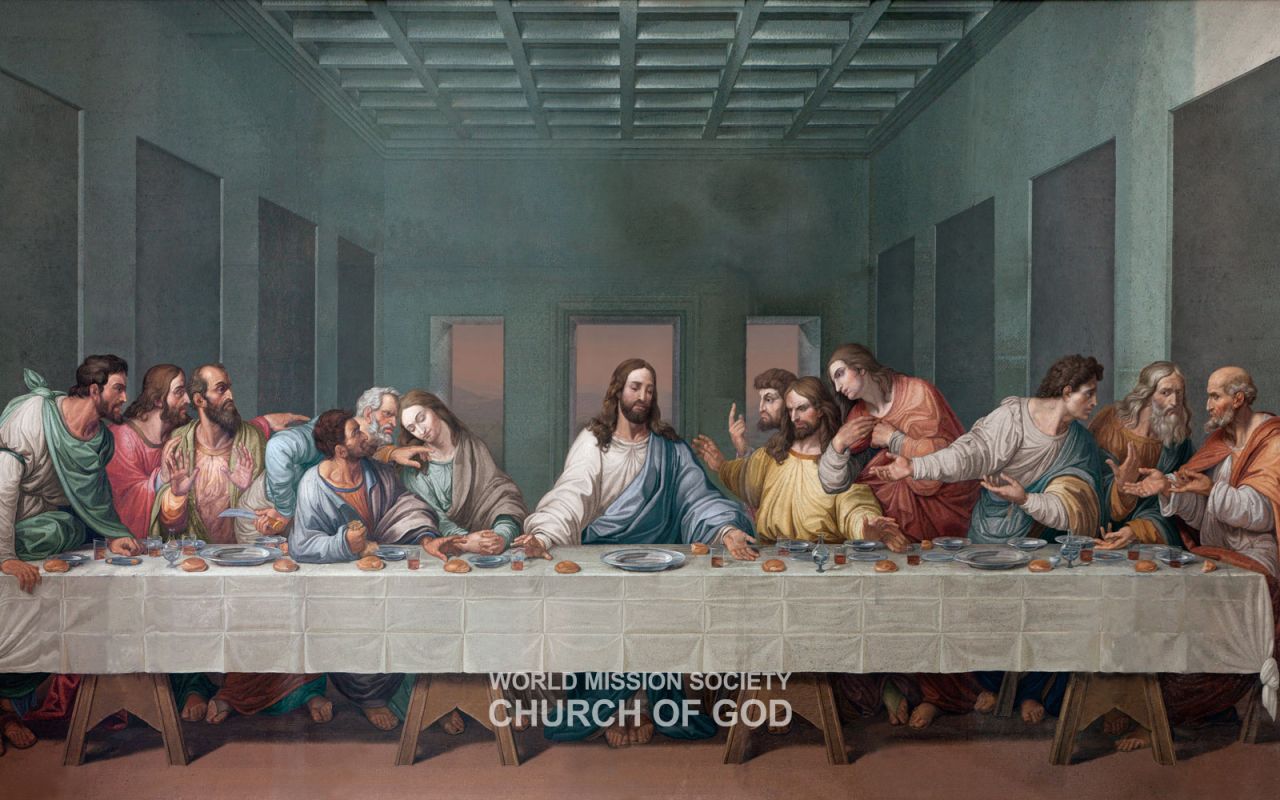

The New Testament means the new covenant. Its name was given to differentiate it from the Old Testament. The first covenant God established with the Israelites in the time of Moses was the old covenant, and the new covenant was established by Jesus while preaching the gospel.[6] The term Scriptures written in the New Testament refers to the Old Testament.
Languages
The New Testament was written in Greek, the international language of that time and the language used in the Roman Empire.[7] To spread the gospel throughout the empire, not limiting it to the Jewish nation, the apostles wrote the Bible in Greek; however, it is said that the books of Matthew and Hebrews were written in Hebrew for the Jews, and later translated into Greek.[8][9]
Writer and Date
| Bible | Writer | Date (Approx.) |
| Matthew | Matthew | A.D. 60–70[10] |
| Mark | Mark | A.D. 55–65[11] |
| Luke | Luke | A.D. 60–68[12] |
| John | John | A.D. 80–90[13] |
| Acts | Luke | A.D. 61–63[14] |
| Romans, 1 & 2 Corinthians, Galatians, Ephesians, Philippians, Colossians, 1 & 2 Thessalonians, 1& 2 Timothy, Titus, Philemon | Paul | A.D. 51–67[15] |
| Hebrews | Paul (uncertain) | A.D. 65–68[16] |
| James | James | A.D. 60–62[17] |
| 1 & 2 Peter | Peter | A.D. 64–67[18] |
| 1 & 2 & 3 John | John | A.D. 85–95[19] |
| Jude | Jude | A.D. 65–80[20] |
| Revelation | John | A.D. 95–96[21] |
Structure
| Class. | Content |
| The Gospels (4 Books)[4] | Matthew, Mark, Luke, John |
| The Book of History (1 Book)[4] | Acts |
| Pauline Epistles (14 Books)[4] | Romans, 1 Corinthians, 2 Corinthians, Galatians, Ephesians, Philippians, Colossians, 1 Thessalonians, 2 Thessalonians, 1 Timothy, 2 Timothy, Titus, Philemon, Hebrews |
| General Epistles (7 Books)[4] | James, 1 Peter, 2 Peter, 1 John, 2 John, 3 John, Jude |
| Book of Prophecy (1 Book)[4] | Revelation |
The Gospels
The Gospels refer to the books of Matthew, Mark, Luke, and John and are found at the beginning of the New Testament. The Gospels focus on the work and teachings of Jesus. The Gospels of Matthew, Mark, and Luke are written from a similar point of view, which is why they are referred to as the synoptic Gospels.[22]
The Book of History
The book of Acts is the only historical book in the New Testament. This book talks about the work of the apostles preaching the gospel not only to Judea but also to the Gentile nations after Jesus’ ascension.[23]
Pauline Epistles
Some believe that there are 13 Pauline epistles,[24] and some believe there are 14 because the writer of Hebrews is presumed to be Paul.[25] They can be divided into three types: letters sent to the churches established during Apostle Paul’s three missionary journeys (Romans, 1 & 2 Corinthians, Galatians, Ephesians, Philippians, Colossians, 1 & 2 Thessalonians); letters he sent to his fellow workers working for the gospel (1 & 2 Timothy, Titus, Philemon); and an epistle targeting a certain class of people (Hebrews). They are also classified into prison epistles (Ephesians, Philippians, Colossians, Philemon) and pastoral epistles (1 & 2 Timothy, Titus) that record the guidelines of the ministry.
General Epistles
The general epistles refer to the epistles in the New Testament excluding the Pauline epistles: James, 1 & 2 Peter, 1 & 2 & 3 John, Jude. Some scholars include the book of Hebrews in the general epistles.
The Book of Prophecy
The last book of the New Testament, Revelation, is a book of prophecy. It was written by Apostle John, who was one of Jesus’ twelve disciples, as he received a revelation from Jesus while he was in exile on the island of Patmos.[26] The Bible begins with the creation of the heavens and the earth in the book of Genesis, and ends with the creation of a new heaven and a new earth. This refers to the coming of the kingdom of heaven in the book of Revelation.
Formation and Preservation of the New Testament

The New Testament was recorded in the Apostolic Age during the 1st century. As the disciples who witnessed Jesus’ life and resurrection died one after another, it was necessary to write Jesus’ work and preserve it.
In addition, the apostles and church leaders sent letters to the churches to teach them how to build up their faith correctly. These letters were copied, shared, and read by many churches for a long time. Churches have acknowledged these books as part of the Bible because they share how to follow the teachings of Jesus and the apostles.[27]
The original copy of the New Testament does not exist. From the beginning, manuscripts were made and sent to various churches, and manuscripts of the manuscripts were made when they were worn out. At that time, the manuscripts were usually written on a scroll made by weaving reeds called papyrus, which was easily obtained in Egypt. Papyrus, however, didn’t last long; it was either broken or rotted due to moisture.[28] Parchment was also used to make manuscripts. Parchment, which was made of sheepskin, lasted longer than papyrus and could be bound in the shape of a book.[29] Until the invention of printing in the fifteenth century, the Bible was handed down through manuscripts.[30]
Main Characters and Regions
- Characters: Jesus, John the Baptist, John, Matthew, Mark, Luke, Peter, Paul, Philip, James, Timothy, Thomas, Judas Iscariot, Herod, Pilate, Cornelius, Mary, Nicodemus
- Regions: Jerusalem, Mount of Olives, Galilee, Capernaum, Nazareth, Samaria, Antioch, Galatia, Thessalonica, Corinth, Colosse, Rome, Ephesus, Philippi
See also
References
- ↑ Bodmer Payri, Bodmer Lab
- ↑ James M Robinson, The Story of the Bodmer Papyri, From the First Monastery's Library in Upper Egypt to Geneva and Dublin, 2013
- ↑ The Bible, Religions, John Drane, BBC, July 12, 2011
- ↑ 4.0 4.1 4.2 4.3 4.4 4.5 Chapter 01 What is the New Testament?, Bart D. Ehrman, A Brief Introduction to the New Testament, Oxford University Press
- ↑ Judaism and Christianity Both Rely on the Hebrew Bible. Why Do They Interpret It So Differently?, HISTORY FAITH, John Barton, TIME.com, June 14, 2019
- ↑ "Hebrews 8:13".
- ↑ In what language was the Bible first written?, Bible Resources Frequently Asked Questions In what language was the Bible first written?, Biblica
- ↑ Chapter XXIV., The order of the gospels, Isaac Boyle, The Ecclesiastical History, Eusebius Pamphilus, pg. 108, 1856
- ↑ Robert L. Lindsey, Jesus, Rabbi and Lord: The Hebrew Story of Jesus Behind Our Gospels, January 1, 1989
- ↑ Matthew 1, BibleGateway
- ↑ Mark 1, BibleGateway
- ↑ Luke 1, BibleGateway
- ↑ John 1, BibleGateway
- ↑ Acts 1, BibleGateway
- ↑ Romans 1, 1 Corinthians 1, 2 Corinthians 1, Galatians 1, Ephesians 1, Philippians 1, Colossians 1, 1 Thessalonians 1, 2 Thessalonians 1, 1 Timothy 1, 2 Timothy 1, Titus 1, Philemon 1, BibleGateway
- ↑ Hebrews 1, BibleGateway
- ↑ James 1, BibleGateway
- ↑ 1 Peter 1, 2 Peter 1, BibleGateway
- ↑ 1 John 1, 2 John 1, 3 John 1, BibleGateway
- ↑ Jude 1, BibleGateway
- ↑ Revelation 1, BibleGateway
- ↑ C.G. Montefiore, The Synoptic Gospels, 1909
- ↑ From the NIV Study Bible, Introductions to the Books of the Bible, Acts, 2002
- ↑ Chapter 13 Hebrews, Edward W. Bauman, An Introduction to the New Testament, pg. 93
- ↑ Rev. W. J. Conybeare, M.A., The Epistles of Paul
- ↑ "Revelation 1:1, 9-10".
- ↑ Charles Bray Williams, New Testament history and literature, 1917
- ↑ Pictures of The New Testament Papyri, Early Bible
- ↑ WHAT IS PARCHMENT?, Museum of the Bible
- ↑ Gutenberg and the History of the Printed Bible, Museum of Printing