Gospel of Luke: Difference between revisions
m Isaacp moved page Draft:Gospel of Luke to Gospel of Luke without leaving a redirect |
No edit summary |
||
| Line 1: | Line 1: | ||
{{성경 | <!-- interlanguage:start -->[[ko:누가복음]]<!-- interlanguage:end -->{{성경 | ||
|image=[[File:Old Bible.jpg|thumb|center]] | |image=[[File:Old Bible.jpg|thumb|center]] | ||
|title=Luke | |title=Luke | ||
Latest revision as of 11:53, 10 December 2025
| Luke | |
|---|---|
 | |
| Abbreviation | Lk |
| Class. | New Testament |
| Category | 4 Gospels |
| Chapters | 24 chapters |
| Record Related | |
| Writer | Luke |
| Date (Approx.) | BC 60–68 |
The Gospel of Luke is the third book of the New Testament, written by Luke, who recorded the life, teachings, and ministry of Jesus Christ. It is one of the Four Gospels, together with Matthew, Mark, and John. In the King James Version (KJV), it is titled “The Gospel According to St. Luke.”
Writer of Luke
The writer of the Gospel of Luke is Luke, who was a physician by profession.[1] After becoming a Christian, he devoted himself not only to healing the body but also to saving souls through the gospel. Luke accompanied Apostle Paul on several of his missionary journeys, faithfully serving as his co-worker and remaining with him even during Paul’s imprisonment in Rome.[2] By comparing the prologues of the Gospel of Luke and the book of Acts, it becomes evident that Luke is also the writer of the book of Acts.[3][4]
Background of the Writing
The Gospel of Luke, together with the book of Acts, was originally written for a specific individual named Theophilus, who is believed to have been a high-ranking Roman official. Luke composed his writings to assure Theophilus that the teachings he had received about Jesus were true and reliable.[3]
This Gospel presents a thorough and orderly account of the birth, life, teachings, death, and resurrection of Jesus Christ. Its ultimate purpose was not only to strengthen Theophilus’s faith but also to help all people gain a clear and accurate understanding of who Jesus Christ is and the truth of His gospel.
Characteristics of the Gospel of Luke
- The Gospel of Luke provides a detailed account of Jesus’ life and emphasizes that salvation through Christ is universal—a message for all people everywhere. The angel’s announcement of Jesus’ birth is described as “good news of great joy for all people.”[5] Unlike the Gospel of Matthew, which traces Jesus’ genealogy back to Abraham, Luke traces it all the way to Adam, and ultimately to God.[6] Luke also highlights Jesus’ compassion toward those who were marginalized or overlooked—the sick, the poor, children, women, and even Samaritans, who were regarded as outsiders in Jewish society at the time. Through these accounts, Luke reveals the boundless mercy and inclusiveness of Christ’s love.
- The Gospel of Luke contains more teachings than the other Gospels that emphasize the value and truth of the human soul.[7][8][9][10][11] This focus suggests that Luke possessed a deep spiritual insight and a profound awareness of the human soul.
- Luke emphasizes the work of the Holy Spirit throughout the life and ministry of Jesus. From His birth and baptism to His public ministry, Jesus is portrayed as being continually guided and empowered by the Spirit.[12][13][14][15] The Gospel also records Jesus’ teaching that a time would come when people would be taught by the Holy Spirit,[16] and He encouraged them to pray for the power of the Spirit to come upon them.[17][18]
- As a physician, Luke provides more precise descriptions of illnesses and physical conditions than the other Gospel writers. For example, while Mark simply notes that Peter’s mother-in-law had a “fever,”[19] Luke describes it more specifically as a “high fever.”[20] Likewise, whereas Matthew and Mark refer generally to a “leper,”[21][22] Luke adds a medical detail, stating that the man was “full of leprosy.”[23]
Structure of the Gospel of Luke
| Verses | Content Summary |
| 1:1–2:52 | The Birth of John the Baptist and of Jesus |
| 3:1–4:13 | Jesus’ Baptism |
| 4:14–9:50 | Jesus’ Ministry in Galilee |
| 9:51–19:27 | Jesus’ Ministry on the Way to Jerusalem |
| 19:28–21:38 | Jesus’ Entry Into Jerusalem |
| 22:1–23:56 | New Covenant Passover and Jesus’ Suffering |
| 24:1–53 | Jesus’ Resurrection |
The Birth of John the Baptist and of Jesus (1:1–2:52)
Zechariah, a priest, had no children even in his old age. While he was serving in the temple, the angel Gabriel appeared to him and promised that his wife would bear a son named John. Because Zechariah did not believe the angel’s message, he was made unable to speak until the child was born.
Meanwhile, in the sixth month of Elizabeth’s pregnancy—Zechariah’s wife—the angel Gabriel visited Mary, a virgin pledged to be married to Joseph, and told her that she would conceive and give birth to a son, Jesus. Shortly after John’s birth, a decree was issued by Caesar Augustus for a census to be taken throughout the Roman Empire.[24] Joseph and Mary went to Bethlehem to register for the census, and while they were there, Jesus was born.
Luke’s Gospel is the only one that records events from Jesus’ childhood. When Jesus was twelve years old, He went to Jerusalem with His family to celebrate the Passover. After the feast, while His parents began their journey home, Jesus stayed behind in the temple. When Mary found Him and asked why He had done so, Jesus replied, “Didn’t you know I had to be in my Father’s house?”
Jesus’ Baptism (3:1–4:13)
When Jesus was about thirty years old, He was baptized by John the Baptist. Although people knew Him as the son of Joseph, Luke traces His genealogy back through David—all the way to Adam—and ultimately to God.
Jesus’ Ministry in Galilee (4:14 – 9:50)
After overcoming Satan’s temptations through the Word of God, Jesus began His public ministry in Galilee. He spent most of His ministry in this region—teaching and performing many miracles for the sick, the poor, women, and children. It was also from Galilee that He called and sent out His twelve disciples.
One notable event took place when Jesus was invited to dine at the house of a Pharisee. A woman known in the town as a sinner came in with an alabaster jar of perfume, poured it on Jesus’ feet, and wiped them with her hair. Those present murmured among themselves, questioning why He would allow such a woman to touch Him. But Jesus forgave her sins.
The religious leaders of the time criticized Jesus for being a friend of tax collectors and sinners, because He did not turn away from those who were marginalized.
Jesus’ Ministry on the Way to Jerusalem (9:51–19:27)
As the time of His death drew near, Jesus set His face toward Jerusalem, yet He continued to preach along the way. During this journey, He spoke many parables through which He revealed the mysteries of the kingdom of heaven and taught profound spiritual truths.
Jesus’ Entry Into Jerusalem (19:28–21:38)
Jesus entered Jerusalem riding on a colt that had been prepared for Him in advance. As He approached the city, the crowd spread their cloaks on the road before Him and followed, praising God with loud voices. Upon entering Jerusalem, Jesus drove out those who were selling in the temple, cleansing it and restoring its sacred purpose. He then taught His disciples about the coming destruction of Jerusalem and the signs of His second coming.
New Covenant Passover and Jesus’ Suffering (22–23)
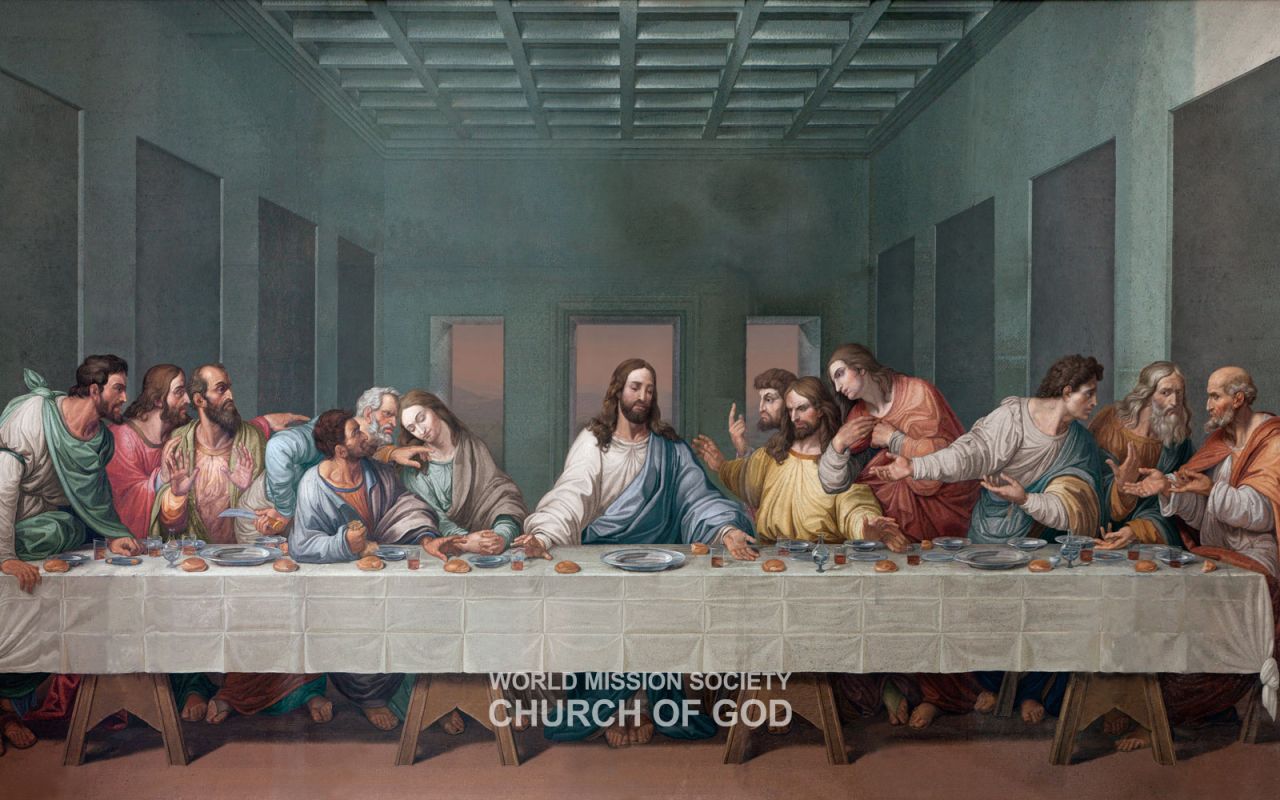

Before the Passover, Judas Iscariot conspired with the chief priests and agreed to betray Jesus in exchange for money. A few days later, Jesus celebrated the Passover with His disciples in a prepared upper room. There, He gave them bread and wine, symbolizing His body and blood.
And he took bread, gave thanks and broke it, and gave it to them, saying, “This is my body given for you; do this in remembrance of me.” In the same way, after the supper he took the cup, saying, “This cup is the new covenant in my blood, which is poured out for you.”
After the Passover, Jesus went to the Mount of Olives and prayed earnestly. Soon afterward, Judas Iscariot arrived with the chief priests, officers, and elders. As they had planned, Judas approached and betrayed Jesus with a kiss. The crowd then seized Jesus and took Him to the high priest’s house.
At daybreak, Jesus was brought before Pilate. When Pilate learned that Jesus was a Galilean, he sent Him to Herod, the ruler of Galilee. Herod mocked Him and then sent Him back to Pilate. To appease the crowd, Pilate sentenced Jesus to death.
While Jesus was on the cross, many continued to mock Him. Yet one of the criminals crucified beside Him rebuked the others and asked Jesus for mercy. Jesus answered, “Truly I tell you, today you will be with me in Paradise.”
At the ninth hour (around 3 p.m.), Jesus breathed His last. A council member named Joseph of Arimathea took His body and laid it in his own new tomb in which no one had ever been laid.
Jesus’ Resurrection (24)
After the Sabbath, early the next morning, women went to Jesus’ tomb. There, an angel dressed in radiant white appeared and announced that Jesus had risen. The women then remembered Jesus’ words: “The Son of Man must be crucified and rise again on the third day.” They quickly went and reported the news of His resurrection to the eleven disciples.
The risen Jesus appeared to two disciples on the road to Emmaus. Although they walked and talked with Him along the way, they did not recognize who He was. It was only when Jesus broke the bread and gave thanks that their eyes were opened and they realized it was Him.
The two disciples immediately returned to Jerusalem and told the others what had happened. While they were still speaking, Jesus appeared among them. At first, they thought they were seeing a spirit, but when He showed them His hands and feet, their fear turned to joy. They even gave Him food to eat.
Jesus then taught them that the message of salvation must be proclaimed to all nations. After His ascension, the disciples were filled with great joy, continually praising God and meeting together in the temple.
See also
References
- ↑ "Colossians 4:14".
- ↑ "2 Timothy 4:10–11".
- ↑ 3.0 3.1 "Luke 1:1–4".
- ↑ "Acts 1:1–2".
- ↑ "Luke 2:10–11".
- ↑ "Luke 3:23–38".
- ↑ "Luke 12:4–5".
- ↑ "Luke 16:19–29".
- ↑ "Luke 23:42–43".
- ↑ "Luke 23:46".
- ↑ "Luke 24:39".
- ↑ "Luke 1:30–35".
- ↑ "Luke 3:21–22".
- ↑ "Luke 4:1".
- ↑ "Luke 4:14".
- ↑ "Luke 12:10–12".
- ↑ "Luke 11:13".
- ↑ "Luke 24:49".
- ↑ "Mark 1:30–31".
- ↑ "Luke 4:38".
- ↑ "Matthew 8:2".
- ↑ "Mark 1:40".
- ↑ "Luke 5:12".
- ↑ Alyssa Roat, Why Was There a Roman Census at the Time of Jesus' Birth?, Bible Study Tools, April 29, 2024