The First Commandment: Difference between revisions
No edit summary |
No edit summary |
||
| Line 9: | Line 9: | ||
As the first of the Ten Commandments, God said, “You shall have no other gods before me.” | As the first of the Ten Commandments, God said, “You shall have no other gods before me.” | ||
{{quote5 |내용= “'''You shall have no other gods before me'''.”|출처=[https://www. | {{quote5 |내용= “'''You shall have no other gods before me'''.”|출처=[https://www.biblegateway.com/passage/?search=Exodus+20%3A3&version=NIV Exodus 20:3] }} | ||
The first commandment has two meanings. They are, “Do not worship any other gods,” and “Serve only Me [God].” God did not make a dictatorial request to “worship no other gods besides Him” for no reason. The reason God gave the first commandment is because He is the Savior who saved Israel from slavery in Egypt.<ref>{{Cite web|url=https://www. | The first commandment has two meanings. They are, “Do not worship any other gods,” and “Serve only Me [God].” God did not make a dictatorial request to “worship no other gods besides Him” for no reason. The reason God gave the first commandment is because He is the Savior who saved Israel from slavery in Egypt.<ref>{{Cite web|url=https://www.biblegateway.com/passage/?search=Exodus+13%3A3&version=NIV|title=Exodus 13:3|quote= }}</ref> So when He gave the first commandment, God said beforehand, “I am God who led you out of Egypt.” | ||
* “I am the LORD '''your God, who brought you out of Egypt, out of the land of slavery'''. '''You shall have no other gods before me'''.” ([https://www. | * “I am the LORD '''your God, who brought you out of Egypt, out of the land of slavery'''. '''You shall have no other gods before me'''.” ([https://www.biblegateway.com/passage/?search=Exodus+20%3A2-3&version=NIV Exodus 20:2–3]) | ||
* “I am the LORD '''your God, who brought you out of Egypt, out of the land of slavery'''. '''You shall have no other gods before me'''.” ([https://www. | * “I am the LORD '''your God, who brought you out of Egypt, out of the land of slavery'''. '''You shall have no other gods before me'''.” ([https://www.biblegateway.com/passage/?search=Deuteronomy+5%3A6-7&version=NIV Deuteronomy 5:6–7]) | ||
The day God led the Israelites out of Egypt was the Passover.<ref>{{Cite web|url=https://www. | The day God led the Israelites out of Egypt was the Passover.<ref>{{Cite web|url=https://www.biblegateway.com/passage/?search=Exodus+12%3A27-42&version=NIV|title=Exodus 12:27–42|quote= }}</ref> Because He led the Israelites with His mighty hand on the night of the Passover, He told them to celebrate the Passover, the day of redemption, and not to worship any other gods except God the Redeemer. | ||
===Love God With All Your Heart=== | ===Love God With All Your Heart=== | ||
| Line 20: | Line 20: | ||
When an expert in the law asked Jesus what the greatest commandment was in the Law, Jesus replied: “ ‘Love God with all your heart, soul, and mind.’ This is the first commandment.” | When an expert in the law asked Jesus what the greatest commandment was in the Law, Jesus replied: “ ‘Love God with all your heart, soul, and mind.’ This is the first commandment.” | ||
{{quote5 |내용=One of them, an expert in the law, tested him with this question: “Teacher, which is the greatest commandment in the Law?” Jesus replied: “ ‘'''Love the Lord your God with all your heart and with all your soul and with all your mind'''.’ This is the '''first and greatest commandment'''.”|출처=[https://www. | {{quote5 |내용=One of them, an expert in the law, tested him with this question: “Teacher, which is the greatest commandment in the Law?” Jesus replied: “ ‘'''Love the Lord your God with all your heart and with all your soul and with all your mind'''.’ This is the '''first and greatest commandment'''.”|출처=[https://www.biblegateway.com/passage/?search=Matthew+22%3A35-38&version=NIV Matthew 22:35–38] }} | ||
When we love God with all our heart, with all our soul, and with all our mind, we can worship God only and no other gods. However, just because a person thinks he loves God or says that he loves God, that does not mean that he can be acknowledged by God as a person who loves God with all his heart, mind, and soul.<br> | When we love God with all our heart, with all our soul, and with all our mind, we can worship God only and no other gods. However, just because a person thinks he loves God or says that he loves God, that does not mean that he can be acknowledged by God as a person who loves God with all his heart, mind, and soul.<br> | ||
| Line 32: | Line 32: | ||
The Passover was first established at the time of the [[Exodus]] of the Israelites. | The Passover was first established at the time of the [[Exodus]] of the Israelites. | ||
{{quote5 |내용= “[I]t is the LORD’s '''Passover'''. On that same night I will pass through Egypt and strike down every firstborn—both men and animals—and '''I will bring judgment on all the gods of Egypt'''. I am the LORD.”|출처=[https://www. | {{quote5 |내용= “[I]t is the LORD’s '''Passover'''. On that same night I will pass through Egypt and strike down every firstborn—both men and animals—and '''I will bring judgment on all the gods of Egypt'''. I am the LORD.”|출처=[https://www.biblegateway.com/passage/?search=Exodus+12%3A11-12&version=NIV Exodus 12:11–12] }} | ||
God said that judgment would be brought on all the other gods on the Passover. When all other gods are judged, the only god left is God, who is the true God. When we realize the Passover and keep it, we will automatically serve only God and no other gods. This way, we will be able to obey the first commandment.<br> | God said that judgment would be brought on all the other gods on the Passover. When all other gods are judged, the only god left is God, who is the true God. When we realize the Passover and keep it, we will automatically serve only God and no other gods. This way, we will be able to obey the first commandment.<br> | ||
| Line 38: | Line 38: | ||
====Time of King Hezekiah==== | ====Time of King Hezekiah==== | ||
[[File:Hezekiah.jpg|thumb|230px|Hezekiah and the people of Judah destroying various idols after keeping the Passover]] | [[File:Hezekiah.jpg|thumb|230px|Hezekiah and the people of Judah destroying various idols after keeping the Passover]] | ||
Until the time of Hezekiah, the thirteenth king of the southern Kingdom of Judah, the Passover had not been celebrated for a long time in Judah. After Hezekiah was enthroned, he repaired the temple<ref>{{Cite web|url=https://www. | Until the time of Hezekiah, the thirteenth king of the southern Kingdom of Judah, the Passover had not been celebrated for a long time in Judah. After Hezekiah was enthroned, he repaired the temple<ref>{{Cite web|url=https://www.biblegateway.com/passage/?search=2+Chronicles+29%3A2-3&version=NIV|title=2 Chronicles 29:2–3|quote= }}</ref> and kept the Passover with the people. | ||
{{quote5 |내용=Hezekiah sent word to all Israel and Judah and also wrote letters to Ephraim and Manasseh, inviting them to come to the temple of the LORD in Jerusalem and celebrate the Passover to the LORD, the God of Israel. . . . They decided to send a proclamation throughout Israel, from Beersheba to Dan, calling the people to come to Jerusalem and '''celebrate the Passover''' to the LORD, the God of Israel. It had not been celebrated in large numbers according to what was written.|출처=[https://www. | {{quote5 |내용=Hezekiah sent word to all Israel and Judah and also wrote letters to Ephraim and Manasseh, inviting them to come to the temple of the LORD in Jerusalem and celebrate the Passover to the LORD, the God of Israel. . . . They decided to send a proclamation throughout Israel, from Beersheba to Dan, calling the people to come to Jerusalem and '''celebrate the Passover''' to the LORD, the God of Israel. It had not been celebrated in large numbers according to what was written.|출처=[https://www.biblegateway.com/passage/?search=2+Chronicles+30%3A1&OLWordSearchRange=beg&version=NIV 2 Chronicles 30:1], [https://www.biblegateway.com/passage/?search=2+Chronicles+30%3A5&OLWordSearchRange=beg&version=NIV 5] }} | ||
After the people celebrated the Passover, they destroyed other gods. | After the people celebrated the Passover, they destroyed other gods. | ||
{{quote5 |내용=When all this had ended, the Israelites who were there went out to the towns of Judah, '''smashed the sacred stones and cut down the Asherah poles. They destroyed the high places and the altars throughout Judah and Benjamin and in Ephraim and Manasseh'''. After they had destroyed all of them, the Israelites returned to their own towns and to their own property.|출처=[https://www. | {{quote5 |내용=When all this had ended, the Israelites who were there went out to the towns of Judah, '''smashed the sacred stones and cut down the Asherah poles. They destroyed the high places and the altars throughout Judah and Benjamin and in Ephraim and Manasseh'''. After they had destroyed all of them, the Israelites returned to their own towns and to their own property.|출처=[https://www.biblegateway.com/passage/?search=2+Chronicles+31%3A1&version=NIV 2 Chronicles 31:1] }} | ||
Until they kept the Passover, Hezekiah and the people had worshiped other gods unknowingly, and kept various idols around them such as sacred stones and Asherah poles. However, after keeping the Passover, they destroyed all the detestable gods they had worshiped. | Until they kept the Passover, Hezekiah and the people had worshiped other gods unknowingly, and kept various idols around them such as sacred stones and Asherah poles. However, after keeping the Passover, they destroyed all the detestable gods they had worshiped. | ||
| Line 50: | Line 50: | ||
====Time of King Josiah==== | ====Time of King Josiah==== | ||
[[File:The Removal and Destruction of The Chariot and The Horses of The Sun 1569 print by Maarten van Heemskerck, NHD 44 -S.II 111910, Prints Department, Royal Library of Belgium.jpg|thumb|230px|Josiah and the people destroying the idols after realizing the Passover]] | [[File:The Removal and Destruction of The Chariot and The Horses of The Sun 1569 print by Maarten van Heemskerck, NHD 44 -S.II 111910, Prints Department, Royal Library of Belgium.jpg|thumb|230px|Josiah and the people destroying the idols after realizing the Passover]] | ||
In the eighteenth year of Josiah, the sixteenth king of the southern Kingdom of Judah, the king and the people removed the idols from the temple after they realized a covenant of God recorded in the Book of the Law. This covenant was the Passover.<ref>{{Cite web|url=https://www. | In the eighteenth year of Josiah, the sixteenth king of the southern Kingdom of Judah, the king and the people removed the idols from the temple after they realized a covenant of God recorded in the Book of the Law. This covenant was the Passover.<ref>{{Cite web|url=https://www.biblegateway.com/passage/?search=2+Kings+23%3A21-24&version=NIV|title=2 Kings 23:21–24|quote= }}</ref> | ||
{{quote5 |내용= The king [Josiah] stood by the pillar and renewed the covenant in the presence of the LORD—to '''follow the LORD and keep his commands, regulations and decrees with all his heart and all his soul, thus confirming the words of the covenant [Passover] written in this book'''. Then all the people pledged themselves to the covenant. The king ordered Hilkiah the high priest, the priests next in rank and the doorkeepers to '''remove from the temple of the LORD all the articles made for Baal and Asherah and all the starry hosts. He burned them outside Jerusalem in the fields of the Kidron Valley''' and took the ashes to Bethel.|출처=[https://www. | {{quote5 |내용= The king [Josiah] stood by the pillar and renewed the covenant in the presence of the LORD—to '''follow the LORD and keep his commands, regulations and decrees with all his heart and all his soul, thus confirming the words of the covenant [Passover] written in this book'''. Then all the people pledged themselves to the covenant. The king ordered Hilkiah the high priest, the priests next in rank and the doorkeepers to '''remove from the temple of the LORD all the articles made for Baal and Asherah and all the starry hosts. He burned them outside Jerusalem in the fields of the Kidron Valley''' and took the ashes to Bethel.|출처=[https://www.biblegateway.com/passage/?search=2+Kings+23%3A3-4&version=NIV 2 Kings 23:3–4] }} | ||
King Josiah believed in God and tried to live according to God’s will, but he had kept idols in the temple of God for eighteen years since he was enthroned.<ref>{{Cite web|url=https://www. | King Josiah believed in God and tried to live according to God’s will, but he had kept idols in the temple of God for eighteen years since he was enthroned.<ref>{{Cite web|url=https://www.biblegateway.com/passage/?search=2+Kings+22%3A3-11&version=NIV|title=2 Kings 22:3–11|quote= }}</ref> When Josiah realized the Passover, he destroyed all the idols in the whole country and destroyed the golden calves and the high places that Jeroboam, the first king of the northern Kingdom of Israel, had made.<ref>{{Cite web|url=https://www.biblegateway.com/passage/?search=2+Kings+23%3A15&version=NIV|title=2 Kings 23:15|quote= }}</ref> | ||
* '''The Sin of Jeroboam''' | * '''The Sin of Jeroboam''' | ||
:Jeroboam, the first king of the northern Kingdom of Israel, tried to keep the people from going to Jerusalem to celebrate [[The Feasts of God|God’s feasts]], including the Passover. So he made two golden calves, set up one in Bethel and the other in Dan, and said to the people, “O Israel, here are your gods, O Israel, who brought you up out of Egypt.” He also appointed days of his own choosing as feasts.<ref>{{Cite web|url=https://www. | :Jeroboam, the first king of the northern Kingdom of Israel, tried to keep the people from going to Jerusalem to celebrate [[The Feasts of God|God’s feasts]], including the Passover. So he made two golden calves, set up one in Bethel and the other in Dan, and said to the people, “O Israel, here are your gods, O Israel, who brought you up out of Egypt.” He also appointed days of his own choosing as feasts.<ref>{{Cite web|url=https://www.biblegateway.com/passage/?search=1+Kings+12%3A25-33&version=NIV|title=1 Kings 12:25–33|quote= }}</ref> This led the northern Kingdom of Israel to forsake the feasts of God and to worship other gods on the pretext of believing in God. This history also shows that if we do not keep the Passover, we come to worship other gods, not even realizing we are. | ||
====Repeated History==== | ====Repeated History==== | ||
[[File:Claes Moeyaert - Sacrifice of Jeroboam - Google Art Project.jpg|thumb|230px|''Jeroboam Sacrificing to His Idols'' by Claes Corneliszoon Moeyaert, 1641]] | [[File:Claes Moeyaert - Sacrifice of Jeroboam - Google Art Project.jpg|thumb|230px|''Jeroboam Sacrificing to His Idols'' by Claes Corneliszoon Moeyaert, 1641]] | ||
God’s promise to judge other gods through the Passover did not only apply to the time of the Exodus. In any age, whenever people realized the Passover and kept it, all the other gods were destroyed. On the contrary, whenever they forsook the Passover, they came to worship other gods though claiming to believe in God. This repeated over and over again.<ref>{{Cite web|url=https://www. | God’s promise to judge other gods through the Passover did not only apply to the time of the Exodus. In any age, whenever people realized the Passover and kept it, all the other gods were destroyed. On the contrary, whenever they forsook the Passover, they came to worship other gods though claiming to believe in God. This repeated over and over again.<ref>{{Cite web|url=https://www.biblegateway.com/passage/?search=Ecclesiastes+3%3A15&version=NIV|title=Ecclesiastes 3:15|quote=}}</ref><br>Until the Passover was celebrated in the days of Hezekiah and Josiah, the people kept idols and worshiped them. Likewise, even though we believe in God today, if we do not keep the Passover, we come to serve other gods unknowingly. That is why the churches that do not keep the Passover observe Sunday worship, the holy day of the sun god, and Christmas, the birthday of the sun god.<ref>{{Cite web |url=https://english.watv.org/truth/qna/content.asp?idx=1524&page=6 |title=Q. The Biblical Sabbath Is Saturday. Then, Why Do Most Churches Worship on Sunday? |website=English.watv.org |publisher= |date= |quote= }}</ref><ref>{{Cite web |url=https://www.britannica.com/topic/sun-worship#:~:text=During%20the%20later,birthday%20of%20Christ.|title= Sun worship|website=Britannica |publisher=|date= |quote= }}</ref><ref>{{Cite web|url=https://www.biblegateway.com/passage/?search=Ezekiel+8%3A16&version=NIV|title=Ezekiel 8:16|quote= }}</ref> However, [[World Mission Society Church of God|the Church of God]], which keeps the Passover by following the example of Christ, does not keep any of the pagan customs such as [[Lord’s Day Worship (Sunday Worship)|Sunday worship]], [[Christmas]], [[Cross|cross-reverence]], or [[Easter eggs]]. | ||
Therefore, the first commandment, “You shall have no other gods before me,” can only be fulfilled by keeping the Passover. | Therefore, the first commandment, “You shall have no other gods before me,” can only be fulfilled by keeping the Passover. | ||
| Line 69: | Line 69: | ||
[[File:Biddende joodse man, RP-P-2015-26-2086.jpg|thumb|200px|By Hermann Struck, 1913: Jews wear Tefillin (''תְּפִלִּין,'' black leather boxes containing scrolls of parchment inscribed with verses) on their foreheads and hands.]] | [[File:Biddende joodse man, RP-P-2015-26-2086.jpg|thumb|200px|By Hermann Struck, 1913: Jews wear Tefillin (''תְּפִלִּין,'' black leather boxes containing scrolls of parchment inscribed with verses) on their foreheads and hands.]] | ||
[[Moses]] said that the first commandment, “Love God with all your heart, soul, and strength,” should be a symbol on the hands and foreheads. | [[Moses]] said that the first commandment, “Love God with all your heart, soul, and strength,” should be a symbol on the hands and foreheads. | ||
{{quote5 |내용=Hear, O Israel: The LORD our God, the LORD is one. '''Love the LORD your God with all your heart and with all your soul and with all your strength'''. These commandments that I give you today are to be upon your hearts. Impress them on your children. Talk about them when you sit at home and when you walk along the road, when you lie down and when you get up. Tie them as '''symbols on your hands''' and bind them '''on your foreheads'''.|출처=[https://www. | {{quote5 |내용=Hear, O Israel: The LORD our God, the LORD is one. '''Love the LORD your God with all your heart and with all your soul and with all your strength'''. These commandments that I give you today are to be upon your hearts. Impress them on your children. Talk about them when you sit at home and when you walk along the road, when you lie down and when you get up. Tie them as '''symbols on your hands''' and bind them '''on your foreheads'''.|출처=[https://www.biblegateway.com/passage/?search=Deuteronomy+6%3A4-8&version=NIV Deuteronomy 6:4–8] }} | ||
However, in the book of [[Exodus]] which was also written by Moses, it is written that the Passover should be the sign on the hand and the reminder on the forehead. | However, in the book of [[Exodus]] which was also written by Moses, it is written that the Passover should be the sign on the hand and the reminder on the forehead. | ||
{{quote5 |내용=“On that day tell your son, ‘I do '''this''' because of '''what the LORD did for me when I came out of Egypt'''.’ This observance will be for you like a '''sign on your hand''' and a '''reminder on your forehead''' that the law of the LORD is to be on your lips.”|출처=[https://www. | {{quote5 |내용=“On that day tell your son, ‘I do '''this''' because of '''what the LORD did for me when I came out of Egypt'''.’ This observance will be for you like a '''sign on your hand''' and a '''reminder on your forehead''' that the law of the LORD is to be on your lips.”|출처=[https://www.biblegateway.com/passage/?search=Exodus+13%3A8-9&version=NIV Exodus 13:8–9] }} | ||
What God did for the Israelites when they came out of Egypt is that He destroyed the firstborn of Egypt through disaster and protected the Israelites who kept the Passover. On the night of the Passover, the Israelites were delivered from Egypt.<ref>{{Cite web|url=https://www. | What God did for the Israelites when they came out of Egypt is that He destroyed the firstborn of Egypt through disaster and protected the Israelites who kept the Passover. On the night of the Passover, the Israelites were delivered from Egypt.<ref>{{Cite web|url=https://www.biblegateway.com/passage/?search=Exodus+12%3A27-42&version=NIV|title=Exodus 12:27–42|quote= }}</ref> Therefore, this ceremony, which is to be the sign on the hand and a reminder on the forehead, refers to the Passover. These words indicate that the first commandment, “Love God with all your heart,” and the Passover are in fact the same.<br> | ||
====Josiah Fulfilled the First Commandment==== | ====Josiah Fulfilled the First Commandment==== | ||
In the Bible, there is a person who was acknowledged to have loved God with all his heart. He is King Josiah of the southern Kingdom of Judah. | In the Bible, there is a person who was acknowledged to have loved God with all his heart. He is King Josiah of the southern Kingdom of Judah. | ||
{{quote5 |내용=Neither before nor after '''Josiah''' was there a king like him who '''turned to the LORD as he did—with all his heart and with all his soul and with all his strength, in accordance with all the Law of Moses'''.|출처=[https://www. | {{quote5 |내용=Neither before nor after '''Josiah''' was there a king like him who '''turned to the LORD as he did—with all his heart and with all his soul and with all his strength, in accordance with all the Law of Moses'''.|출처=[https://www.biblegateway.com/passage/?search=2+Kings+23%3A25&version=NIV 2 Kings 23:25] }} | ||
Josiah was written as someone who turned to God with all his heart and with all his soul and with all his strength, in accordance with all the Law of God. This means that Josiah fully obeyed all the law, including the first commandment, “Love God with all your heart.” Josiah received this acknowledgment after keeping the Passover which had not been kept for a long time. | Josiah was written as someone who turned to God with all his heart and with all his soul and with all his strength, in accordance with all the Law of God. This means that Josiah fully obeyed all the law, including the first commandment, “Love God with all your heart.” Josiah received this acknowledgment after keeping the Passover which had not been kept for a long time. | ||
{{quote5 |내용= The king gave this order to all the people: “Celebrate the '''Passover''' to the LORD your God, as it is written in this Book of the Covenant.” Not since the days of the judges who led Israel, nor throughout the days of the kings of Israel and the kings of Judah, had any such Passover been observed. But in the eighteenth year of King Josiah, this Passover was celebrated to the LORD in Jerusalem. |출처=[https://www. | {{quote5 |내용= The king gave this order to all the people: “Celebrate the '''Passover''' to the LORD your God, as it is written in this Book of the Covenant.” Not since the days of the judges who led Israel, nor throughout the days of the kings of Israel and the kings of Judah, had any such Passover been observed. But in the eighteenth year of King Josiah, this Passover was celebrated to the LORD in Jerusalem. |출처=[https://www.biblegateway.com/passage/?search=2+Kings+23%3A21-23&version=NIV 2 Kings 23:21–23] }} | ||
By keeping the Passover, Josiah fully obeyed the first commandment, “Love God with all your heart.” | By keeping the Passover, Josiah fully obeyed the first commandment, “Love God with all your heart.” | ||
| Line 88: | Line 88: | ||
{{그림 |최후의 만찬 유월절.jpg|너비= 250px |정렬=오른쪽섬네일 |타이틀=The Passover of the new covenant kept by Jesus before the crucifixion}} | {{그림 |최후의 만찬 유월절.jpg|너비= 250px |정렬=오른쪽섬네일 |타이틀=The Passover of the new covenant kept by Jesus before the crucifixion}} | ||
The equivalence of the First Commandment and the Passover is not limited to the Old Testament times. Two thousand years ago, Jesus established the Passover of [[New Covenant|the new covenant]]. As God who was [[God in the Flesh (Incarnation)|incarnated]], Jesus suffered the shedding of blood on the cross for the salvation of mankind. The last thing he kept with His disciples before His suffering was the New Covenant Passover, which is well-known as '''''[[The Last Supper]]'''''. Jesus promised the Passover bread to be His flesh that would be torn on the cross, and the Passover wine to be His blood that would be shed on the cross. | The equivalence of the First Commandment and the Passover is not limited to the Old Testament times. Two thousand years ago, Jesus established the Passover of [[New Covenant|the new covenant]]. As God who was [[God in the Flesh (Incarnation)|incarnated]], Jesus suffered the shedding of blood on the cross for the salvation of mankind. The last thing he kept with His disciples before His suffering was the New Covenant Passover, which is well-known as '''''[[The Last Supper]]'''''. Jesus promised the Passover bread to be His flesh that would be torn on the cross, and the Passover wine to be His blood that would be shed on the cross. | ||
{{quote5 |내용=And he said to them, “I have eagerly desired to eat this '''Passover''' with you before I suffer.” . . . And he took '''bread''', gave thanks and broke it, and gave it to them, saying, “This is '''my body''' given for you; do this in remembrance of me.” In the same way, after the supper he took the '''cup [wine]''', saying, “This cup is the '''new covenant''' in '''my blood''', which is poured out for you.”|출처=[https://www. | {{quote5 |내용=And he said to them, “I have eagerly desired to eat this '''Passover''' with you before I suffer.” . . . And he took '''bread''', gave thanks and broke it, and gave it to them, saying, “This is '''my body''' given for you; do this in remembrance of me.” In the same way, after the supper he took the '''cup [wine]''', saying, “This cup is the '''new covenant''' in '''my blood''', which is poured out for you.”|출처=[https://www.biblegateway.com/passage/?search=Luke+22%3A15&OLWordSearchRange=beg&version=NIV Luke 22:15], [https://www.biblegateway.com/passage/?search=Luke+22%3A19-20&OLWordSearchRange=beg&version=NIV 19–20] }} | ||
The Passover of the new covenant is the truth that allows us to realize the love and sacrifice of Jesus who opened the way of salvation through the pain of being crucified and shedding His blood. Those who are saved through the Passover and realize God’s love are bound to love God with all their heart. Therefore, even in the New Testament times, we come to love God with all our heart when we keep the Passover of the new covenant. Thus, regardless of age, the first commandment, “Love God with all your heart,” can be fulfilled through the Passover. | The Passover of the new covenant is the truth that allows us to realize the love and sacrifice of Jesus who opened the way of salvation through the pain of being crucified and shedding His blood. Those who are saved through the Passover and realize God’s love are bound to love God with all their heart. Therefore, even in the New Testament times, we come to love God with all our heart when we keep the Passover of the new covenant. Thus, regardless of age, the first commandment, “Love God with all your heart,” can be fulfilled through the Passover. | ||
Revision as of 16:51, 24 June 2024

The first among the Ten Commandments is, “You shall have no other gods before me.” This is the first commandment that God gave to His people when He proclaimed the Ten Commandments on Mount Sinai. In the New Testament times, Jesus Christ said that the first commandment is to love God with all our heart and with all our soul and with all our mind. This is sometimes called the “the greatest commandment.” However, the New and Old Testaments do not conflict with each other in regard to the first commandment. It is because if we love God with all our heart, we will only serve God and no other gods.
There are not many people who fully understand the first commandment. There are even less people who know how to fulfill the first commandment. In the Old Testament, the Israelites, who were proud of their faith in God and love for Him, very frequently worshiped other gods and idols. The first commandment cannot be fulfilled through human thoughts and methods. The way we can worship only God and love Him without worshiping other gods is to keep God’s commandment, the Passover.
The Content of the First Commandment
You Shall Have No Other Gods Before Me

As the first of the Ten Commandments, God said, “You shall have no other gods before me.”
“You shall have no other gods before me.”
The first commandment has two meanings. They are, “Do not worship any other gods,” and “Serve only Me [God].” God did not make a dictatorial request to “worship no other gods besides Him” for no reason. The reason God gave the first commandment is because He is the Savior who saved Israel from slavery in Egypt.[1] So when He gave the first commandment, God said beforehand, “I am God who led you out of Egypt.”
- “I am the LORD your God, who brought you out of Egypt, out of the land of slavery. You shall have no other gods before me.” (Exodus 20:2–3)
- “I am the LORD your God, who brought you out of Egypt, out of the land of slavery. You shall have no other gods before me.” (Deuteronomy 5:6–7)
The day God led the Israelites out of Egypt was the Passover.[2] Because He led the Israelites with His mighty hand on the night of the Passover, He told them to celebrate the Passover, the day of redemption, and not to worship any other gods except God the Redeemer.
Love God With All Your Heart

When an expert in the law asked Jesus what the greatest commandment was in the Law, Jesus replied: “ ‘Love God with all your heart, soul, and mind.’ This is the first commandment.”
One of them, an expert in the law, tested him with this question: “Teacher, which is the greatest commandment in the Law?” Jesus replied: “ ‘Love the Lord your God with all your heart and with all your soul and with all your mind.’ This is the first and greatest commandment.”
When we love God with all our heart, with all our soul, and with all our mind, we can worship God only and no other gods. However, just because a person thinks he loves God or says that he loves God, that does not mean that he can be acknowledged by God as a person who loves God with all his heart, mind, and soul.
The Passover Fulfills the First Commandment
The Passover Contains the Promise of Judging Other Gods
The first of the Ten Commandments, “You shall have no other gods before me,” includes the command, “Worship only God,” and “Do not serve any other gods.” The Passover is the truth that allows us to keep these two commands. It is because God established the Passover as the day to judge other gods.
History of the Exodus

The Passover was first established at the time of the Exodus of the Israelites.
“[I]t is the LORD’s Passover. On that same night I will pass through Egypt and strike down every firstborn—both men and animals—and I will bring judgment on all the gods of Egypt. I am the LORD.”
God said that judgment would be brought on all the other gods on the Passover. When all other gods are judged, the only god left is God, who is the true God. When we realize the Passover and keep it, we will automatically serve only God and no other gods. This way, we will be able to obey the first commandment.
Time of King Hezekiah

Until the time of Hezekiah, the thirteenth king of the southern Kingdom of Judah, the Passover had not been celebrated for a long time in Judah. After Hezekiah was enthroned, he repaired the temple[3] and kept the Passover with the people.
Hezekiah sent word to all Israel and Judah and also wrote letters to Ephraim and Manasseh, inviting them to come to the temple of the LORD in Jerusalem and celebrate the Passover to the LORD, the God of Israel. . . . They decided to send a proclamation throughout Israel, from Beersheba to Dan, calling the people to come to Jerusalem and celebrate the Passover to the LORD, the God of Israel. It had not been celebrated in large numbers according to what was written.
After the people celebrated the Passover, they destroyed other gods.
When all this had ended, the Israelites who were there went out to the towns of Judah, smashed the sacred stones and cut down the Asherah poles. They destroyed the high places and the altars throughout Judah and Benjamin and in Ephraim and Manasseh. After they had destroyed all of them, the Israelites returned to their own towns and to their own property.
Until they kept the Passover, Hezekiah and the people had worshiped other gods unknowingly, and kept various idols around them such as sacred stones and Asherah poles. However, after keeping the Passover, they destroyed all the detestable gods they had worshiped.
Time of King Josiah

In the eighteenth year of Josiah, the sixteenth king of the southern Kingdom of Judah, the king and the people removed the idols from the temple after they realized a covenant of God recorded in the Book of the Law. This covenant was the Passover.[4]
The king [Josiah] stood by the pillar and renewed the covenant in the presence of the LORD—to follow the LORD and keep his commands, regulations and decrees with all his heart and all his soul, thus confirming the words of the covenant [Passover] written in this book. Then all the people pledged themselves to the covenant. The king ordered Hilkiah the high priest, the priests next in rank and the doorkeepers to remove from the temple of the LORD all the articles made for Baal and Asherah and all the starry hosts. He burned them outside Jerusalem in the fields of the Kidron Valley and took the ashes to Bethel.
King Josiah believed in God and tried to live according to God’s will, but he had kept idols in the temple of God for eighteen years since he was enthroned.[5] When Josiah realized the Passover, he destroyed all the idols in the whole country and destroyed the golden calves and the high places that Jeroboam, the first king of the northern Kingdom of Israel, had made.[6]
- The Sin of Jeroboam
- Jeroboam, the first king of the northern Kingdom of Israel, tried to keep the people from going to Jerusalem to celebrate God’s feasts, including the Passover. So he made two golden calves, set up one in Bethel and the other in Dan, and said to the people, “O Israel, here are your gods, O Israel, who brought you up out of Egypt.” He also appointed days of his own choosing as feasts.[7] This led the northern Kingdom of Israel to forsake the feasts of God and to worship other gods on the pretext of believing in God. This history also shows that if we do not keep the Passover, we come to worship other gods, not even realizing we are.
Repeated History

God’s promise to judge other gods through the Passover did not only apply to the time of the Exodus. In any age, whenever people realized the Passover and kept it, all the other gods were destroyed. On the contrary, whenever they forsook the Passover, they came to worship other gods though claiming to believe in God. This repeated over and over again.[8]
Until the Passover was celebrated in the days of Hezekiah and Josiah, the people kept idols and worshiped them. Likewise, even though we believe in God today, if we do not keep the Passover, we come to serve other gods unknowingly. That is why the churches that do not keep the Passover observe Sunday worship, the holy day of the sun god, and Christmas, the birthday of the sun god.[9][10][11] However, the Church of God, which keeps the Passover by following the example of Christ, does not keep any of the pagan customs such as Sunday worship, Christmas, cross-reverence, or Easter eggs.
Therefore, the first commandment, “You shall have no other gods before me,” can only be fulfilled by keeping the Passover.
The Passover Allows You to Love God With All Your Heart
The Sign on the Hand and the Reminder on Your Forehead

Moses said that the first commandment, “Love God with all your heart, soul, and strength,” should be a symbol on the hands and foreheads.
Hear, O Israel: The LORD our God, the LORD is one. Love the LORD your God with all your heart and with all your soul and with all your strength. These commandments that I give you today are to be upon your hearts. Impress them on your children. Talk about them when you sit at home and when you walk along the road, when you lie down and when you get up. Tie them as symbols on your hands and bind them on your foreheads.
However, in the book of Exodus which was also written by Moses, it is written that the Passover should be the sign on the hand and the reminder on the forehead.
“On that day tell your son, ‘I do this because of what the LORD did for me when I came out of Egypt.’ This observance will be for you like a sign on your hand and a reminder on your forehead that the law of the LORD is to be on your lips.”
What God did for the Israelites when they came out of Egypt is that He destroyed the firstborn of Egypt through disaster and protected the Israelites who kept the Passover. On the night of the Passover, the Israelites were delivered from Egypt.[12] Therefore, this ceremony, which is to be the sign on the hand and a reminder on the forehead, refers to the Passover. These words indicate that the first commandment, “Love God with all your heart,” and the Passover are in fact the same.
Josiah Fulfilled the First Commandment
In the Bible, there is a person who was acknowledged to have loved God with all his heart. He is King Josiah of the southern Kingdom of Judah.
Neither before nor after Josiah was there a king like him who turned to the LORD as he did—with all his heart and with all his soul and with all his strength, in accordance with all the Law of Moses.
Josiah was written as someone who turned to God with all his heart and with all his soul and with all his strength, in accordance with all the Law of God. This means that Josiah fully obeyed all the law, including the first commandment, “Love God with all your heart.” Josiah received this acknowledgment after keeping the Passover which had not been kept for a long time.
The king gave this order to all the people: “Celebrate the Passover to the LORD your God, as it is written in this Book of the Covenant.” Not since the days of the judges who led Israel, nor throughout the days of the kings of Israel and the kings of Judah, had any such Passover been observed. But in the eighteenth year of King Josiah, this Passover was celebrated to the LORD in Jerusalem.
By keeping the Passover, Josiah fully obeyed the first commandment, “Love God with all your heart.”
New Covenant Passover
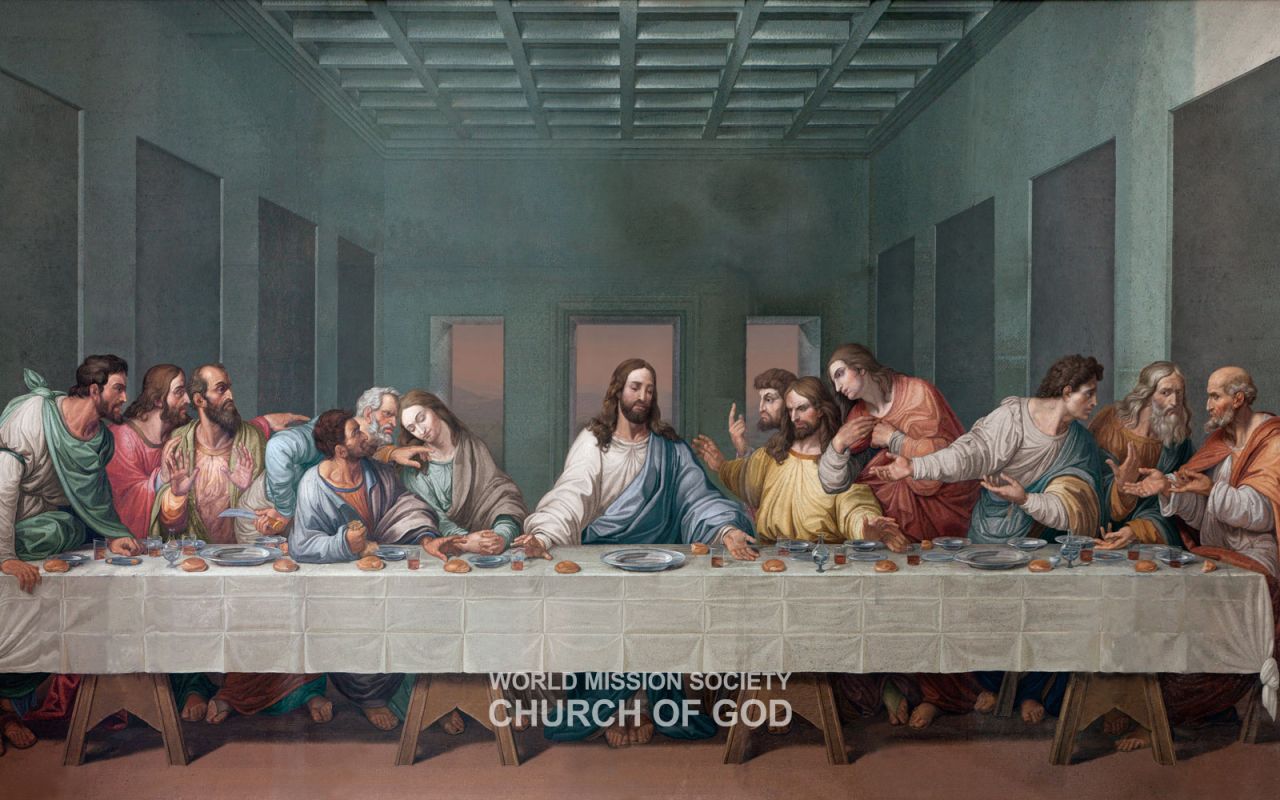

The equivalence of the First Commandment and the Passover is not limited to the Old Testament times. Two thousand years ago, Jesus established the Passover of the new covenant. As God who was incarnated, Jesus suffered the shedding of blood on the cross for the salvation of mankind. The last thing he kept with His disciples before His suffering was the New Covenant Passover, which is well-known as The Last Supper. Jesus promised the Passover bread to be His flesh that would be torn on the cross, and the Passover wine to be His blood that would be shed on the cross.
And he said to them, “I have eagerly desired to eat this Passover with you before I suffer.” . . . And he took bread, gave thanks and broke it, and gave it to them, saying, “This is my body given for you; do this in remembrance of me.” In the same way, after the supper he took the cup [wine], saying, “This cup is the new covenant in my blood, which is poured out for you.”
The Passover of the new covenant is the truth that allows us to realize the love and sacrifice of Jesus who opened the way of salvation through the pain of being crucified and shedding His blood. Those who are saved through the Passover and realize God’s love are bound to love God with all their heart. Therefore, even in the New Testament times, we come to love God with all our heart when we keep the Passover of the new covenant. Thus, regardless of age, the first commandment, “Love God with all your heart,” can be fulfilled through the Passover.
See also
External links
Related videos
- Sermon: The First Commandment & the Passover
- Sermon: You Shall Have No Other Gods Before Me
References
- ↑ "Exodus 13:3".
- ↑ "Exodus 12:27–42".
- ↑ "2 Chronicles 29:2–3".
- ↑ "2 Kings 23:21–24".
- ↑ "2 Kings 22:3–11".
- ↑ "2 Kings 23:15".
- ↑ "1 Kings 12:25–33".
- ↑ "Ecclesiastes 3:15".
- ↑ "Q. The Biblical Sabbath Is Saturday. Then, Why Do Most Churches Worship on Sunday?". English.watv.org.
- ↑ "Sun worship". Britannica.
- ↑ "Ezekiel 8:16".
- ↑ "Exodus 12:27–42".