New Commandment


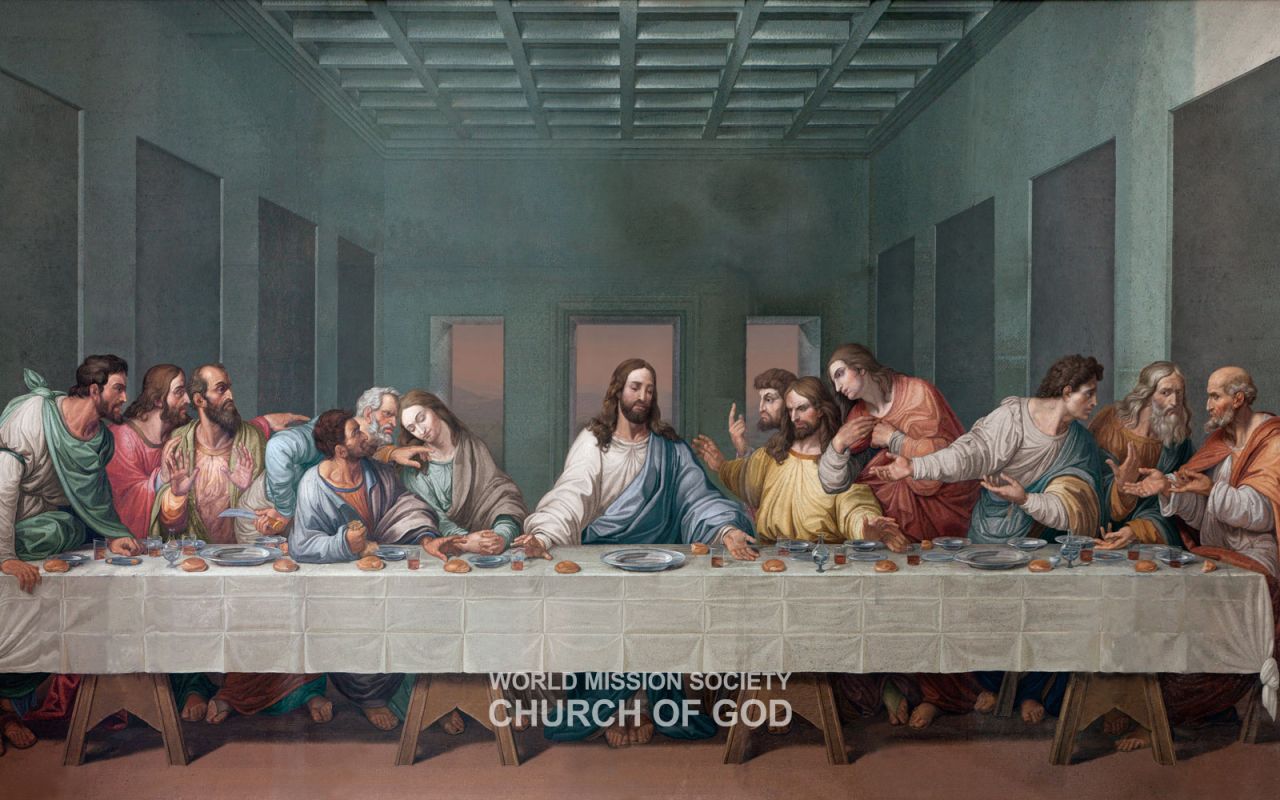

The New Commandment refers to Jesus Christ’s words at the Passover Last Supper: “Love one another as I have loved you.” Jesus gave this command and, the very next day, died on the cross. The New Commandment is an essential teaching that every Christian who follows Christ must put into practice.
The expression “New Commandment” appears in the Gospel of John. In the Gospels of Matthew and Mark, it is recorded as “Covenant,” and in the Gospel of Luke, as “New Covenant.”
New Commandment and New Covenant

The New Commandment Established at the Passover
The New Commandment was established at the Passover Last Supper, where Jesus Christ was with His disciples.[1] During this Passover, Jesus gave the New Commandment, saying, “Love one another.”
“A new command I give you: Love one another. As I have loved you, so you must love one another.”
At the same time and in the same setting, Luke recorded Jesus’ words as the “New Covenant,”[2] while Matthew and Mark referred to the same words spoken at the Passover simply as the “Covenant.”
- Gospel of Luke
- "And he said to them, “I have eagerly desired to eat this Passover with you before I suffer. . . . And he took bread, gave thanks and broke it, and gave it to them, saying, “This is my body given for you; do this in remembrance of me.” In the same way, after the supper he took the cup [wine], saying, “This cup is the new covenant in my blood, which is poured out for you.” (Luke 22:15, 19–20)
- Gospel of Matthew
- So the disciples did as Jesus had directed them and prepared the Passover. . . . While they were eating, Jesus took bread, and when he had given thanks, he broke it and gave it to his disciples, saying, “Take and eat; this is my body.” Then he took a cup, and when he had given thanks, he gave it to them, saying, “Drink from it, all of you. This is my blood of the covenant, which is poured out for many for the forgiveness of sins.” (Matthew 26:19, 26–28)
- Gospel of Mark
- The disciples left, went into the city and found things just as Jesus had told them. So they prepared the Passover. . . . While they were eating, Jesus took bread, and when he had given thanks, he broke it and gave it to his disciples, saying, “Take it; this is my body.” Then he took a cup, and when he had given thanks, he gave it to them, and they all drank from it. “This is my blood of the covenant, which is poured out for many,” he said to them. (Mark 14:16, 22–24)
In the Gospel of John, the “New Covenant” is not separately recorded. Likewise, in the Gospel of Luke, the term “New Commandment” is not written. The New Covenant and the New Commandment are the same words, differing only in expression.
Commandment and Covenant
In the Bible, a covenant is also referred to as a commandment. When God Jehovah gave Moses the stone tablets of the Ten Commandments on Mount Sinai, they are described as the “law and commandments” or the “words of the covenant,” and the Bible states that the covenant was proclaimed.
- The LORD said to Moses, “Come up to me on the mountain and stay here, and I will give you the tablets of stone with the law and commandments I have written for their instruction.” (Exodus 24:12)
- Moses was there with the LORD forty days and forty nights without eating bread or drinking water. And he wrote on the tablets the words of the covenant—the Ten Commandments. (Exodus 34:28)
- He declared to you his covenant, the Ten Commandments, which he commanded you to follow and then wrote them on two stone tablets. (Deuteronomy 4:13)
The Ten Commandments are both the law and the commandments, and they are also referred to as the “covenant.” This shows that the law and the commandments are fundamentally identical to the covenant. In the same way, the New Commandment is identical to the New Covenant.
The Principle of Love Contained in the New Commandment

The New Commandment, “Love one another,” can be practiced when one understands the principle of love contained in the New Covenant Passover. Through the New Covenant Passover, Jesus enabled God’s people to eat and drink His flesh and blood together, so that they might become one body in Christ.
Is not the cup of thanksgiving for which we give thanks a participation in the blood of Christ? And is not the bread that we break a participation in the body of Christ? Because there is one loaf, we, who are many, are one body, for we all share the one loaf.
When God’s people become one body in Jesus, they cannot hate their brothers and sisters who have become part of their own body. The Passover is the ceremony in which believers eat and drink the flesh and blood of Christ, thereby recognizing the sacrifice and love of Christ, who tore His flesh and shed His blood on the cross. Even those who do not yet know how to love others can, through the New Covenant Passover, realize the grace of Christ who gave His life for them and come to love their brothers and sisters—who have become one body—as they love themselves. This is the principle of love contained in the New Covenant Passover. Therefore, when one keeps the New Covenant Passover, the New Commandment, “Love one another,” can also be practiced.