The Old Covenant


Old Covenant (Hanja: 舊約) literally means “an old promise,” but in the Bible it refers to the promise God made to the people of Israel before the coming of Jesus Christ. The scriptures that contain the content of the Old Covenant are called the Old Testament. The Old Covenant, as a law, is called “the Law of Moses.”
Jesus Christ, through His sacrifice on the cross, established a new promise for the salvation of humanity. This is the New Covenant (Hanja: 新約). The Old Covenant served as a copy and shadow that dimly revealed the New Covenant to come.
When the New Covenant was established, the Old Covenant lost its effect. In the New Testament times, practicing the teachings of the Old Covenant, the Old Testament, as they are, is an act of being cut off from the grace of Christ. Believers of the New Testament times receive blessings by keeping the regulations of the New Covenant according to the teachings of the New Testament.
Promulgation of the Old Covenant

The Old Covenant was the covenant God Jehovah established with the people of Israel through Moses during the Exodus.[1] In the Old Testament it is recorded simply as “the covenant,” but after the New Covenant was established in the New Testament times, it came to be called the Old Covenant or the First Covenant in contrast to the New Covenant. In the Bible, a covenant is a commandment and a law; therefore, it is also referred to as the old commandment or the Law of Moses.
When Israel, who had come out of Egypt, reached the desert of Sinai, God called Moses up Mount Sinai and said, “If you keep my covenant, Israel will be a kingdom of priests and a holy nation.” Then, amid blazing fire, thick darkness, tempest, and the sound of trumpets, God proclaimed the Ten Commandments with a majestic voice, and afterwards gave regulations concerning the feasts and various laws through Moses (Exodus chapters 19–23). When Moses came down from Mount Sinai and conveyed the words of God, the people accepted the covenant with God, saying, “We will do everything the LORD has said.” Moses sprinkled the blood of sacrificial offerings on the people, saying, “This is the blood of the covenant that the LORD has made with you,” and thus the covenant was confirmed.[2] Then God called Moses again up Mount Sinai and gave him the stone tablets of the Ten Commandments on which the words of the covenant were written.[3][4]
Role of the Old Covenant
Blessings upon Those Who Keep It
The relationship between God and His people was maintained through the covenant. Those who obeyed according to the words of God were God’s people, and God promised to be their God and bless them. In the Old Testament times, those who kept the words and commands of God received physical blessings such as wealth, glory, and protection from enemies.[5]
When God led the people of Israel out of Egypt and toward Canaan through Moses, He did not let them enter Canaan immediately but made them wander in the desert for 40 years. This was a stage of testing to confirm whether the people would faithfully keep the covenant made with God.[6] God gave Israel various commandments, including the Sabbath, and commanded them to keep them. However, during their life in the desert, most of the Israelites neglected God’s statutes and laws,[7] continually grumbled and complained, and were destroyed in the desert. Only Joshua and Caleb, who obeyed God’s words, along with the second generation born in the desert, entered the promised land of Canaan.[8]
The reason the nation of Israel was later destroyed, according to Prophet Jeremiah, was because the people forsook the covenant with God.[9]
Covenant that Makes Sin Known

The Old Covenant, that is, the Law of the Old Testament, has the role of making people realize sin.[10][11] The Law is the standard that shows what sin is and makes people realize that they are sinners destined to die.[12] A person who does not realize he is a sinner has less earnestness for the forgiveness of sins. However, once one keenly realizes one’s own sin, the desire to seek forgiveness becomes stronger.
The Old Covenant, as the covenant that makes sin known, leads people to Christ, who grants forgiveness of sins. Therefore, Apostle Paul described the role of the Old Covenant, the Law of the Old Testament, as a tutor—that is, a guardian—leading to Christ:
Before the coming of this faith, we were held in custody under the law, locked up until the faith that was to come would be revealed. So the law was our guardian until Christ came that we might be justified by faith.
God established the Old Covenant so that humanity could receive forgiveness of sins and eternal life through Christ.
Copy and Shadow of the New Covenant

The Old Covenant was established as a model and shadow of the New Covenant to be established by Christ, the regulations of the Old Covenant reveal the system of the New Covenant, which is the reality.
The law is only a shadow of the good things that are coming—not the realities themselves. For this reason it can never, by the same sacrifices repeated endlessly year after year, make perfect those who draw near to worship.
A prominent feature of the Old Covenant was the sacrificial method of shedding the blood of animals such as sheep, cattle, and goats in the sanctuary.[13] When the people sinned, they received forgiveness from God through the sacrifice of animals as a substitute for their sins.[14] Representative examples were the feast ceremonies such as the Sabbath, the Passover, and the Day of Atonement. The Sabbath and Passover were kept with the sacrifice of lambs,[15][16] while the Day of Atonement required a bull and a male goat as sin offerings.[17] The sacrificial system of the Old Testament according to the Old Covenant was also a shadow of the system of the New Covenant. The sacrifices of animals in the Old Testament foreshadowed the sacrifice of Christ on the cross as the atoning sacrifice for the sins of many.[18] Through the sacrifice of Jesus Christ, the regulations of the Old Covenant were revealed as the reality in the regulations of the New Covenant. Representative examples are as follows:
- Circumcision→ Baptism
- In the Old Testament times, the people of Israel received circumcision as the sign of becoming God’s people.[19] The circumcision of the Old Covenant was fulfilled in the baptism of the New Covenant.[20] Baptism, which is the act of immersing the body in water, is the “sign of salvation”[21][22] performed so that a person may wash away past sins and be born again into a new life as a Christian. Just as Jesus died on the cross, the body of sin is buried through baptism, and just as Jesus rose again, the one who washes away sins through baptism is also reborn.[23]
- Passover: Liberation from Egypt → Liberation from Sin and Death
- The Passover of the Old Covenant was a feast commemorating the day the people of Israel were freed from slavery in Egypt.[24] Jesus Christ chose this day to establish the New Covenant, promising the forgiveness of sins[25] to those who keep the New Covenant Passover, thereby freeing humanity from slavery to sin and death.[26]
- The Feast of Firstfruits → Resurrection Day
- The Feast of Firstfruits was the Old Testament sacrifice of presenting the first sheaf of grain to God on the day after the first Sabbath following the Feast of Unleavened Bread (Sunday).[27] Jesus Christ became the offering of the Feast of Firstfruits and, as “the firstfruits of those who have fallen asleep,” was resurrected.[28] Just as the offering of the Feast of Firstfruits was presented on the day after the Sabbath, Jesus was resurrected on the first day after the Sabbath (Sunday), thus fulfilling the prophecy of the Feast of Firstfruits.[29]
Completion of the Old Covenant in the New Covenant
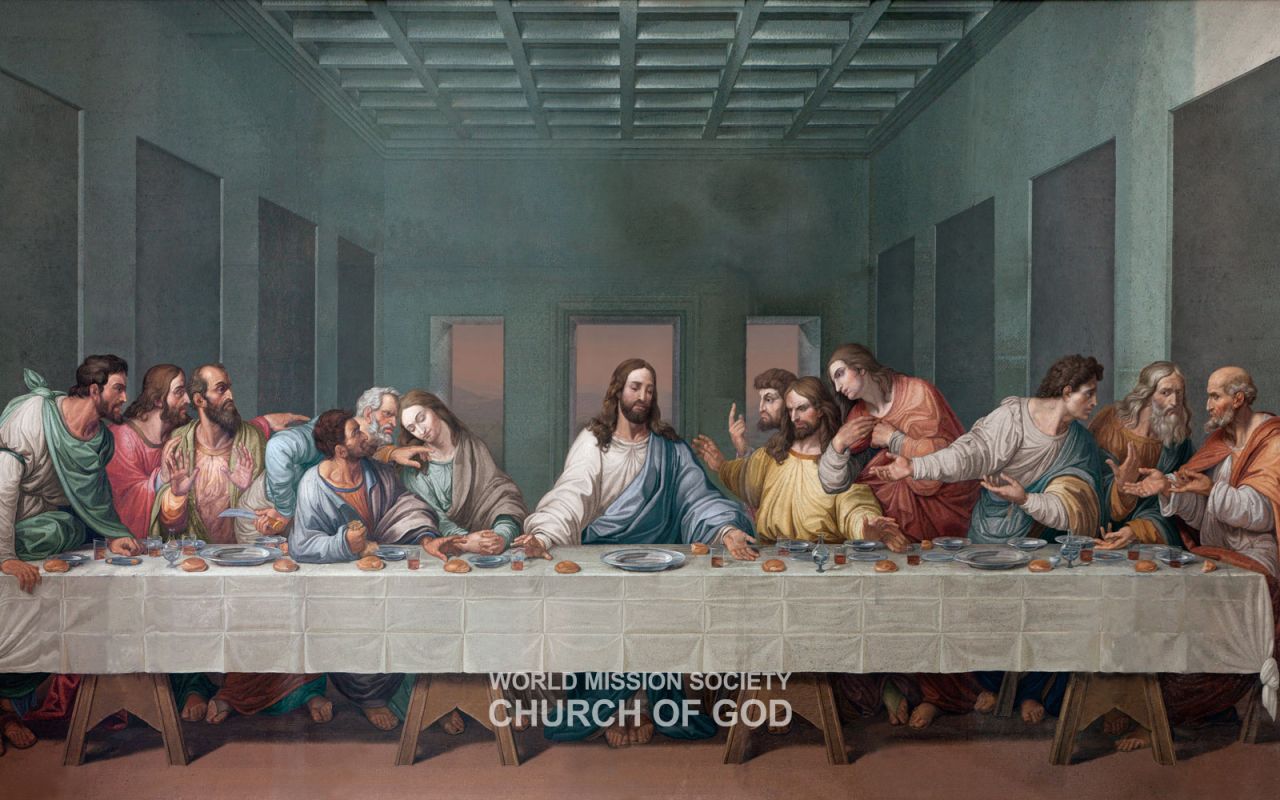

In the Old Testament book of Jeremiah, it is recorded that the New Covenant would be established in the future. When the Old Covenant was broken by the sins and disobedience of the people of Israel, Prophet Jeremiah prophesied that God would establish the New Covenant.[30] Apostle Paul testified that the prophecy of Jeremiah was fulfilled by Jesus Christ, and that when Jesus established the New Covenant, the Old Covenant became obsolete.
For if there had been nothing wrong with that first covenant, no place would have been sought for another. But God found fault with the people and said: “The days are coming, declares the Lord, when I will make a new covenant . . . This is the covenant I will establish with the people of Israel after that time, declares the Lord. I will put my laws in their minds and write them on their hearts. I will be their God, and they will be my people. . . . By calling this covenant “new,” he has made the first one obsolete; and what is obsolete and outdated will soon disappear.
Through the Law of Moses, which is the Old Covenant, no one can receive complete salvation (eternal life). Therefore, Jesus established the perfect law, the New Covenant, so that humanity could attain complete salvation.[31]
See also
External links
References
- ↑ "Nehemiah 9:13-14".
- ↑ Exodus 24:3–8
- ↑ "Exodus 24:12-18".
- ↑ "Exodus 31:18".
- ↑ "Deuteronomy 28:1–19".
- ↑ "Deuteronomy 8:2–16".
- ↑ "Ezekiel 20:10–13".
- ↑ "Numbers 14:34–38".
- ↑ "Jeremiah 22:8–9".
- ↑ "Romans 3:20".
- ↑ "Romans 7:7-13".
- ↑ "Romans 6:23".
- ↑ "Leviticus 1:1-5".
- ↑ "Leviticus 4:1-35".
- ↑ "Numbers 28:9-10".
- ↑ "Exodus 12:5-11".
- ↑ "Leviticus 16:11-15".
- ↑ Matthew 10:28
- ↑ "Genesis 17:10-14".
- ↑ "Colossians 2:11–12".
- ↑ "Colossians 2:12".
- ↑ "1 Peter 3:21".
- ↑ "Romans 6:3–5".
- ↑ "Exodus 12:5-33".
- ↑ "Matthew 26:19, 26-28".
- ↑ "Romans 6:16-23".
- ↑ "Leviticus 23:10–11".
- ↑ "1 Corinthians 15:20".
- ↑ "Mark 16:1–9".
- ↑ "Jeremiah 31:31-33".
- ↑ "Matthew 5:17".