The Teachings of Jesus Christ



The teachings of Jesus Christ embody His holy love and self-sacrifice, given to guide humanity toward the kingdom of heaven. These teachings are often called the gospel of the kingdom. In order to save humanity—destined to die because of sin—Jesus fulfilled the new covenant through His suffering and death on the cross.[1] Along with this covenant, He proclaimed the reality and value of the heavenly kingdom, instilled hope for eternal life, and taught that God is our Father in heaven.[2] Furthermore, Jesus emphasized humility and service. Though He is by nature God, He humbled Himself to serve and love humankind, setting a perfect example of selfless service.[3] Before His ascension, His final instruction to His disciples was the mission to preach the gospel to all nations.[4] The teachings of Jesus, given two thousand years ago, remain a spiritual compass that guides humanity toward the eternal kingdom of heaven.
Truth of Life: The New Covenant
Jesus began His public ministry as the Savior at the age of thirty, following His baptism.[5] Before that time, He faithfully observed the laws of the Old Testament as a Jew. However, after His baptism, He began proclaiming the gospel of the kingdom as the Christ[6][7]—the One who came to save humanity from sin and death—by establishing and keeping the new covenant.[1] This new covenant was given for the forgiveness of sins, as prophesied by the prophet Jeremiah.[8] In other words, it is the truth of life that all people—destined to die because of their sins—must come to know in order to receive salvation.
The old covenant established through Moses in Old Testament times was a shadow, whereas the new covenant established by Jesus in the New Testament is its reality.[9] In the Old Testament, animals were sacrificed and their blood shed to atone for the sins of the people. In the New Testament, Jesus—who is the true reality of those sacrifices—fulfilled the requirements of the new covenant by shedding His own blood on the cross for the forgiveness of humanity’s sins.[10][11] The truths of the new covenant that lead to salvation include baptism and the feasts of God. The Bible records the feasts that Jesus taught and kept under this covenant. Among them, the representative ones are the weekly feast, the Sabbath, and the annual feasts such as the Passover, the Day of Pentecost, and the Feast of Tabernacles.
Weekly Feast: The Sabbath
The Bible records that Jesus kept the Sabbath day as was His custom.[12] The word custom indicates that He observed the Sabbath regularly—every week, not merely once. Jesus set this example so that His people might, through the Sabbath, receive holiness, blessings, and the sign that identifies them as God’s people.[13][14][15]
He [Jesus] went to Nazareth, where he had been brought up, and on the Sabbath day he went into the synagogue, as was his custom. He stood up to read.
The Sabbath originated from the seventh day, when God rested after creating the heavens and the earth. In Old Testament times, the Sabbath was observed by offering animal sacrifices, such as lambs and goats.[16] However, in the New Testament, Jesus established the Sabbath of the new covenant, to be kept as a worship in spirit and in truth, without the need for animal sacrifices—because Jesus Himself is the reality of those sacrifices.[17][18] For 1,500 years, countless animals were offered on the Sabbath, their blood symbolically pointing to the ultimate sacrifice Jesus would make in the New Testament for the forgiveness of humanity’s sins.[19][20][21]
Annual Feasts: Seven Feasts in Three Times
Jesus set the perfect example of keeping the feasts of the new covenant. The annual feasts established by God are known as the Seven Feasts in Three Times—seven feasts celebrated during three appointed seasons: the Passover, the Feast of Unleavened Bread, the Feast of Firstfruits, the Feast of Weeks, the Feast of Trumpets, the Day of Atonement, and the Feast of Tabernacles. The feasts of the Old Testament were shadows, while the feasts of the New Testament reveal their true reality in Christ.[9] Through the feasts of the old covenant, we can understand the spiritual principles of the new covenant system that Jesus established. In Old Testament times, sacrifices were offered for every feast—animals were killed and their blood shed in place of the people, symbolizing atonement for sin. These sacrifices pointed to Jesus, the true sacrificial Lamb, who shed His blood on the cross to pay for the sins of all humanity, thus completing the system of the new covenant.[11] As the reality of the Passover lamb, Jesus promised the forgiveness of sins and eternal life through the Passover of the new covenant,[22][23] and He established this covenant with His own blood on the cross the following day.[20] The feasts of the new covenant were fulfilled through the boundless love of Jesus.[24] Through the Holy Supper of the Passover, believers partake of His flesh and blood, becoming united with Christ.[25] Even sinners, transformed by His grace, come to love others as themselves through the power of the New Covenant Passover.[26] Moreover, Jesus poured out the blessings of the Holy Spirit through the feasts of the new covenant, such as Pentecost and the Feast of Tabernacles, enabling believers to live a renewed life in the fullness of His Spirit.[22][27][28]
- New Covenant Passover
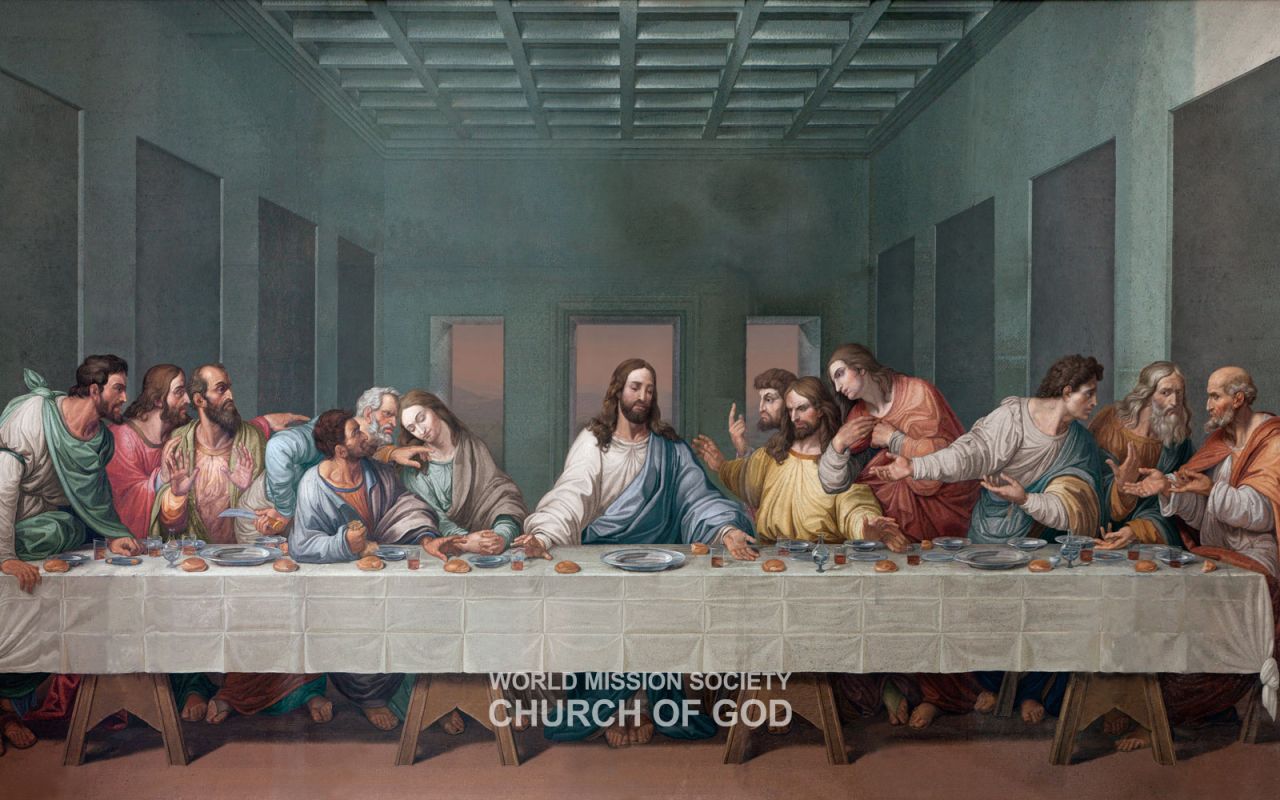
Jesus eagerly desired to keep the Passover of the new covenant.[29] This was because humanity, bound by sin, was destined to face death, and only through the blood of Christ could redemption be granted.[30][31][32] During the Passover, Jesus declared that the bread and wine represent His flesh and blood, and through this sacred covenant, He promised the forgiveness of sins and the gift of eternal life.[23][22]
And he took bread, gave thanks and broke it, and gave it to them, saying, “This is my body given for you; do this in remembrance of me.” In the same way, after the supper he took the cup, saying, “This cup is the new covenant in my blood, which is poured out for you.”
On the day of the New Covenant Passover, Jesus’ words about giving His flesh and blood were not merely symbolic—they were a covenant soon to be fulfilled. The next day, His body was torn and His blood was shed on the cross, completing the promise of the Passover.[21] Jesus endured the agony of death in place of humanity’s sins, embedding His sacrifice and boundless love within the New Covenant Passover. For this reason, He taught those who shared in His flesh and blood through the Passover, saying, “Love one another as I have loved you.”[33]
- Pentecost
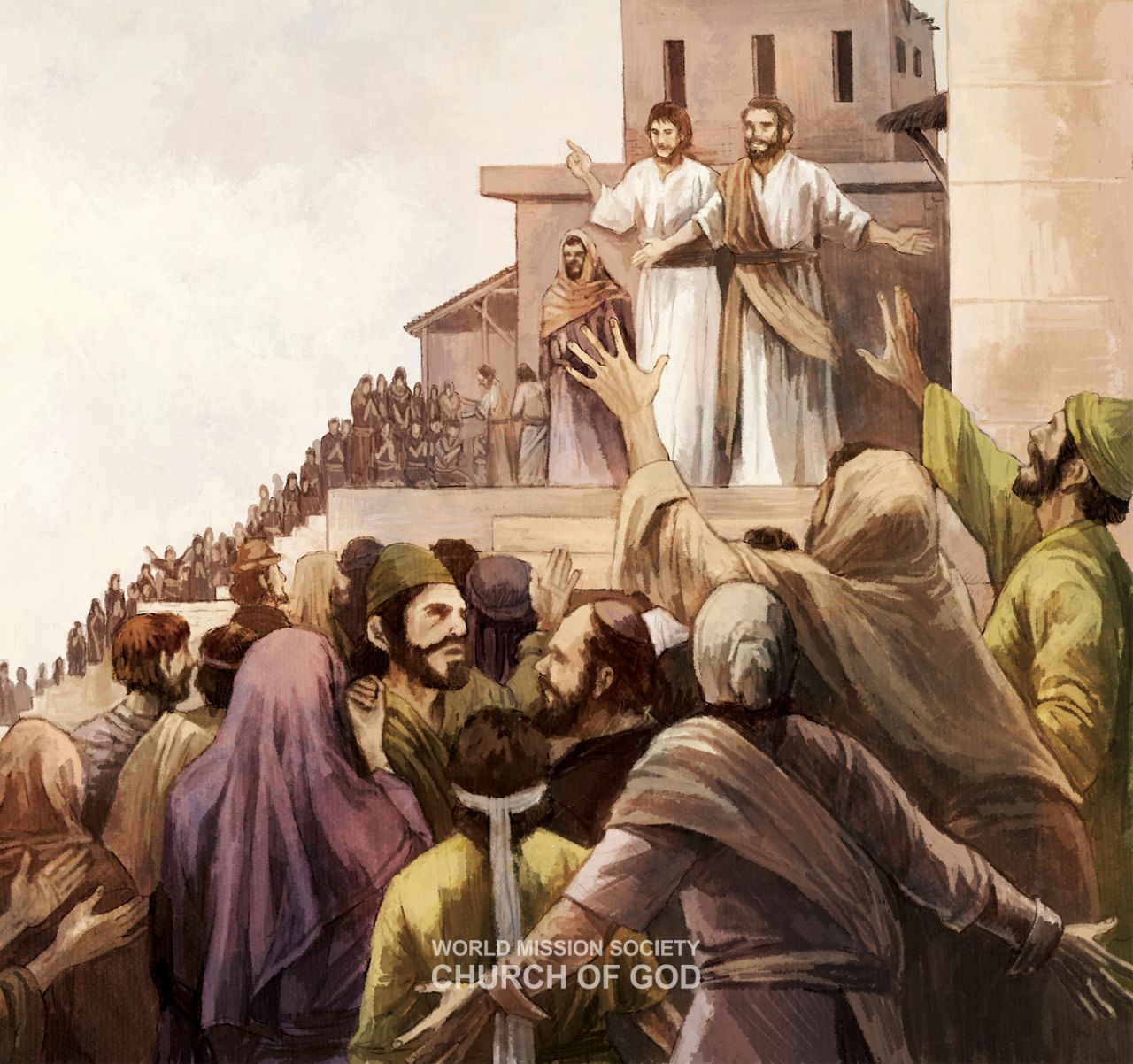

After His crucifixion, Jesus rose from the dead on the third day. He remained with His disciples for forty days, teaching them and strengthening their faith before ascending to heaven. Before His ascension, Jesus said, “Do not leave Jerusalem, but wait for the gift my Father promised, which you have heard Me speak about.” Following His words, the disciples gathered in Jerusalem and devoted themselves to prayer. On the fiftieth day after His resurrection, the Holy Spirit of Jesus came upon them with power—this was the Day of Pentecost. Filled with the Holy Spirit, the disciples began to speak in different tongues and preached the gospel boldly to people from many nations. On that day, about three thousand people repented and were baptized, marking a momentous event in the history of the early Church.[27]
- The Feast of Tabernacles
The Feast of Tabernacles originates from the Old Testament, where it was celebrated to commemorate the building of the tabernacle. In the New Testament, its meaning was revealed more fully as a feast of the new covenant, through which believers receive the Holy Spirit. In John 7, it is recorded that Jesus Himself kept the Feast of Tabernacles of the new covenant. On that day, He proclaimed that “streams of living water will flow from within anyone who believes in Me,” referring to the Holy Spirit that believers would later receive.[34] The fact that Jesus kept the Feast of Tabernacles also indicates that He observed the Feast of Trumpets and the Day of Atonement, for these two feasts are included within the third group of annual feasts that culminate in the Feast of Tabernacles.[35]
The New Commandment: Love
The Bible teaches that the greatest commandment is love, and that love is the fulfillment of the law. All the laws of the Old and New Testaments—including the Seven Feasts in Three Times—are ultimately fulfilled through love. This is why Jesus declared that the greatest commandment is to love God with all our heart, and why Apostle Paul affirmed, “Love is the fulfillment of the law.”[36][24] The way to fulfill the law through love, the greatest commandment, is by keeping the new covenant. In the Bible, the term new covenant means a new command, and Jesus gave this new command, saying, “Love one another.”[1][33] In essence, the Passover of the new covenant embodies this command of love.[37] Through the New Covenant Passover, Jesus allowed the saints to become one with Him by eating His flesh and drinking His blood.[22][1][23] In doing so, believers are united as one body in Christ.[25] Although human nature is inclined toward selfishness and lacks true love, through the Passover of the new covenant, believers come to understand the sacrifice and love of Christ deeply, learning to love one another as their own body.[26] When Jesus said, “Love one another,” on the night of the New Covenant Passover, He added an essential condition:[33] “As I have loved you.” This points to the supreme love of Jesus—God in human form—who gave His flesh and shed His blood on the cross for sinners.
The Hope for Heaven
Jesus taught humanity—who had not known about heaven—about its existence, its immeasurable value, and the way to return to it. To help people understand how precious the kingdom of heaven is, He compared it to “a treasure hidden in a field” and “a pearl of great price,” planting in their hearts a living hope for heaven.[38][39] In the Sermon on the Mount recorded in Matthew chapters 5–7, Jesus taught the qualities required to enter the kingdom of heaven. He said that “those who are poor in spirit,” “those who are persecuted for righteousness,” and “those who do the will of God” would inherit the heavenly kingdom.[40][41][42] He also urged His followers to store up treasures in heaven so that their hearts would be set not on earthly things, but on the eternal home above.[43] To humankind, who had lived believing that this world was all there is, Jesus revealed the existence of heaven—a place without death, pain, or tears. He said:[44]
“Blessed are those who are persecuted because of righteousness, for theirs is the kingdom of heaven. Blessed are you when people insult you, persecute you and falsely say all kinds of evil against you because of me. Rejoice and be glad, because great is your reward in heaven.”
Our Relationship With God
Through the Lord’s Prayer, Jesus taught that the relationship between God and humanity is that of a Father and His children.[45] The word Father is one used within a family, revealing that God and we are part of a spiritual family. The Bible teaches that what exists on earth is a copy and shadow of what is in heaven.[46] Just as there is a physical family on earth, so there also exists a spiritual family in heaven.[47][48][49]
“This, then, is how you should pray: “‘Our Father in heaven, hallowed be your name.”
Humility and Service

Jesus repeatedly emphasized the importance of humility and service through His words and parables—teachings that are recorded throughout the Bible. When His disciples asked who would be the greatest in the kingdom of heaven, Jesus answered, “Whoever humbles himself like this little child is the greatest in the kingdom of heaven.”[50] Through parables, He also taught that those who humble themselves will be exalted. In the parable of the Pharisee and the tax collector who went up to the temple to pray, the Pharisee boasted of his own righteousness, while the tax collector humbly confessed his sins and sought forgiveness. Jesus said that the tax collector, not the Pharisee, went home justified before God, teaching that “whoever exalts himself will be humbled, and whoever humbles himself will be exalted.” [51]
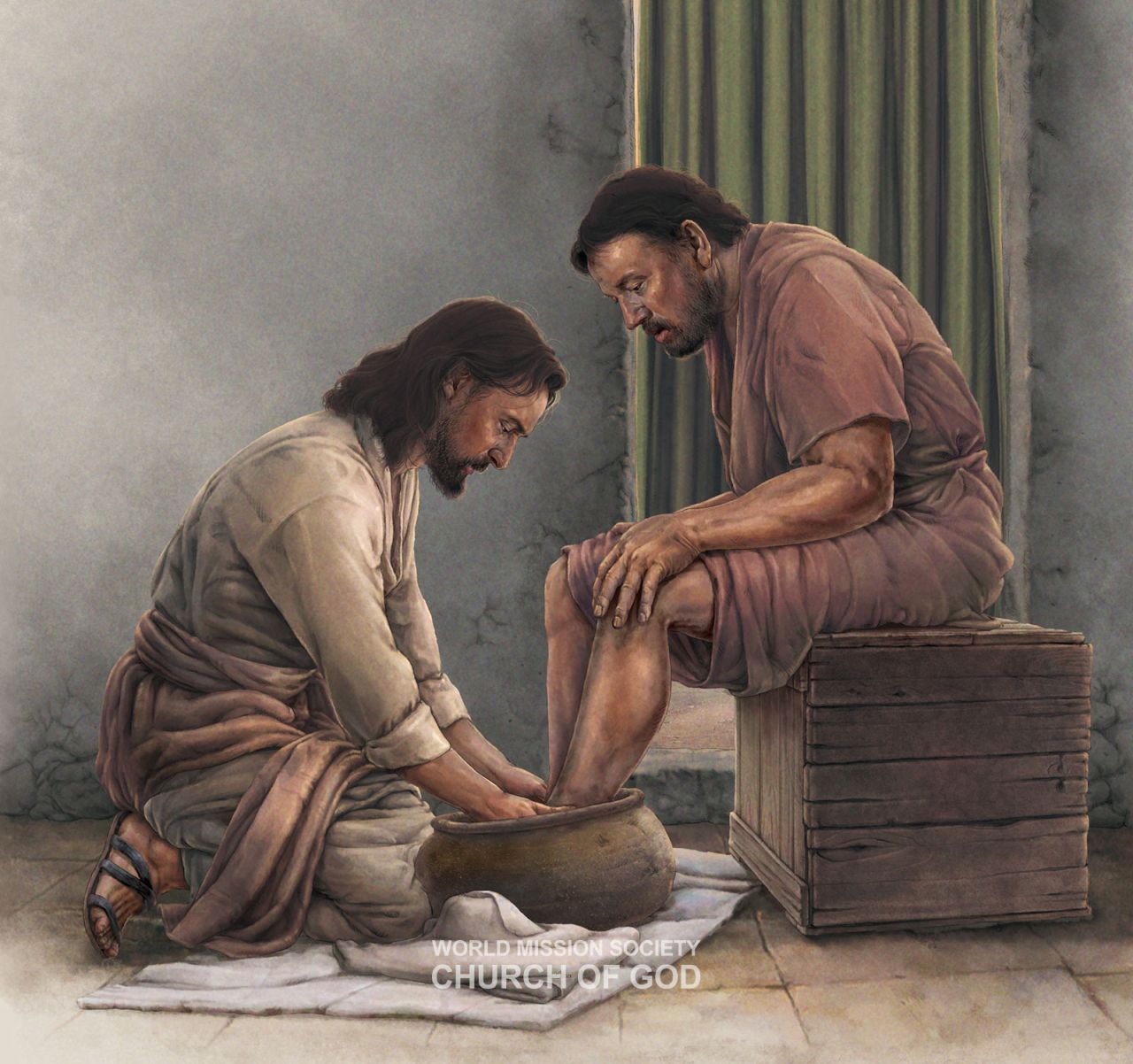
Jesus not only taught humility and service through words but also demonstrated them through His own actions. A clear example is the Foot-Washing Ceremony, which took place before the Holy Supper of the Passover. On that day, Jesus Himself washed the feet of His disciples—a task usually performed by servants or those of low social status.[52][53] Yet the Lord of all creation removed His outer garment, wrapped a towel around His waist, and washed His disciples’ feet with His own hands.[54] Through this, Jesus set a living example, teaching that His followers should do the same—serving one another in humility and love, just as He served them.
I have set you an example that you should do as I have done for you.
The Mission of Preaching the Gospel
Before ascending to heaven, Jesus entrusted His disciples with the sacred mission of preaching the gospel to all nations. To Peter, He asked three times, “Do you love Me?” Each time Peter answered that he did, Jesus responded, “Feed My lambs,” “Take care of My sheep,” and “Feed My sheep.”[55] Through these words, Jesus taught that those who love Him must care for and nurture His people—represented as sheep in His flock. Jesus also appeared to the eleven disciples who had gathered in Galilee and gave them the Great Commission, saying, “Go and make disciples of all nations, baptizing them in the name of the Father and of the Son and of the Holy Spirit, and teaching them to obey everything I have commanded you. And surely I am with you always, to the very end of the age.”[4] After Jesus’ ascension, the apostles faithfully obeyed His command. Empowered by the Holy Spirit, they devoted themselves to preaching the gospel of the new covenant in every place, working tirelessly to lead souls to salvation.
See also
- God in the Flesh (Incarnation)
- Messiah
- Christ
- Jesus Christ
- Life of Jesus
- Prophecies About Jesus in the Bible
- The Major Works of Jesus Christ
- Jesus’ Appearance and Living Environment
- Miracles of Jesus
- The Last Supper
- Crucifixion
- Jesus’ Resurrection
- The Ascension of Jesus
References
- ↑ 1.0 1.1 1.2 1.3 "Luke 22:20".
- ↑ "Matthew 6:9".
- ↑ "John 13:4–15".
- ↑ 4.0 4.1 "Matthew 28:18–20".
- ↑ "Luke 3:21–23".
- ↑ "Matthew 1:21".
- ↑ "Matthew 4:17".
- ↑ "Jeremiah 31:31–34".
- ↑ 9.0 9.1 "Hebrews 10:1".
- ↑ "히 10:1–5, 10-17".
- ↑ 11.0 11.1 Chapter 2 The Seven Feasts in Three Times, THE MYSTERY OF GOD AND THE SPRING OF THE WATER OF LIFE, Ahnsahnghong, Melchizedek Pub. Co., Ltd, 2016
- ↑ "Luke 4:16".
- ↑ "Genesis 2:3".
- ↑ "Exodus 20:8–11".
- ↑ "Exodus 31:13".
- ↑ "Numbers 28:9–10".
- ↑ "John 4:23–24".
- ↑ "John 1:29".
- ↑ "Isaiah 53:4–6".
- ↑ 20.0 20.1 "1 Corinthians 5:7".
- ↑ 21.0 21.1 "Mark 15:22–27".
- ↑ 22.0 22.1 22.2 22.3 "Matthew 26:19–28".
- ↑ 23.0 23.1 23.2 "John 6:53–54".
- ↑ 24.0 24.1 "Romans 13:8–10".
- ↑ 25.0 25.1 "1 Corinthians 10:16–17".
- ↑ 26.0 26.1 Chapter 31 The Regulations of the New Covenant, THE MYSTERY OF GOD AND THE SPRING OF THE WATER OF LIFE, Ahnsahnghong, Melchizedek Pub. Co., Ltd, 2016
- ↑ 27.0 27.1 "Acts 2:1–41".
- ↑ "John 7:2–37".
- ↑ "Luke 22:15".
- ↑ "Romans 6:23".
- ↑ "Ephesians 1:7".
- ↑ "1 Peter 1:18–19".
- ↑ 33.0 33.1 33.2 "John 13:34".
- ↑ "John 7:2–39".
- ↑ Chapter 6 Comparison Between the Old Covenant and the New Covenant, THE LAST PLAGUES AND THE SEAL OF GOD, Ahnsahnghong, Melchizedek Pub. Co., Ltd, 2010
- ↑ "Matthew 22:35–40".
- ↑ Chapter 31 The Regulations of the New Covenant, THE MYSTERY OF GOD AND THE SPRING OF THE WATER OF LIFE, Ahnsahnghong, Melchizedek Pub. Co., Ltd, 2016
- ↑ "Matthew 13:44".
- ↑ "Matthew 13:45–46".
- ↑ "Matthew 5:3".
- ↑ "Matthew 5:10".
- ↑ "Matthew 7:21–23".
- ↑ "Matthew 6:20–21".
- ↑ "Revelation 21:4".
- ↑ "Matthew 6:9".
- ↑ "Hebrews 8:5".
- ↑ "Hebrews 12:9".
- ↑ "2 Corinthians 6:18".
- ↑ "Galatians 4:26".
- ↑ "Matthew 18:1–4".
- ↑ "Luke 18:9–14".
- ↑ John W. Parker, WAHING OF FEET, The Bible Cyclopaedia, 1843
- ↑ Mrs. Humphrey Ward, Q. Why is the ceremony of washing the feet so often mentioned in the Old and New Testament?, A Guide to Jewish History, ceremonies, manners, and customs, ancient and modern, in the form of question and answer, by the authoress of "the Child's Guide to Knowledge.", Simpkin, Marshall, 1834, pg 109
- ↑ "John 13:3–7".
- ↑ "John 21:15–17".