New Covenant: Difference between revisions
No edit summary |
No edit summary |
||
| (8 intermediate revisions by 2 users not shown) | |||
| Line 1: | Line 1: | ||
{{그림 |최후의 만찬 유월절.jpg|너비= 300px |정렬=오른쪽섬네일 |타이틀=Jesus established the new covenant at the Holy Supper of the Passover.}} | <!-- interlanguage:start -->[[ko:새 언약]][[vi:Giao ước mới]][[es:Nuevo pacto]][[ne:नयाँ करार]][[pt:A Nova Aliança]]<!-- interlanguage:end -->{{그림 |최후의 만찬 유월절.jpg|너비= 300px |정렬=오른쪽섬네일 |타이틀=Jesus established the new covenant at the Holy Supper of the Passover.}} | ||
The literal meaning of the '''new covenant''' is “new promise.” In Christianity, it refers to the new promise made by [[Jesus Christ]] for the salvation of mankind. On the contrary, the covenant established in the time of Moses is called the [[Old Covenant|old covenant]], meaning the “promise made a long time ago.” From this expression, were made the terms [[The New Testament|New Testament]] and [[The Old Testament|Old Testament]]. | The literal meaning of the '''new covenant''' is “new promise.” In Christianity, it refers to the new promise made by [[Jesus Christ]] for the salvation of mankind. On the contrary, the covenant established in the time of Moses is called the [[The Old Covenant|old covenant]], meaning the “promise made a long time ago.” From this expression, were made the terms [[The New Testament|New Testament]] and [[The Old Testament|Old Testament]]. | ||
The new covenant first appears in the book of [[Jeremiah]] in the Old Testament. God [[Jehovah]] prophesied that He would make a new covenant. The One who established the new covenant is [[God in the Flesh (Incarnation)|God who came in the flesh]], whose name is Jesus. Jesus established the new covenant at the [[Passover]] Holy Supper which He kept with His disciples before His suffering on the cross. In the [[Gospel of John]], it is written as a “[[New Commandment|new command.]]” | The new covenant first appears in the book of [[Jeremiah (Prophet)|Jeremiah]] in the Old Testament. God [[Jehovah]] prophesied that He would make a new covenant. The One who established the new covenant is [[God in the Flesh (Incarnation)|God who came in the flesh]], whose name is Jesus. Jesus established the new covenant at the [[Passover]] Holy Supper which He kept with His disciples before His suffering on the cross. In the [[Gospel of John]], it is written as a “[[New Commandment|new command.]]” | ||
==The New Covenant Established by God== | ==The New Covenant Established by God== | ||
===The New Covenant Prophesied to Be Made by God=== | ===The New Covenant Prophesied to Be Made by God=== | ||
The prophet [[Jeremiah]] of the Old Testament prophesied that the LORD God would make the new covenant. | The prophet [[Jeremiah (Prophet)|Jeremiah]] of the Old Testament prophesied that the LORD God would make the new covenant. | ||
{{quote5 |내용=“The time is coming,” declares the '''LORD''', “when '''I will make a new covenant''' with the house of Israel and with the house of Judah. . . .” . . . “This is the covenant I will make with the house of Israel after that time,” declares the LORD. “'''I will put my law in their minds and write it on their hearts. I will be their God, and they will be my people.'''”|출처=[https://www.biblegateway.com/passage/?search=Jeremiah+31%3A31-33&version=NIV Jeremiah 31:31–33] }} | {{quote5 |내용=“The time is coming,” declares the '''LORD''', “when '''I will make a new covenant''' with the house of Israel and with the house of Judah. . . .” . . . “This is the covenant I will make with the house of Israel after that time,” declares the LORD. “'''I will put my law in their minds and write it on their hearts. I will be their God, and they will be my people.'''”|출처=[https://www.biblegateway.com/passage/?search=Jeremiah+31%3A31-33&version=NIV Jeremiah 31:31–33] }} | ||
| Line 32: | Line 32: | ||
[[File:Gérôme, Jean-Léon - Moses on Mount Sinai Jean-Léon Gérôme -1895-1900.jpg|thumb|''Moses on Mount Sinai'' by Jean-Léon Gérôme, 1895–1900: The old covenant proclaimed on Mount Sinai is a covenant God commanded on earth, but the new covenant is a covenant commanded from heaven.]] | [[File:Gérôme, Jean-Léon - Moses on Mount Sinai Jean-Léon Gérôme -1895-1900.jpg|thumb|''Moses on Mount Sinai'' by Jean-Léon Gérôme, 1895–1900: The old covenant proclaimed on Mount Sinai is a covenant God commanded on earth, but the new covenant is a covenant commanded from heaven.]] | ||
===Shadow and Reality=== | ===Shadow and Reality=== | ||
The new covenant is the reality of the old covenant, the [[Law of Moses]]. The old covenant was established as a copy and shadow of the new covenant that Christ would establish. Therefore, we can know the reality of the new covenant through the law of the old covenant. | The new covenant is the reality of the old covenant, the [[The Law of Moses]]. The old covenant was established as a copy and shadow of the new covenant that Christ would establish. Therefore, we can know the reality of the new covenant through the law of the old covenant. | ||
{{quote5 |내용=The '''law''' is only a '''shadow''' of the good things that are coming—not the realities themselves. For this reason it can never, by the same sacrifices repeated endlessly year after year, make perfect those who draw near to worship.|출처=[https://www.biblegateway.com/passage/?search=Hebrews+10%3A1&version=NIV Hebrews 10:1] }} | {{quote5 |내용=The '''law''' is only a '''shadow''' of the good things that are coming—not the realities themselves. For this reason it can never, by the same sacrifices repeated endlessly year after year, make perfect those who draw near to worship.|출처=[https://www.biblegateway.com/passage/?search=Hebrews+10%3A1&version=NIV Hebrews 10:1] }} | ||
| Line 86: | Line 86: | ||
{{quote5 |내용=When the day of '''Pentecost''' came, they were all together in one place. . . . All of them were filled with the '''Holy Spirit''' and began to speak in other tongues as the Spirit enabled them. . . . Those who accepted his message were baptized, and about three thousand were added to their number that day.|출처=[https://www.biblegateway.com/passage/?search=Acts+2%3A1-47&version=NIV Acts 2:1–47] }} | {{quote5 |내용=When the day of '''Pentecost''' came, they were all together in one place. . . . All of them were filled with the '''Holy Spirit''' and began to speak in other tongues as the Spirit enabled them. . . . Those who accepted his message were baptized, and about three thousand were added to their number that day.|출처=[https://www.biblegateway.com/passage/?search=Acts+2%3A1-47&version=NIV Acts 2:1–47] }} | ||
In the Old Testament, Pentecost was called the [[Feast of Weeks]], and it was a feast to commemorate the day Moses went up to Mount Sinai to receive the stone tablets of the Ten Commandments.<ref>{{Cite web |url=https://www.biblegateway.com/passage/?search=Exodus+24%3A12-18&version=NIV |title=Exodus 24:12–18 |publisher= |quote= }}</ref> As Jesus poured down the Holy Spirit from heaven on this day, the Pentecost of the new covenant was completed. | In the Old Testament, Pentecost was called the [[Feast of Weeks]], and it was a feast to commemorate the day Moses went up to Mount Sinai to receive the stone tablets of the [[The Ten Commandments|Ten Commandments]].<ref>{{Cite web |url=https://www.biblegateway.com/passage/?search=Exodus+24%3A12-18&version=NIV |title=Exodus 24:12–18 |publisher= |quote= }}</ref> As Jesus poured down the Holy Spirit from heaven on this day, the Pentecost of the new covenant was completed. | ||
==Comparison Between the Old Covenant and the New Covenant== | ==Comparison Between the Old Covenant and the New Covenant== | ||
| Line 122: | Line 122: | ||
==See also== | ==See also== | ||
* [[Old Covenant]] | * [[The Old Covenant]] | ||
* [[Law of Christ]] | * [[Law of Christ]] | ||
* [[Law of Moses]] | * [[The Law of Moses]] | ||
* [[New Commandment]] | * [[New Commandment]] | ||
* [[Gospel]] | * [[Gospel]] | ||
Latest revision as of 14:11, 23 April 2026
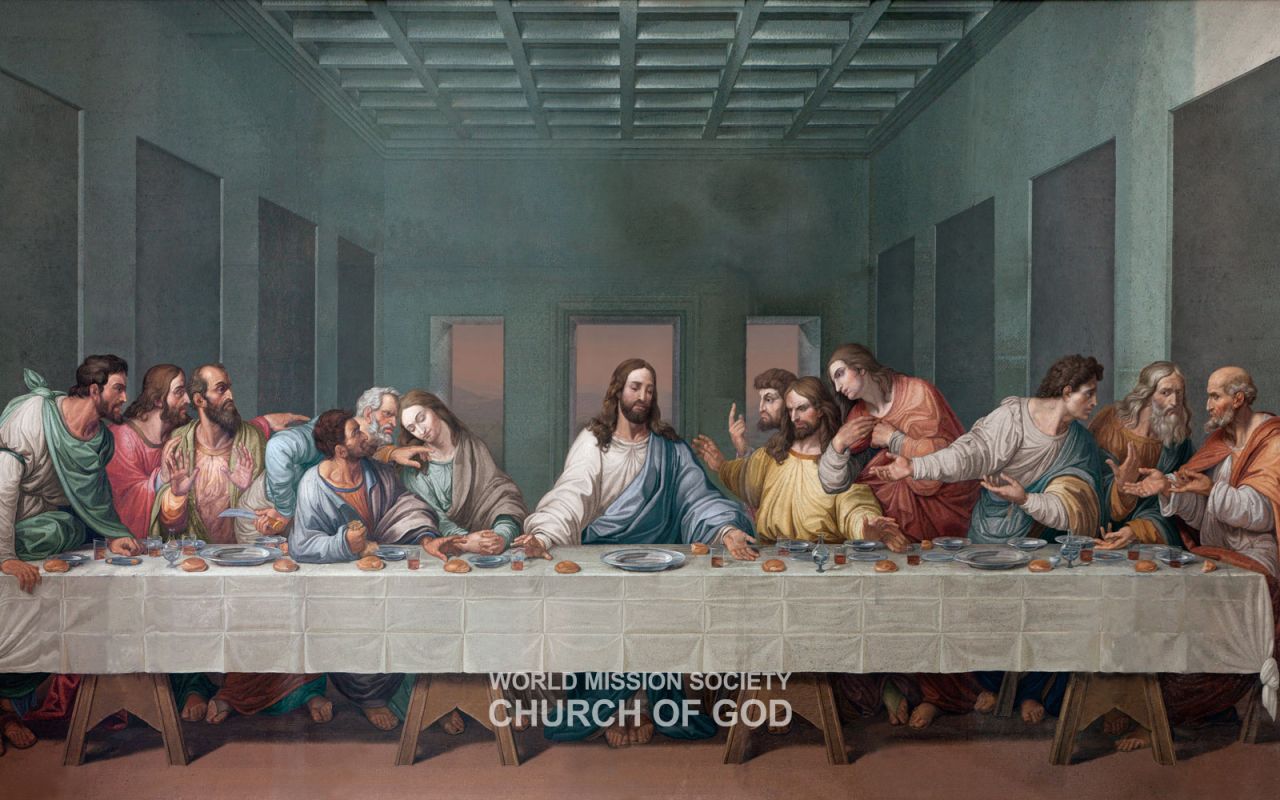

The literal meaning of the new covenant is “new promise.” In Christianity, it refers to the new promise made by Jesus Christ for the salvation of mankind. On the contrary, the covenant established in the time of Moses is called the old covenant, meaning the “promise made a long time ago.” From this expression, were made the terms New Testament and Old Testament.
The new covenant first appears in the book of Jeremiah in the Old Testament. God Jehovah prophesied that He would make a new covenant. The One who established the new covenant is God who came in the flesh, whose name is Jesus. Jesus established the new covenant at the Passover Holy Supper which He kept with His disciples before His suffering on the cross. In the Gospel of John, it is written as a “new command.”
The New Covenant Established by God
The New Covenant Prophesied to Be Made by God
The prophet Jeremiah of the Old Testament prophesied that the LORD God would make the new covenant.
“The time is coming,” declares the LORD, “when I will make a new covenant with the house of Israel and with the house of Judah. . . .” . . . “This is the covenant I will make with the house of Israel after that time,” declares the LORD. “I will put my law in their minds and write it on their hearts. I will be their God, and they will be my people.”
Since He said that He would make a new covenant, it is a prophecy about the New Testament times. God acknowledges those who have the new covenant written on their hearts, meaning, those who keep the new covenant, which is God’s law, as “My people” and promised to be their God.
Jesus Christ Establishes the New Covenant

It was Jesus Christ who established the new covenant, which was prophesied in the Old Testament times to be established by the LORD Himself. Jesus—God who came in the flesh for the salvation of mankind—proclaimed the new covenant at the Holy Supper of the Passover.
And he said to them, “I have eagerly desired to eat this Passover with you before I suffer.” . . . And he took bread, gave thanks and broke it, and gave it to them, saying, “This is my body given for you; do this in remembrance of me.” In the same way, after the supper he took the cup, saying, “This cup is the new covenant in my blood, which is poured out for you.”
Jesus said that the Passover wine, which represents His blood, is the new covenant. This means that the core truth of the new covenant that Jesus established is the Passover of the new covenant. The reason He made the Passover the core of the new covenant is because it contains the sacrifice and love of Christ.
At the Holy Supper of the Passover, the day before His crucifixion, Jesus promised that the Passover bread would be His flesh to be torn on the cross and that the Passover wine would be His blood to be shed on the cross. Through the Passover, God let us remember the love of Christ who endured the pain of death to forgive us of our sins. So the apostles said that they proclaimed the Lord’s death whenever they kept the Passover of the new covenant,[1] and they called it the “will” of Christ.
For this reason Christ is the mediator of a new covenant, that those who are called may receive the promised eternal inheritance—now that he has died as a ransom to set them free from the sins committed under the first covenant. In the case of a will (testament, KJV), it is necessary to prove the death of the one who made it, because a will (testament, KJV) is in force only when somebody has died; it never takes effect while the one who made it is living.
In ancient times, when Moses preached God’s laws and commandments to the people, they promised to obey all of them. Then, Moses sprinkled the blood of the sacrifice and established a covenant (old covenant) between God and the people.[2][3] When the new covenant was established, the shedding of blood was needed, too. Jesus Christ became the ransom of mankind and shed His blood on the cross.[4] Jesus fulfilled the new covenant, the promise of salvation, through His death just as it was written, “A will takes effect only when somebody has died.”
The new covenant was established through the sacrifice of Jesus. Therefore, those who keep the New Covenant Passover and engrave Christ’s love and sacrifice on their hearts become God's people who have the new covenant written in their hearts.
The Old Covenant and the New Covenant

Shadow and Reality
The new covenant is the reality of the old covenant, the The Law of Moses. The old covenant was established as a copy and shadow of the new covenant that Christ would establish. Therefore, we can know the reality of the new covenant through the law of the old covenant.
The law is only a shadow of the good things that are coming—not the realities themselves. For this reason it can never, by the same sacrifices repeated endlessly year after year, make perfect those who draw near to worship.
In the Old Testament times, animals such as sheep and goats were sacrificed for the forgiveness of the Israelites. This is a copy and shadow of Christ’s sacrifice on the cross, a ransom for the sins of many.[4] The feasts of the Old Testament, which were sacrifice offered to God, are also a shadow of the feasts of the new covenant, commemorating the sacrifice of Christ.
The Old Covenant Fulfilled by the New Covenant
The new covenant is the complete covenant, which Jesus fulfilled by changing the old law.[5] Jesus said that He did not come into the world to abolish the law, but to fulfill it.
“Do not think that I have come to abolish the Law or the Prophets; I have not come to abolish them but to fulfill them.”
Apostle Paul explained that Jesus fulfilled the prophecy of Jeremiah that God would make a new covenant, and said that the old covenant would disappear as the new covenant was established.
For if there had been nothing wrong with that first covenant, no place would have been sought for another. But God found fault with the people and said: “The time is coming, declares the Lord, when I will make a new covenant with the house of Israel and with the house of Judah. . . . This is the covenant I will make with the house of Israel after that time, declares the Lord. I will put my laws in their minds and write them on their hearts. I will be their God, and they will be my people. . . .” By calling this covenant “new,” he has made the first one obsolete; and what is obsolete and aging will soon disappear.
The first covenant, the old covenant, had flaws. This means that man cannot be completely saved through the Law of Moses, the old covenant. That is why Jesus established the new covenant, the perfect law, so that mankind can receive complete salvation. Apostle Paul referred to the new covenant as the law of Christ, meaning the law established by Jesus.[6]
The New Covenant Established in Zion

The old covenant was established by God on Mount Sinai through Moses[7][8] and kept by the Israelites. The new covenant was established on Mount Zion, where the feasts are celebrated. Zion is the present city of Jerusalem and its outskirts, but spiritually Zion is wherever the feasts of the new covenant are celebrated.[9] Also, the new covenant is not only kept by the Israelites like the old covenant, but by many nations. Many prophets prophesied about this as follows:
- Isaiah
- In the last days the mountain of the LORD’s temple will be established as chief among the mountains; it will be raised above the hills, and all nations will stream to it. Many peoples will come and say, “Come, let us go up to the mountain of the LORD, to the house of the God of Jacob. He will teach us his ways, so that we may walk in his paths.” The law will go out from Zion, the word of the LORD from Jerusalem. (Isaiah 2:2–3)
- Micah
- In the last days the mountain of the LORD's temple will be established as chief among the mountains; it will be raised above the hills, and peoples will stream to it. Many nations will come and say, “Come, let us go up to the mountain of the LORD, to the house of the God of Jacob. He will teach us his ways, so that we may walk in his paths.” The law will go out from Zion, the word of the LORD from Jerusalem. (Micah 4:1–2)
- In the last days the mountain of the LORD's temple will be established as chief among the mountains; it will be raised above the hills, and peoples will stream to it. Many nations will come and say, “Come, let us go up to the mountain of the LORD, to the house of the God of Jacob. He will teach us his ways, so that we may walk in his paths.” The law will go out from Zion, the word of the LORD from Jerusalem. (Micah 4:1–2)
According to these prophecies, Jesus established the new covenant while keeping the feast of the Passover with His disciples.[10] Unlike the old covenant which was established on Mount Sinai with a majestic voice of God and the sound of trumpet in the midst of blazing fire, black cloud, darkness and storm,[11] the new covenant was established quietly in Mark’s upper room during the holy supper of the Passover. However, Apostle Paul said that the old covenant declared on Mount Sinai was spoken on earth, and that the new covenant declared in Mark’s upper room was spoken from heaven.[12]
The Regulations of the New Covenant

With the coming of Jesus, the order of priests, that is, the priesthood, was changed and the law was also changed.[13] The subject of the renewed law, that is, the new covenant, is Jesus Christ. The words Jesus Himself taught and the decrees He kept as a lesson for us are important lessons that should be practiced by Christians. We should follow the examples of the apostles who were taught directly by Jesus.[14][15][16]
Baptism
Baptism is a practice of being immersed in water or soaking the body with water to put off the sinful body and be reborn into a new life and become a Christian.[17][18] In the Old Testament times, the Israelites were circumcised as a sign of becoming God’s people.[19] Circumcision in the Old Testament was completed through baptism in the New Testament.[20]
Jesus baptized people,[21] and He told His disciples to baptize all peoples.[22] Apostle Peter, who was directly taught by Jesus, preached to people that they should be baptized and receive the forgiveness of sins,[23] and Apostle Paul said that a new life is given through baptism.[24] Thus, baptism is a law of the new covenant that saints must follow in order to receive salvation in the New Testament times.[25]
The Sabbath of the New Covenant
In the Old Testament times, priests slaughtered lambs and shed their blood on the Sabbath day.[26] In the New Testament times, Jesus appeared as the reality of the sacrificial lambs,[27] and the system of the New Covenant Sabbath was changed to the way of worshiping in spirit and truth.[28]
Instead of slaughtering lambs on the Sabbath, Jesus preached from the Scriptures, setting an example of worshiping in spirit and truth.
He went to Nazareth, where he had been brought up, and on the Sabbath day he went into the synagogue, as was his custom. And he stood up to read.
After the time of Jesus, the apostles too kept the Sabbath of the new covenant, following the example of Jesus.[29][30]
The Feast of Tabernacles of the New Covenant

Jesus promised the same blessings of the Holy Spirit like the living water (the water of life) while keeping the Feast of Tabernacles.
But when the Jewish Feast of Tabernacles was near, . . . On the last and greatest day of the Feast, Jesus stood and said in a loud voice, “If anyone is thirsty, let him come to me and drink. Whoever believes in me, as the Scripture has said, streams of living water will flow from within him.” By this he meant the Spirit, whom those who believed in him were later to receive.
The Feast of Tabernacles of the Old Testament was a feast to commemorate the construction of the tabernacle; they celebrated it by building booths with all different types of branches and dwelling in them for seven days.[31] The Feast of Tabernacles of the new covenant is celebrated by gathering saints, who are described as the temple materials, after receiving the Holy Spirit Jesus promised to give.
The Passover of the New Covenant
The core truth of the new covenant is the Passover. In the Old Testament times, God commanded the Israelites to keep the Passover with the flesh and blood of a lamb to free them from slavery in Egypt.[32] In the New Testament times, Jesus Christ gave the forgiveness of sins to mankind[33] by coming into this world as the reality of the Passover lamb[34] and having them keep the Passover with the bread and wine that represent His flesh and blood to free them from slavery to death.[35] The Passover of the Old Testament, which was celebrated through the sacrifice of the lambs, was fulfilled as the Passover of the new covenant kept by eating and drinking bread and wine containing Jesus’ sacrifice.
Pentecost of the New Covenant
Pentecost is the day when the Holy Spirit, which Jesus promised the saints before His ascension, descended.[36] The Holy Spirit, which was poured out on the Day of Pentecost, became the driving force behind the gospel work of the early Church.
When the day of Pentecost came, they were all together in one place. . . . All of them were filled with the Holy Spirit and began to speak in other tongues as the Spirit enabled them. . . . Those who accepted his message were baptized, and about three thousand were added to their number that day.
In the Old Testament, Pentecost was called the Feast of Weeks, and it was a feast to commemorate the day Moses went up to Mount Sinai to receive the stone tablets of the Ten Commandments.[37] As Jesus poured down the Holy Spirit from heaven on this day, the Pentecost of the new covenant was completed.
Comparison Between the Old Covenant and the New Covenant
| Old Covenant | New Covenant |
| Declared at Mount Sinai[38] | Declared at Mount Zion[39] |
| Priesthood: Order of Aaron | Priesthood: Order of Melchizedek[40] |
| Covenant commanded from the earth | Covenant commanded from heaven[41] |
|
Passover Kept by slaughtering lambs[42] |
Passover Kept with bread and wine[10] |
The New Covenant and the New Command
.jpg)
In the Gospel of Luke 22, Jesus said that He was establishing the “new covenant,” and in the Gospel of John 13, Jesus said that He was giving a “new command.”
“A new command I give you: Love one another. As I have loved you, so you must love one another.”
The place where Jesus established the “new covenant” was the Holy Supper of the Passover.[53] The place where Jesus gave the “new command” was also the Holy Supper of the Passover.[54] In other words, they were given at the same time in the same place. Although those two records are about the same situation, there is no record of the "new command" in the Gospel of Luke, and there is no record of the "new covenant" in the Gospel of John. It is because the new covenant and the new command are fundamentally the same. In the Bible, command and covenant are essentially the same. God called the Ten Commandments, which were given to Moses, the “covenant.”[55]
When we understand the principle of love contained in the Passover of the new covenant, we can understand that the new covenant and the new command are the same. The Holy Supper of the Passover is a ceremony that allows us to realize the love of Christ who sacrificed Himself on the cross, by eating bread and wine, which represent Jesus’ flesh and blood. Also, the Passover makes the saints become one body with Jesus by having them participate in His flesh and blood,[56] so that they can love one another as themselves. By keeping the Passover, we can realize Christ’s love and sacrifice and fully love brothers and sisters; this is the principle of love contained in the new covenant. Therefore, the new covenant which allows us to become one body in Christ through the bread and wine of the Passover and the “new command” which commands us to love one another are fundamentally the same.
The New Covenant and the Gospel
Gospel means “good news.” In the New Testament, it means the gospel of the kingdom that Jesus preached for about three years after he was baptized until He died on the cross.[57] This gospel is specifically the new covenant. Apostle Paul said that he was a “servant of the gospel” who preached the gospel, and he also said that he was a “minister of the new covenant.”[58][59] This is because the gospel and the new covenant have the same meaning. Baptism, the Sabbath, the Passover, and the seven feasts in three times, which Jesus taught and kept, are the truths of the new covenant and the gospel that leads mankind to the kingdom of heaven.
Related videos
- Sermon: The New Covenant Engraved on Our Hearts
- Sermon: Those Who Keep the New Covenant
See also
- The Old Covenant
- Law of Christ
- The Law of Moses
- New Commandment
- Gospel
- Gospel and the New Covenant
- Order of Priest
- New Covenant Passover
External links
References
- ↑ "1 Corinthians 11:23–26".
- ↑ "Exodus 24:8".
- ↑ "Hebrews 9:18–22".
- ↑ 4.0 4.1 Matthew 20:28
- ↑ "Hebrews 7:12".
- ↑ "1 Corinthians 9:20–21".
- ↑ Nehemiah 9:13–14
- ↑ "Exodus 20:1–17".
- ↑ "Isaiah 33:20–22".
- ↑ 10.0 10.1 Luke 22:15, 19–20
- ↑ "Exodus 24:12–18".
- ↑ Hebrews 12:25
- ↑ "Hebrews 7:12".
- ↑ "John 13:15".
- ↑ "Matthew 28:20".
- ↑ "Philippians 4:9".
- ↑ "Colossians 2:12".
- ↑ "1 Peter 3:21".
- ↑ "Genesis 17:10–14".
- ↑ "Colossians 2:11–12".
- ↑ "John 3:22".
- ↑ "Matthew 28:19".
- ↑ "Acts 2:38".
- ↑ "Romans 6:3–4".
- ↑ "Mark 16:16".
- ↑ "Numbers 28:9–10".
- ↑ "John 1:29".
- ↑ "John 4:24".
- ↑ "Acts 17:2".
- ↑ "Acts 18:4".
- ↑ "Leviticus 23:34–43".
- ↑ "Exodus 12:5–33".
- ↑ "Romans 6:16–23".
- ↑ "1 Corinthians 5:7–8".
- ↑ Matthew 26:19, 26–28
- ↑ "Acts 1:4–9".
- ↑ "Exodus 24:12–18".
- ↑ "Nehemiah 9:13–14".
- ↑ "Micah 4:1–2".
- ↑ "Hebrews 7:11–12".
- ↑ "Hebrews 12:25".
- ↑ "Exodus 12:5–11".
- ↑ "Exodus 12:15".
- ↑ "Leviticus 23:10–11".
- ↑ "Leviticus 23:15–17".
- ↑ "Leviticus 23:24".
- ↑ "Leviticus 23:27–28".
- ↑ "Leviticus 23:34".
- ↑ "Matthew 9:15".
- ↑ "1 Corinthians 15:20".
- ↑ "Acts 2:1–4".
- ↑ "John 7:2, 37–39".
- ↑ "Luke 22:20–34".
- ↑ "John 13:34–38".
- ↑ "Exodus 34:28".
- ↑ "1 Corinthians 10:16–17".
- ↑ "Matthew 4:23".
- ↑ "Colossians 1:23".
- ↑ "2 Corinthians 3:6".